Intel Stock Is Raising $15 Billion in New Shares: What the Largest Dilution in Years Actually Means

 Prefer us on Google
Intel stock falling 3% to 5% on a $15 billion share offering that represents only 3.1% dilution is almost exactly the mechanical response the market should produce rather than evidence of investor panic.
Intel stock at approximately $98 after the offering announcement is pricing a company that has nearly tripled in 2026 and that has chosen to monetize that stock price strength by selling equity rather than adding debt to an already significant capital structure. Intel stock's specific situation after the offering is one where the near-term dilution arithmetic is clear and modest while the longer-term question of whether the capital raised produces returns that justify the dilution is the question that actually determines whether the offering was good or bad for existing shareholders.
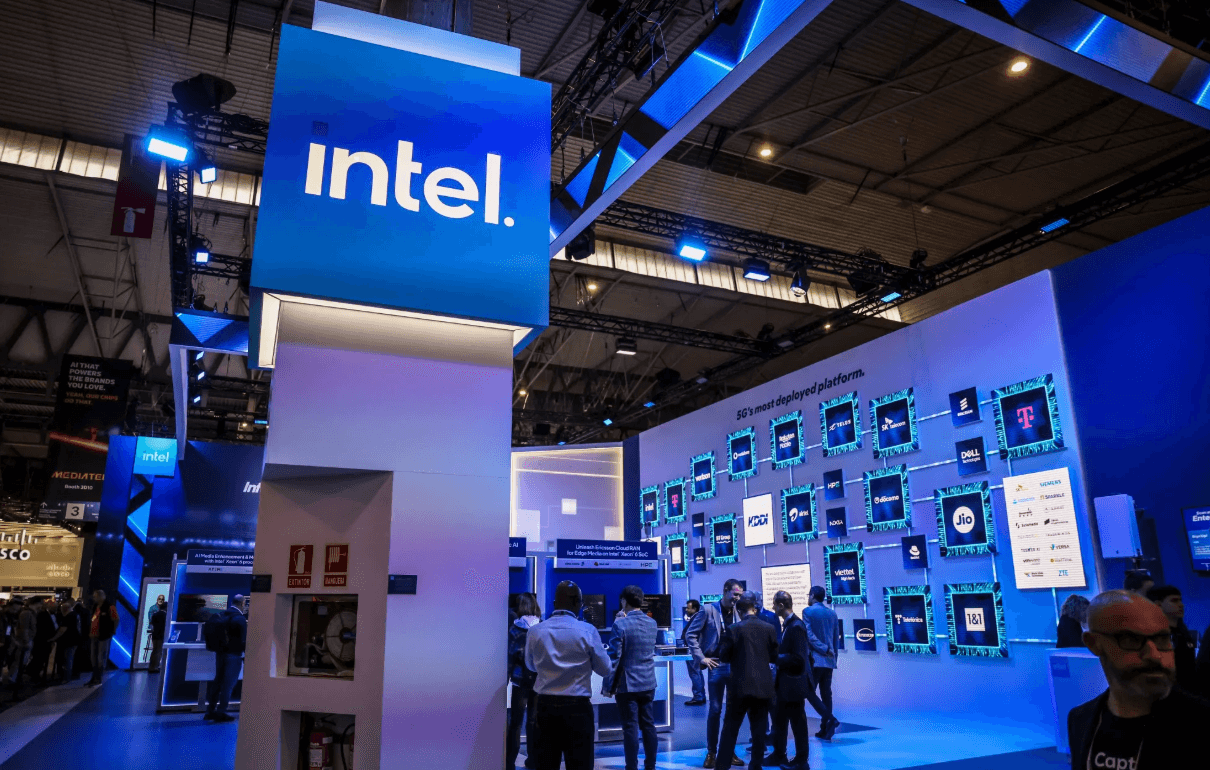
What the $15 Billion Offering Actually Consists Of
Before evaluating what the offering means, establishing precisely what Intel announced prevents the analytical confusion that large capital raise announcements routinely create.
Intel Corporation today announced a $15 billion underwritten public offering of common stock. Proceeds intended to support general corporate purposes, including capital expenditures and working capital.
An underwritten public offering means J.P. Morgan, Goldman Sachs, Morgan Stanley, and Citigroup are running the books, taking on the obligation to purchase the shares from Intel and resell them to institutional investors at the offering price. The underwritten structure provides Intel with certainty that the full $15 billion will be raised regardless of secondary market conditions during the offering period.
Intel said the offering, set to close on August 12, is expected to raise net proceeds of $19.7 billion, after deducting underwriting discounts and commissions and estimated offering expenses.
The upsizing from $15 billion to $20 billion is the most important development since the initial announcement because it demonstrates that institutional demand for Intel equity at current prices exceeded the initial offering size. When an underwritten equity offering is upsized rather than reduced, the underwriters and Intel's management team have observed sufficient institutional demand to fill a larger book than originally planned. An oversubscribed equity offering at a company that has tripled in 2026 is a signal about institutional confidence in the Intel recovery narrative rather than simply a larger dilution event.
At around $97.52, the base offering translates to approximately 154 million additional shares, or about 3.1% of Intel's share count in January. In exchange, Intel secures funds amounting to 75% of its capital expenditure planned for this year.
The 3.1% dilution figure is the most important number for framing the market's response. A 3% to 5% stock decline on 3.1% dilution is precisely the mechanical response the market should produce because the dilution reduces each existing share's claim on future earnings by 3.1%. The stock price fell approximately as much as the dilution percentage, which means the market is not assigning any net negative or net positive strategic interpretation to the offering beyond the arithmetic dilution effect.
Why Intel Chose Stock Rather Than Debt
One analytically significant dimension of the offering that most coverage has not examined with sufficient specificity is why Intel chose to issue equity rather than raise the equivalent amount through debt markets.
Debt creates interest expense. Stock issuance creates dilution. Intel is effectively telling investors it would rather increase its share count than pile even more debt onto the balance sheet.
Intel's existing debt load from the foundry transformation investment cycle is the specific context that makes the equity choice rational rather than arbitrary. A company that has already issued significant debt to finance its manufacturing transformation faces a different cost-benefit calculation for incremental capital raises than a company approaching its capital raise from a clean balance sheet.
At current interest rates, $15 billion in new debt would add approximately $750 million to $1 billion in annual interest expense at a company whose earnings are still recovering from the foundry transformation losses. At 3.1% dilution, $15 billion in equity adds no recurring cash expense and actually strengthens the balance sheet by reducing the debt to equity ratio rather than increasing the leverage that creditors monitor.
The timing amplifies the rationale. Intel shares have more than doubled this year, making the current market environment considerably more attractive for raising equity than it would have been before the turnaround rally. Intel is effectively using the strength of its stock to help finance the next phase of its manufacturing comeback.
A stock that has tripled is a stock where each share issued raises three times as much capital as the same share would have raised at the beginning of the year. Intel's management team is selling equity when its price is high relative to its fundamental recovery trajectory rather than when its price is depressed, which is the correct timing for equity issuance even though the announcement produces near-term selling pressure from investors who focus on dilution rather than timing.
What the Capital Will Actually Fund
The offering's stated purpose of general corporate purposes including capital expenditures and working capital is boilerplate language that in Intel's specific situation has a clear operational meaning.
The Wall Street Journal reported that Intel has already raised its 2026 capital-expenditure forecast from $18 billion to more than $20 billion.
Intel's $20 billion capital expenditure plan for 2026 represents the single largest annual manufacturing investment in the company's history. The investment is distributed across three categories whose returns operate on different timelines and whose risk profiles differ substantially.
Advanced process node development at Intel Foundry is the highest risk capital allocation because it requires Intel to close a manufacturing technology gap against TSMC that has been widening rather than narrowing for most of the past decade. The 18A process node that Intel has been developing is the specific technology whose commercial viability determines whether Intel Foundry becomes a genuine competitive alternative to TSMC or remains a primarily captive manufacturing operation for Intel's own chip designs.
Advanced packaging expansion is the medium risk capital allocation because it addresses a market where Intel has genuine differentiated capability. Intel's Foveros and EMIB advanced packaging technologies are approaching the capability of TSMC's CoWoS packaging that has been supply constrained throughout the AI chip boom. A $15 billion offering that expands advanced packaging capacity is an offering that funds a product Intel can sell today rather than one it is still developing.
External foundry customer acquisition is the lowest risk capital allocation because every dollar of external foundry revenue Intel generates reduces its dependence on its own chip design business and improves the utilization of fixed manufacturing cost that the $20 billion capex is creating.
The Foundry Loss That Provides the Most Important Context
One specific financial disclosure that makes the $15 billion offering most analytically significant is Intel's foundry operating loss and what it implies about the return timeline on the capital being raised.
Intel's Foundry Grew 31% Last Quarter and Lost $2.1 Billion Doing It.
A foundry business growing revenue at 31% while losing $2.1 billion in a single quarter is a business in the deep investment phase of a capital-intensive transformation rather than a business whose loss represents steady-state economics. The $2.1 billion quarterly loss is not evidence that the foundry business is structurally unprofitable. It is evidence that the fixed cost structure created by years of manufacturing investment has not yet been covered by the revenue the business generates, which is the normal condition of any manufacturing business in the ramp phase of a new process node.
Intel must prove AI investments generate returns above capital cost, or shareholders will have financed the boom while owning less of the company.
This framing from 24/7 Wall Street is the most honest available articulation of the offering's investment risk. The $15 billion offering and the $20 billion annual capex plan are bets that AI compute demand will sustain long enough and Intel's manufacturing execution will improve enough that the foundry business eventually generates returns above the cost of the capital being raised to fund it. Neither condition is guaranteed.
TSMC's 67.7% gross margin and accelerating 2nm ramp underscore the economic challenge Intel faces as it works to build a competitive foundry business.
TSMC's 67.7% gross margin against Intel Foundry's current loss generating operations is the most specific illustration of the gap Intel must close to justify the capital being raised. Getting from negative operating margins to TSMC-comparable margins requires both manufacturing yield improvement that only experience and volume can provide and external customer wins that only happen after the manufacturing yield improvement is demonstrated.
Why the Timing Is the Whole Story
The most analytically useful framing of Intel's $15 billion offering is not the dilution arithmetic or the capex deployment plan. It is the timing and what it reveals about how management is thinking about the capital markets opportunity.
Intel filed to sell $15 billion of new common stock on Monday. Shares slipped roughly 3.5% to $98 by early afternoon. That gap between Intel's drop and everyone else's shrug is the story.
The gap between Intel's 3.5% decline and the semiconductor sector's flat response is the most important market signal from today. If the offering had raised concerns about Intel's fundamental trajectory, the sector would have sold off in sympathy as investors reduced exposure to the AI infrastructure investment cycle broadly. Instead, Nvidia, AMD, Micron, and other semiconductor companies were roughly flat while Intel fell exactly the amount its dilution implied.
Intel has nearly tripled in 2026. A company that has tripled and then sells 3.1% of its equity at near-peak prices has extracted real value from the market's confidence in its recovery narrative without paying any of that value back in interest expense or debt covenants. The offering is the management team converting the market's enthusiasm into permanent capital while the enthusiasm exists rather than waiting for the manufacturing results that would justify a higher stock price.
The risk of this timing strategy is that markets are forward-looking and the offering price of $95 reflects expectations about Intel's foundry trajectory that the operational results have not yet confirmed. If the foundry transformation takes longer or costs more than the current capital plan implies, the stock that has tripled could give back a significant portion of those gains regardless of the dilution having been modest in percentage terms.
What the Oversubscription Signal Actually Means
The upsizing from $15 billion to $20 billion is analytically more important than the initial $15 billion announcement and has received significantly less attention in the coverage of today's offering.
An equity offering that is upsized rather than reduced reflects institutional demand that exceeded the supply Intel initially made available. J.P. Morgan, Goldman Sachs, Morgan Stanley, and Citigroup running the books for a $20 billion offering are not underwriting a transaction they expect to fail. The upsizing implies the book was covered at $15 billion and management and the banks agreed that the incremental demand justified raising the offering size rather than simply allocating the oversubscription at the original size.
Institutional investors who participated in the $20 billion upsized offering at $95 per share have made a specific bet that Intel's foundry transformation will generate sufficient returns to justify their purchase of Intel equity at the offering price rather than waiting for lower prices if the transformation takes longer than expected. The oversubscription is therefore a signal about institutional confidence in the foundry trajectory rather than simply a mechanical outcome of strong demand from investors seeking any large-cap semiconductor exposure.
For existing Intel shareholders who did not participate in the offering, the oversubscription signal provides the most specific available evidence about sophisticated institutional assessment of the Intel recovery narrative at current valuations. Twenty billion dollars of institutional demand at $95 per share from investors with access to Intel management and manufacturing facility visits is a different category of demand signal than retail sentiment surveys or analyst target price revisions.
For those looking to participate in global financial markets, having access to the right trading platform matters. WEEX offers crypto and stock trading products, covering major global markets including stocks and digital assets.
Conclusion
Intel stock's $15 billion offering upsized to $20 billion at $95 per share is the management team converting a nearly tripled stock price into permanent capital for the foundry transformation at a 3.1% dilution cost that the market has already priced through today's stock price decline. The timing is the strategic insight rather than the dilution arithmetic, and the oversubscription is the market's validation that the timing decision was correct.
What the offering does not resolve is the foundry transformation's return timeline. Intel Foundry grew 31% last quarter and lost $2.1 billion doing it. The $20 billion in new capital accelerates the manufacturing investment that eventually closes the gap between current losses and TSMC comparable margins, but the timeline for that gap closure depends on manufacturing yield improvements and external customer wins that capital alone cannot guarantee.
The honest assessment for existing Intel shareholders is that the offering has strengthened the balance sheet, funded 75% to 100% of 2026 capex without adding debt service burden, and demonstrated institutional confidence through oversubscription, while simultaneously confirming that the foundry transformation will require sustained investment at scales that ongoing equity dilution may be necessary to fund if the foundry losses persist longer than the current plan assumes.
FAQ
1. What does Intel's $15 billion stock offering actually involve?
Intel announced an underwritten public offering of common stock with J.P. Morgan, Goldman Sachs, Morgan Stanley, and Citigroup running the books, subsequently upsized to $20 billion at $95 per share closing August 12. The offering produces approximately 3.1% dilution at current share counts. Proceeds support general corporate purposes including capital expenditures and working capital as Intel expands manufacturing capacity for AI compute demand. The underwritten structure guarantees Intel receives the full proceeds regardless of secondary market conditions during the offering period.
2. Why did Intel choose to sell stock rather than issue debt?
Intel's existing debt load from the foundry transformation makes additional debt more expensive and operationally constraining than 3.1% equity dilution. At current interest rates, $15 billion in new debt would add $750 million to $1 billion in annual interest expense at a company whose earnings are still recovering. Equity issuance adds no recurring cash expense and strengthens the balance sheet by reducing leverage. The timing amplifies the rationale because Intel shares have nearly tripled in 2026, meaning each share issued raises three times the capital it would have raised at the start of the year.
3. What does the oversubscription from $15 billion to $20 billion signal?
An equity offering upsized rather than reduced reflects institutional demand exceeding the supply initially offered. J.P. Morgan, Goldman Sachs, Morgan Stanley, and Citigroup running a $20 billion book implies the original $15 billion was covered and management agreed additional demand justified raising the size. Institutional investors purchasing $20 billion at $95 have made a specific bet that Intel's foundry transformation generates returns justifying purchase at current valuations, providing a sophisticated demand signal about the Intel recovery narrative beyond retail sentiment or analyst targets.
4. What will the $15 to $20 billion in proceeds actually fund?
Intel raised its 2026 capital expenditure forecast to more than $20 billion, meaning the offering funds approximately 75% to 100% of this year's planned manufacturing investment. The capex distributes across advanced process node development at Intel Foundry, advanced packaging expansion where Intel has genuine differentiated capability through Foveros and EMIB technologies, and external foundry customer acquisition infrastructure. The advanced packaging allocation is the lowest-risk component because it funds capacity for a product Intel can sell today rather than one still in development.
5. What is the most important risk that the $15 billion offering introduces for Intel shareholders?
The foundry transformation return timeline is the primary risk. Intel Foundry grew 31% last quarter and lost $2.1 billion in a single quarter, meaning the fixed cost structure created by manufacturing investment has not yet been covered by foundry revenue. If the transformation takes longer than the current capital plan implies, the stock that has tripled could give back gains regardless of the offering's modest 3.1% dilution percentage. The offering strengthens Intel's balance sheet to withstand a longer transformation but does not guarantee the manufacturing yield improvements and external customer wins that profitable foundry operations ultimately require.
This content is provided for general informational purposes only and doesn't constitute financial, investment, legal, or tax advice. Any events, rewards, online promotions, or related information mentioned herein should not be considered a recommendation, solicitation, or invitation to purchase, sell, trade, or otherwise deal in any crypto assets. Crypto assets are highly volatile and may result in loss. The availability of WEEX services, products, and related events may vary by region. You are responsible for ensuring that your participation is in accordance with applicable local laws and regulations.
You may also like

Is Cronos (CRO) Still Worth Buying in 2026? Ecosystem Growth, Staking Yields and Risk Factors

Google Stock and the $200 Billion Anthropic Financing Program: What the Largest AI Deal in History Means for GOOG
Why Is Cronos (CRO) Gaining Trader Attention? Key Drivers Behind the Recent Volume Surge

Is Bitcoin Preparing for a Bullish Breakout? Key Technical Indicators and On-Chain Data
How to Avoid Liquidation During Market Crashes? Futures Risk Management Strategies
Which AI Crypto Tokens Are Surging Today? Top Decentralized AI Projects to Watch

Is Cronos (CRO) Preparing for a Major Rally? Catalysts, Risks and the 2026 Outlook
Which Major Tokens Face Massive Unlocks Tomorrow? Market Impact and Price Predictions
HIMS Stock Falls After Raising Guidance: What the GLP-1 Regulatory Uncertainty Actually Changes
What Are the New Crypto Regulation Laws? Essential Compliance Guide for Traders
ASTS Stock Price Prediction 2026-2027: Can AST SpaceMobile Recover After the Launch Bottleneck
Is ASTS Stock a Buy After Falling 48% From Its All-Time High? What the $1.3 Billion Backlog Actually Implies
PLTR Stock Is Up 37% From Its Low: What Michael Burry's "Price Does Not Matter" Warning Actually Means
Goldman Sachs Says Buy SpaceX or Palantir But Not Both: What the Forced Choice Actually Reveals
Nvda Stock Price and the $3 Billion Lancium Investment: What Betting on AI Data Center Energy Actually Means
SPY ETF vs QQQ: Which Is the Better Way to Invest in the AI Stock Recovery
What Is SPY ETF? How the World's Largest S&P 500 Fund Works and Why It Matters
RKLB Stock Price Prediction 2026-2027: Can RKLB Reach $107 After the Space Force Deals
Is RKLB Stock a Buy After the Space Force Contracts and Q2 Earnings?
MSFT Stock and the 30 Million Copilot Seats Milestone: What Growing From 20 Million Actually Changes
Cathie Wood Just Bought $36.9 Million of SPCX Stock: What ARK's SpaceX Bet Actually Signals
SPCX Stock and the $60 Billion Cursor Acquisition: What Buying an AI Coding Startup Actually Means for SPCX
RKLB Stock vs SpaceX Stock: Who Is Winning the Commercial Space Race After SPCX's IPO
RKLB Stock Q2 2026: What Record Revenue and the $397 Million Space Force Contract Actually Mean
MU Stock and the Apple CXMT Test: What Replacing Micron With Chinese Memory Actually Means
ACHR Stock After the Boeing Deal: What the 20% Stake Costs
Strategic Petroleum Reserve 2026: What's Left and What It Can Do
Tiffany Milanovich and the $5M Fake-Support Call Playbook
Microsoft Stock Is Charging Back: What the Case for Another 30% Rally Actually Requires
SPCX Stock Price Rebounds 16% From Its All Time Low: Is the Worst Finally Over for SpaceX
Is Cronos (CRO) Still Worth Buying in 2026? Ecosystem Growth, Staking Yields and Risk Factors
Google Stock and the $200 Billion Anthropic Financing Program: What the Largest AI Deal in History Means for GOOG
Why Is Cronos (CRO) Gaining Trader Attention? Key Drivers Behind the Recent Volume Surge
Is Bitcoin Preparing for a Bullish Breakout? Key Technical Indicators and On-Chain Data
How to Avoid Liquidation During Market Crashes? Futures Risk Management Strategies
Which AI Crypto Tokens Are Surging Today? Top Decentralized AI Projects to Watch
Contents
Popular coins
Latest articles