
 Buy Crypto
- Markets
 Futures
- Spot
- Copy Trade
- Earn
- More
Binance Launches Regulated Gold and Silver Perpetual Futures Settled in USDT

Key Takeaways:
- Binance has introduced its first regulated perpetual futures contracts, which are tied to traditional assets like gold and silver and settled in USDT.
- These TradFi Perpetual Contracts enable continuous trading and apply familiar structures from the crypto derivatives market to conventional assets.
- Through licenses secured from the Abu Dhabi Global Market, Binance positions itself as a leader in offering regulated traditional financial instruments on a digital platform.
- The launch reflects a broader strategy by Binance to merge traditional financial markets with blockchain technology, enabling new trading opportunities.
WEEX Crypto News, 2026-01-08 12:50:50
In an innovative move for the cryptocurrency industry, Binance has ventured beyond the confines of digital assets to introduce its first suite of regulated perpetual futures linked to traditional financial instruments. This marks a significant extension in the reach of blockchain technology as Binance rolls out contracts designed to track the price of gold and silver. Settled in the Tether stablecoin (USDT), these offerings, branded under ‘TradFi Perpetual Contracts,’ are poised to enhance trading possibilities within the cryptocurrency ecosystem by integrating conventional market assets.
Expanding Horizons with TradFi Perpetual Contracts
Binance’s launch of these contracts demonstrates a blending of established financial markets with the dynamic nature of cryptocurrency trading. By offering round-the-clock trading on precious metals such as gold and silver, Binance provides traders with continuous exposure to markets traditionally bound by business hours. Through instruments such as the XAUUSDT and XAGUSDT perpetual futures, Binance allows users to engage with these financial commodities using a familiar crypto derivative framework.
The strategic move to introduce traditional market assets via perpetual futures aligns with a growing trend within the cryptocurrency exchange industry — expanding beyond purely digital assets to capture wider market interest. The use of Tether (USDT) for settlement retains a stable, crypto-familiar environment while branching into commodities that have defined economic milestones for centuries.
Regulatory Approvals and Market Implications
A crucial component of Binance’s strategy is its compliance with regulatory standards, achieved through licenses under the Abu Dhabi Global Market (ADGM). This regulatory approval is not only a testament to Binance’s adherence to legal standards but also underscores its commitment to bridging traditional and digital financial realms under a governance structure. By securing a comprehensive set of licenses, Binance becomes a pioneering global digital asset exchange allowed to list traditional financial contracts on a regulated basis.
These perpetual futures differ from traditional futures because they lack an expiry date, maintaining alignment with the underlying asset through funding mechanisms. This system, already familiar to crypto traders, is innovatively applied to traditional market assets here. Moreover, the inclusion of unique pricing and risk controls during traditional market closures ensures the stability and reliability of trading on these new contracts.
Strategic Steps Toward Integrating Traditional Markets
The inception of stock-linked perpetual contracts — previously hinted at by Binance’s API updates — suggests a broader intent to bring traditional asset classes onto the blockchain. By transforming conventional market access into a digital experience, Binance aligns itself with a growing demand for tokenized real-world assets, expanding the crypto infrastructure to new market domains. This strategy points toward an evolving landscape where tokenized versions of stocks and commodities are expected to gain traction, further cementing the role of blockchain as a transformative tool in financial markets.
In recent discussions, market analysts have observed a strategic rotation of investment interests from digital currencies like Bitcoin to equities and commodities. This movement hints at an evolving market dynamic, where diverse asset classes on digital platforms meet the changing appetites of global investors. The advent of TradFi perpetual futures by Binance taps precisely into this transition, offering innovative solutions to integrate shiny metals and equities seamlessly into digital platforms.
Market Reactions and Anticipated Developments
The introduction of perpetual futures for traditional market assets may mark a shift in trading patterns, as reflected in the behaviors of global currencies and commodities. Insights by Ki Young Ju, founder of CryptoQuant, highlight that while capital inflows into Bitcoin have cooled, there is a steady interest in equity and commodity markets. This changing landscape signifies a market phase that extends beyond the conventional volatility associated with digital currencies alone, into a more inclusive environment catering to broader investment motivations.
Amidst these financial developments, market dynamics remain complex. The notion of a ‘boring sideways’ trading environment, as described by Ju, emphasizes a potentially stable phase for cryptocurrency markets, contrasting with historical first-quarter increases typically seen in Bitcoin returns. Through perpetual futures like XAUUSDT and XAGUSDT, Binance adapts to these macroeconomic shifts, providing traders with additional strategic avenues outside the classic crypto portfolio.
Compliance and Governance Challenges
Despite these progressive steps, Binance’s journey through regulatory challenges has been punctuated by scrutiny and compliance controversies. An investigative report by the Financial Times alluded to the continuation of suspicious transactions on Binance’s platform post its $4.3 billion settlement with the US authorities in 2023. Such reports underscore the persistent battle exchanges face to balance innovation with compliance, often drawing attention to regulatory scrutiny from bodies ensuring that financial activities remain within legal bounds.
Adding layers to the narrative, the pardon of Binance’s founder Changpeng Zhao for previous violations and growing business relations involving Binance-linked entities illustrate the complexities at the intersection of global governance and corporate operations. These events underscore the crucial balance Binance endeavors to maintain as it continues its pursuit of market expansion and legitimacy via regulatory confidence.
Bridging Traditional and Digital Realms
The launch of gold and silver perpetual futures represents more than a mere expansion in Binance’s service portfolio — it illustrates an evolution in how financial instruments are accessed and transacted in today’s digital era. With over a billion dollars in on-chain representations of stocks and commodities projected by late 2025, this shift identifies a tangible market trajectory where the once clear lines between traditional and digital financial systems are increasingly blurred.
Conclusion
Binance’s foray into regulated gold and silver perpetual futures settled in USDT is a clear testament to the exchange’s strategic foresight in aligning the fast-paced crypto world with timeless traditional markets. As the landscape continues to evolve, traders and investors are poised to engage with a broader spectrum of assets, leveraging secure and regulated platforms like Binance’s to navigate this new era of financial innovation. Whether seen as a pioneering step or a glimpse into the multifaceted future of finance, Binance’s move reinforces the critical role that blockchain technology is set to play in the wider economic ecosystem.
FAQs
What are TradFi Perpetual Contracts?
TradFi Perpetual Contracts are financial instruments introduced by Binance that allow trading on traditional assets like gold and silver using a structure similar to crypto derivatives, with settlement in USDT.
How are these perpetual futures different from traditional futures?
Unlike traditional futures, perpetual futures do not have an expiry date. They use funding mechanisms to stay aligned with the underlying asset prices while offering continuous trading, even when traditional markets are closed.
Why is regulatory licensing important for these contracts?
Regulatory licensing, such as the ADGM framework, ensures that Binance can list these financial contracts under strict governance standards, safeguarding traders’ interests and maintaining market integrity.
How do traditional and crypto markets benefit from perpetual futures?
By integrating traditional assets into a crypto trading framework, these futures enhance market accessibility, allow for continuous trading, and offer diversified investment opportunities underpinned by blockchain technology.
What are the compliance challenges Binance faces?
Binance’s growth is accompanied by increased regulatory scrutiny, necessitating stringent compliance measures to operate within legal boundaries while adapting to global financial regulations.
You may also like
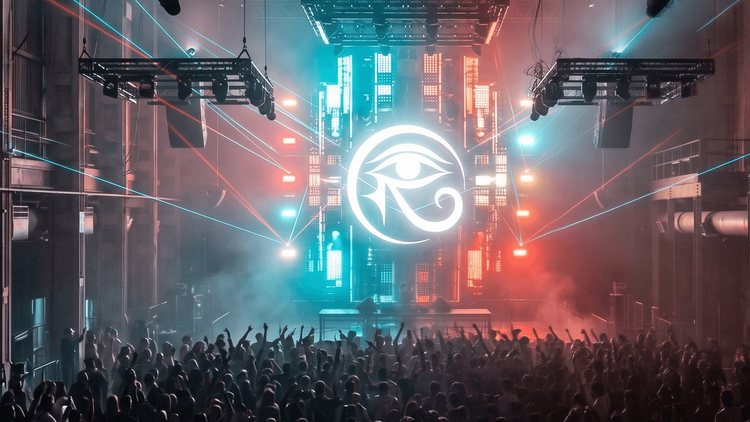
70x in a Month: When $RAVE Put Istanbul’s Dancefloor on the Chain
A Web3 project with zero VCs and no whitepaper started with a midnight party for 200 people. Eighteen months later, its token $RAVE is up 70x, and its contract liquidations briefly eclipsed Ethereum’s. Is this just pure speculation, or are we looking at a new breed of cultural asset?

Bearish Traders Continue to Short Bitcoin | Rewire News Morning Update

Is Nasdaq About to Reach a New High, Is the Bull Market Back?

Goldman Sachs Applies for Bitcoin ETF, Wall Street's Final Bastion Falls
Only Working 2 Hours a Day? This Google Engineer Got His Job Done Using Claude for 80% of It

Interpreting Stanford's 423-page AI Report: US-China Gap Narrows to 2.7%, Tsinghua's DeepSeek Enters Global Top Ten

YouTube will become the next new type of bank

How to Reshape On-Chain Transaction Logic? Exploring the Rise of Stablecoin Execution Layers

Why AI Memecoins are Failing the Reality Test
From 90,000% gains to a 98% crash—discover why the AI Meme bubble is bursting and what the shift to "AI Utility" means for your portfolio.
Morning News | Kraken receives $200 million investment from Deutsche Börse; Goldman Sachs submits application for Bitcoin Premium Income ETF; Walsh discloses his cryptocurrency holdings

Hong Kong licensing, stablecoin landscape changes: Who is reshaping the next generation of the financial landscape?
IOSG: TAO is like the Elon Musk who invested in OpenAI, Subnet is like Sam Altman

Stablecoin License Battle Concludes: Anxiety-Ridden Hong Kong, Will Not Wait for the Next Tether

You can grasp a new field in half an hour, how to quickly establish a cognitive framework using AI?

Franklin Templeton's latest research: How to understand RWA tokenization

Espanyol vs FC Barcelona: A Derby Fought with Fire and Quality
The Espanyol vs FC Barcelona derby delivered high-intensity football as Barca won 4-1, moving nine points clear at the top of LALIGA. Lamine Yamal's masterclass, Ferran Torres' brace, and a passionate city rivalry on full display. WEEX, Official Regional Partner of LALIGA in Hong Kong and Taiwan celebrates the beautiful game.

DeAgentAI announced the establishment of the AIA Ecological Fund, focusing on the "AI Agent + Physical AI" track

Why is Crypto Up? Altcoins Lead Due to US Grand Deal
Key Takeaways: The “US Grand Deal” has beefed up crypto’s appeal, impacting assets like Ethereum and Solana. Altcoins,…
70x in a Month: When $RAVE Put Istanbul’s Dancefloor on the Chain
A Web3 project with zero VCs and no whitepaper started with a midnight party for 200 people. Eighteen months later, its token $RAVE is up 70x, and its contract liquidations briefly eclipsed Ethereum’s. Is this just pure speculation, or are we looking at a new breed of cultural asset?


 App
App