
Bittensor (TAO) +18%: Critical Insights for Investors

 Prefer us on Google

Key Takeaways:
- Bittensor’s (TAO) recent 18% surge indicates a shift from potential to proven utility.
- The asset’s trading volume spiked by 62% within 24 hours, signaling heightened market interest.
- While TAO saw resistance above $289, a cooling period ensued, revealing typical market dynamics.
- The system’s transition to the Taoflow emission model shifts focus to net TAO inflows via staking.
- Beware of potential short-term pullbacks due to the “crowded trade” risk in the crypto-AI sector.
WEEX Crypto News, 2026-03-25 08:34:41
Understanding TAO’s Recent Price Surge
Bittensor (TAO) experienced an 18% rise in value recently, reflecting a broader trend in AI-tied cryptos. This price hike demonstrates TAO’s shift from mere potential to tangible utility. The excitement around markets like AI and decentralized infrastructure is no longer speculative; they are functional realities. The surge saw TAO trading at $287.16, a move that accompanied a substantial 62% rise in trading volume within a single day. The crypto even tested resistance levels slightly above $289, before entering a predictable cooling phase. This highlights a classic cycle in the crypto market often driven by “momentum chasers.”
What’s Behind TAO’s Strong Yet Volatile Movement?
In a recent session, the appetite for AI-linked tokens surged, causing a market-wide lift of around 14%. Bittensor emerged as a leader by briefly surpassing the $289 mark. This elevation was influenced by endorsements from key figures like NVIDIA CEO Jensen Huang, who praised TAO’s distributed training capabilities, cementing its status as a technological forefront. Despite the initial excitement, TAO saw a pullback to $267, providing a reality check for investors. Market analysts have noted that while the long-term trajectory remains upward, with the 200-day moving average supporting this trend, short-term indicators such as the RSI hover in overbought zones, hinting at an impending market cooldown.
The Impact of TAO’s Halving on Supply Dynamics
A significant milestone for Bittensor was the halving event on December 14, 2025, which slashed block rewards by half, mimicking Bitcoin’s scarcity tactics. By reducing annual inflation from around 20% to 13%, this action points to a scenario where lower supply potentially leads to higher price floors, assuming demand remains unchanged. Grayscale analysts suggest that this shift from high inflation to scarcity could be a positive catalyst for TAO. However, the nuanced impact of this halving will be clearer as miner sell-offs decrease over time, reducing overall market pressure.
-- Price
Bittensor Shifts Focus to Network Activity
The crux of Bittensor’s ecosystem evolution lies in its new economic pulse. Transitioning away from a token price model, the network has embraced Taoflow—a flow-based emission framework. Unlike its predecessor, Taoflow incentivizes based on net TAO inflow primarily via staking, divorcing TAO from being merely an AI hype symbol to becoming a fundamental driver within a decentralized machine learning-activated economy. This realignment focuses on actual network utility rather than speculative trading.
Evaluating the Risks of Pullbacks
While the overarching macro picture for TAO seems favorable, the “crowded trade” hazard still looms large. The intersection of AI and blockchain thrusts TAO into the spotlight, transforming it into a speculative leverage play on computational futures. With industry stalwarts like Jensen Huang endorsing decentralized models like Bittensor’s 4-billion parameter LLaMA run, the market understandably reacts. However, this reaction must be tempered by a clear understanding of potential volatility, as increased open interest often heralds turbulent times ahead.
Bittensor’s Strategic Position Post-Halving
Emerging from its first halving trial, Bittensor remains a focal point of the digital currency landscape. By reducing token supply and enhancing staking-based demand, it creates a strong foundation for growth. However, the recent rally has absorbed much of the immediate positive momentum. For investors eyeing the long haul, crucial considerations include expanding subnets and maintaining staking robustness. If Bittensor can consistently prove that its decentralized methodology outpaces traditional centralized systems, its current valuation might seem trivial in hindsight.
FAQ
What has driven the recent price surge in Bittensor (TAO)?
The recent 18% surge in Bittensor’s price is primarily driven by a combination of increased staking demands, a strategic shift from speculative to tangible utility, and influential endorsements from industry figures like NVIDIA CEO, Jensen Huang.
How does the recent halving event impact Bittensor’s market dynamics?
The halving event reduced TAO’s annual inflation by cutting block rewards in half, decreasing market supply. Over time, this is expected to lead to an appreciation in value due to decreased sell pressure from miners, aiding in transitioning to a scarcity-driven growth phase.
How does Taoflow change the incentives within the Bittensor network?
Taoflow transitions the network from a token-price-focused incentive model to one based on net TAO inflows through staking. This utility-driven approach shifts emphasis from speculation to active participation in the decentralized AI economy.
Are there risks associated with Bittensor’s recent price movements?
Yes, the volatility tied to TAO’s recent movements highlights the risks of a “crowded trade.” As interest surges and open interest increases, it suggests that volatility and potential pullbacks could occur, especially if broader market conditions change.
What should long-term investors in Bittensor focus on post-halving?
Long-term investors should concentrate on the health and expansion of subnets, the sustainability of staking activities, and how effectively Bittensor can demonstrate its decentralized architecture’s capability to overshadow traditional, centralized AI models.
[Place Image: Chart showing TAO price fluctuations over the past month]
In summary, while Bittensor’s recent performance showcases its transition to operational utility, investors must remain vigilant of potential volatility while keeping an eye on strategic network developments. Let’s see how the unfolding year continues to shape this promising digital asset’s trajectory.
This content is provided for general informational purposes only and doesn't constitute financial, investment, legal, or tax advice. Any events, rewards, online promotions, or related information mentioned herein should not be considered a recommendation, solicitation, or invitation to purchase, sell, trade, or otherwise deal in any crypto assets. Crypto assets are highly volatile and may result in loss. The availability of WEEX services, products, and related events may vary by region. You are responsible for ensuring that your participation is in accordance with applicable local laws and regulations.
You may also like

The Hong Kong Securities and Futures Commission urges the SFC to optimize the CVAP exam, focusing on the operational costs of the new virtual asset policy

Bittensor new proposal: Validators may become active fund managers to reduce subnet token selling pressure

New Types of Information Laundering in Prediction Markets: How Secrets Integrate into Investment Signals

Top 12 Cryptocurrencies to Invest in April 2026
Key Takeaways: Bitcoin remains the dominant player with a $1.42 trillion market cap. Hyperliquid’s HYPE token gains traction,…

A Bittensor Developer Exits After Dumping 37,000 TAO Cryptos: Governance Crisis in Full Swing?
Key Takeaways: TAO price plummeted to $249, about 68% drop from its peak of $767.68, due to governance…

Top AI Tokens to Watch in 2026: Which AI Coins Are Worth Accumulating Early?
Looking for the best AI crypto tokens to invest in before the next market cycle? This guide explains what AI coins are, why 2026 could be a key accumulation window, and which infrastructure, AI agent, and data-layer projects may have strong long-term growth potential.
IOSG: TAO is like the Elon Musk who invested in OpenAI, Subnet is like Sam Altman

TAO is Elon Musk, who invested in OpenAI, and Subnet is Sam Altman

Morning News | Ether Machine terminates $1.6 billion SPAC deal; SpaceX holds approximately $603 million in Bitcoin; Michael Saylor releases Bitcoin Tracker information again

The latest disclosed candidate asset list from Gray includes HYPE, STX, VIRTUAL, and others
The person who helped TAO rise by 90% has now single-handedly crashed the price again today

Top 5 Cryptos to Buy in 2026 Q1: A ChatGPT Deep Dive Analysis
Explore the top 5 cryptos to buy in Q1 2026 including BTC, ETH, SOL, TAO, and ONDO. See price outlooks, key narratives, and institutional catalysts shaping the next market move.
Bittensor co-founder responds to Covenant AI's accusations: no authority to suspend subnet emissions, and the amount sold is less than 1% of the investment

Why did Covenant AI flee from Bittensor?
Q1 Market Review: Traditional Assets Enter the Blockchain Era; Geopolitical Turbulence Puts Pressure on the Cryptocurrency Market

Grayscale Submits Initial GTAQ S-1 File to SEC

Venture Capital Post-Mortem 2025: Hashrate is King, Narrative is Dead
TAO Surges Above $520, Marking an 18.76% Increase in 24 Hours

10x Research: Bittensor subnet staking scale exceeds 600 million USD, possibly driven by strong momentum from AI narratives
Bittensor vs. Virtuals: Two Distinct AI Flywheel Mechanisms
Bittensor Ecosystem Token SN Surges 5x in March, What's Behind Richard Heart's One-Liner?
Data: Most of the cryptocurrency market is up, with the Meme sector rising by 5.09%, while only the GameFi and PayFi sectors are down

Bittensor (TAO) +18%: Essential Insights for Investors
Key Takeaways: The Bittensor (TAO) market has shifted from speculative potential to verified utility, marking an 18% rise…
Bittensor Surge: Understanding the TAO’s Bullish Performance and Institutional Inflows
Key Takeaways: Bittensor (TAO) is regarded as a key asset for institutional investors with a recent listing on…
Safello’s Bittensor Staked TAO ETP on Nasdaq Stockholm: A New Horizon
Key Takeaways: Bittensor Staked TAO ETP (STAO) by Safello is now listed on Nasdaq Stockholm. The ETP offers…
Data: The cryptocurrency market has generally risen, the AI sector has increased by over 10%, while only the RWA sector has seen a slight decline
Data: Today's price changes of the top 100 cryptocurrencies by market capitalization
Data: The cryptocurrency sector continues to rise, BTC breaks through the $72,000 mark, ETH rises over 4%
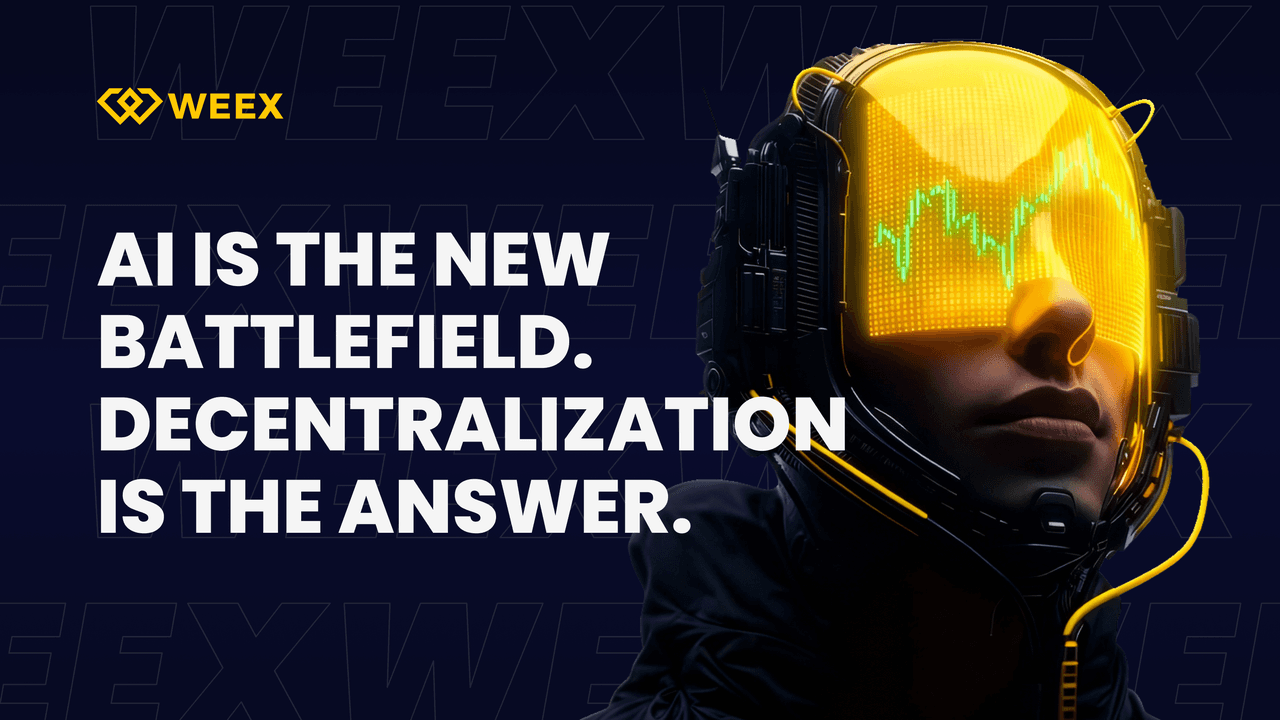
Who Will Control AI? Why Decentralized AI May Be the Only Alternative to Government and Big Tech
AI has become critical infrastructure, and governments and corporations are competing to control it. Centralized development and regulation are entrenching existing power structures. The Web3 community is building a decentralized alternative — distributed compute, token incentives, and community governance — before that window closes.
Data: The cryptocurrency sector is experiencing a broad increase, with the AI sector leading with over 7%, and BTC breaking through 70,000 USD
The Hong Kong Securities and Futures Commission urges the SFC to optimize the CVAP exam, focusing on the operational costs of the new virtual asset policy
Bittensor new proposal: Validators may become active fund managers to reduce subnet token selling pressure
New Types of Information Laundering in Prediction Markets: How Secrets Integrate into Investment Signals
Top 12 Cryptocurrencies to Invest in April 2026
Key Takeaways: Bitcoin remains the dominant player with a $1.42 trillion market cap. Hyperliquid’s HYPE token gains traction,…
A Bittensor Developer Exits After Dumping 37,000 TAO Cryptos: Governance Crisis in Full Swing?
Key Takeaways: TAO price plummeted to $249, about 68% drop from its peak of $767.68, due to governance…
Top AI Tokens to Watch in 2026: Which AI Coins Are Worth Accumulating Early?
Looking for the best AI crypto tokens to invest in before the next market cycle? This guide explains what AI coins are, why 2026 could be a key accumulation window, and which infrastructure, AI agent, and data-layer projects may have strong long-term growth potential.

Contents
Latest articles





Latest coin listings on WEEX


