
- Buy Crypto
- Markets
 Futures
- Spot
- Copy Trade
- Earn
- More
Can Bitcoin Survive the Quantum Threat? BlackRock Has an Answer
By: cointribuneen|2025/05/16 02:30:06
0
Share
Doubts are growing around the famous “Q-Day.” The day when quantum technology would surpass the cryptography protecting Bitcoin. This concern comes from BlackRock, which has explicitly mentioned the quantum risk in its Bitcoin ETF filing. This development raises a question: is Bitcoin’s security obsolete in the face of the power of future quantum computers? The stakes are huge, as it is not just a theoretical risk. The Quantum Danger Looms Over Bitcoin BlackRock, the asset management giant, has for the first time mentioned the threat of quantum computing in its updated prospectus for its Bitcoin ETF, iShares. This threat is based on a potential capability of quantum computers to decrypt the private keys securing Bitcoin transactions. In its filing , BlackRock explains that: The firm also emphasizes that the transition to quantum-resistant cryptography would require broad consensus within the Bitcoin community. This shift to a new standard could be complex, even contentious. Technically, the fear comes from the Shor’s algorithm , theoretically capable of breaking the elliptic curve cryptography on which the Bitcoin network relies. Google and Microsoft have presented quantum computing advancements, such as the Willow and Majorana 1 processors, capable of performing unimaginable calculations in minutes. Yet, reality is still far from an immediate threat. As Paolo Ardoino, CEO of Tether, explains, “ quantum machines are still far from being able to crack 256-bit security “, providing some breathing room. However, according to analyses, nearly 25% of bitcoins in circulation are stored at potentially vulnerable addresses , especially those that have already revealed their public key. Should a sufficiently powerful quantum computer ever be developed, these coins would then be at risk. Diverse Perspectives on the Quantum Threat Opinions are divided in the crypto community. Some, like Coin Bureau , warn about the severity of the threat . Their tweet highlights: This institutional warning is enough to increase attention. Conversely, experts like Ole Lehmann take a more reassuring stance. They remind that Bitcoin anticipated this risk a long time ago . Ole writes: “ Bitcoin isn’t afraid of Willow, Google’s quantum processor. Satoshi foresaw this threat 14 years ago .” He details that the Willow processor, though revolutionary, is just a first step in a long journey . To threaten Bitcoin, a technological leap of several orders would be required. Ole adds that: Moreover, the blockchain is not static. Recent forks, such as SegWit or Taproot, have already reinforced the network’s security and scalability. The community and developers demonstrate an adaptability that suggests a future with effective post-quantum protections. Key Figures and Financial Stakes Quantum represents a potential threat but also a significant economic challenge for Bitcoin and the crypto-sphere. Here are the key figures to remember: BlackRock’s Bitcoin iShares fund holds 64 billion dollars in net assets; About 25% of bitcoins (approximately 4 million) are in vulnerable addresses; Google announced a quantum processor capable of solving a problem in 5 minutes, compared to 10^25 years for classical supercomputers; Since the start of the year, Bitcoin ETFs have attracted more than 41 billion dollars, proof of strong interest despite the risks; Post-quantum signatures such as SPHINCS+ are already being tested on Bitcoin testnets. This observation shows a contradiction : the market largely ignores the threat, focused on immediate volatility and growth, while the quantum threat calls for deep preparation. Furthermore, the transition to post-quantum cryptography could be laborious and divide the community. In this race against time, some players also see quantum computing as an opportunity. For example, Naoris, specialized in cybersecurity, offers solutions to secure EVM-compatible blockchains without requiring a hard fork. This innovative approach offers extra comfort against future risks while maintaining network compatibility. Thus, the rise of quantum computing could stimulate a new generation of protections, combining enhanced security and technological continuity.
You may also like

Old Indicator Fails, Three Major New Signals Emerge: BTC True Bottom May Still Be Below $60K
When the grocery shopping auntie on the subway, or Tony the hairdresser, start asking you about BTC, crypto, and cryptocurrency investments, selling immediately will be the only best option.

Meeting OpenClaw Founder at a Hackathon: What Else Can Lobsters Do?
Imperial College London MetaGame: AI Agent × Web3 Landing Three Major Directions.

Huang Renxun's Latest Podcast Transcript: NVIDIA's Future, Embodied Intelligence and Agent Development, Soaring Demand for Inferencing, and AI's PR Crisis
The future of competition is not only about whose model is bigger, whose computing power is stronger, but also about who understands the industry better, who can more deeply integrate AI into real processes, and who can organize these capabilities into a set of executable, scalable systems
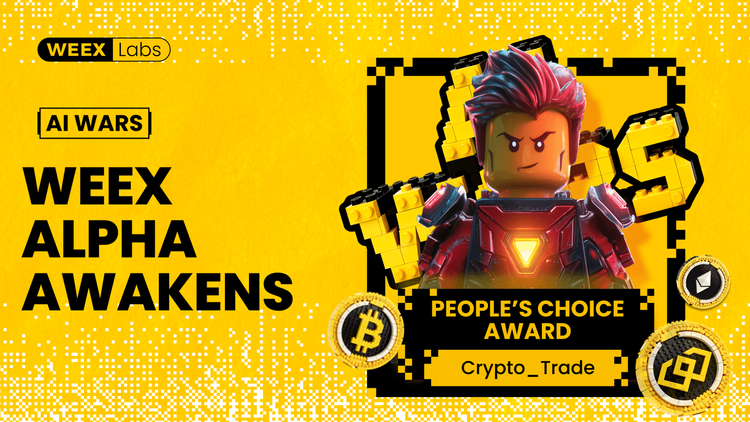
How a Structured AI Crypto Trading Bot Won at the WEEX Hackathon
Crypto_Trade shows how structured inputs and controlled adaptability can build a more stable and reliable AI crypto trading bot within the WEEX AI Trading Hackathon, highlighting a practical path toward scalable AI trading systems.

AI Starts to Devour the Manufacturing Industry | Rewire News Morning Edition
When Bezos starts using AI to buy factories instead of building data centers, it shows that he believes the next wave of AI's value is not inside the box.

When Scaling Meets Speed, Ethereum Foundation Introduces "Hardness" to Safeguard the Base Layer
Hardness is a protocol-level commitment to Ethereum core properties, including censorship resistance, privacy, security, and permissionlessness.
Google, Circle, Stripe Flock Together to Let AI Spend Money: Payment Giants' Joys and Worries in 2026 Q1
The real enemy is no longer each other, but zero cost itself

$100 Billion Factory Purchase: Bezos and Middle Eastern Capital Shift AI Money from Cloud to Shop Floor
Bezos doesn't invest in a new model; he invests in a supply chain.

Xiaomi and MiniMax both unleash their ultimate moves, signaling the start of the Agent Pricing War.
No brand, no marketing, let developers vote with their feet in 8 days

Predicting markets has taken the spotlight, but the Perp DEX has been quietly waging war on traditional exchanges.
During a weekend of relentless volatility, while traditional financial markets were closed, another wave of investors was busy trading gold, oil, and silver on a blockchain platform.

Is the Market Slump Still Making Millions a Day? Is pump.fun's Revenue Real?
If it's really that profitable, what's keeping $PUMP's price down?

Understanding x402 and MPP in One Article: The Two Paths of Agent Payments
x402 for in-protocol payments, MPP for off-chain payments

Quick Look at the Latest 18 Graduation Projects from Alliance: Who's the Next Pump.fun?
The project's core innovation areas include stablecoin payments, AI applications, prediction markets, and RWA tokenization.

It's not just the prediction market that profits from the Iraq War
Always maintaining the ambiguity of regulation with "offshore" may be the consensus of the perp DEX.

The "bank card" of AI has caught the attention of the giants
AI has not learned how to spend money yet, and the people who fix banks for it have already arrived.
Morning News | U.S. SEC approves tokenized trading on Nasdaq; Animoca Brands announces investment in AVAX tokens; Algorand Foundation completes strategic integration
Overview of Important Market Events on March 19

$70 trillion wealth transfer, the financial gateway is being rewritten | Interview with Robinhood CEO Vlad Tenev
The next key competition in the financial sector may revolve around where the "intergenerational wealth transfer" of up to $90 trillion will ultimately flow.
Whale Opens 20x Oil Short on Hyperliquid With 5.6M USDC at Risk
Key Takeaways A significant leveraged short position on crude oil has been initiated on Hyperliquid using 5.6 million…
Old Indicator Fails, Three Major New Signals Emerge: BTC True Bottom May Still Be Below $60K
When the grocery shopping auntie on the subway, or Tony the hairdresser, start asking you about BTC, crypto, and cryptocurrency investments, selling immediately will be the only best option.
Meeting OpenClaw Founder at a Hackathon: What Else Can Lobsters Do?
Imperial College London MetaGame: AI Agent × Web3 Landing Three Major Directions.
Huang Renxun's Latest Podcast Transcript: NVIDIA's Future, Embodied Intelligence and Agent Development, Soaring Demand for Inferencing, and AI's PR Crisis
The future of competition is not only about whose model is bigger, whose computing power is stronger, but also about who understands the industry better, who can more deeply integrate AI into real processes, and who can organize these capabilities into a set of executable, scalable systems
How a Structured AI Crypto Trading Bot Won at the WEEX Hackathon
Crypto_Trade shows how structured inputs and controlled adaptability can build a more stable and reliable AI crypto trading bot within the WEEX AI Trading Hackathon, highlighting a practical path toward scalable AI trading systems.
AI Starts to Devour the Manufacturing Industry | Rewire News Morning Edition
When Bezos starts using AI to buy factories instead of building data centers, it shows that he believes the next wave of AI's value is not inside the box.
When Scaling Meets Speed, Ethereum Foundation Introduces "Hardness" to Safeguard the Base Layer
Hardness is a protocol-level commitment to Ethereum core properties, including censorship resistance, privacy, security, and permissionlessness.


 App
App