
ETH Denver Recap and Reflection, Crypto in the Midst of a Structural Shift


Original Article Title: The Last Cycle: An ETH Denver Retrospective
Original Article Author: TraderNoah, Theia Team Member
Original Article Translation: ChatGPT
Editor's Note: ETH Denver reflected the shift in the crypto industry—reduced speculation, increased pragmatism. Market participants can be divided into old-timers, technical builders, newcomers, and speculators, with fewer and fewer actually making money. The crypto industry has entered a new stage, with a clear trend towards institutionalization and a slowdown in pure crypto-native market growth. With regulatory clarity, stablecoins and on-chain finance will see widespread adoption, and the traditional VC exit model is now well recognized. The surge in 2024 was more of a financial game, and after the bubble burst, the industry faces a reality check: either create real business value or continue to wait for the next speculative cycle.
Below is the original content (slightly restructured for ease of comprehension):
There are few new faces, reduced extravagant marketing spending, and a shift in industry trends towards pragmatism. Legacy projects from the past still exist (e.g., lingering infrastructure projects from 2018 or VC firms that have just been overfunded burning cash on marketing), but compared to previous years, this phenomenon has diminished.
Background
Currently, there are primarily two main groups in the industry: the crypto-native group and newcomers.
These can be further subdivided into four subcategories:
Crypto-native Mercenaries
Crypto-native Technocrats
Low-quality Newcomers
High-quality Newcomers
Crypto-native Group
This group is mainly composed of technocrats (VC/investors, VC-backed projects), focusing on significant market opportunities and dedicated to building tangible products. In this event, they accounted for over two-thirds of the crypto-native group, primarily focusing on AI/DeFi and FinTech directions.
The number of mercenaries is significantly lower than in previous years, which could be due to:
· A subdued on-chain market
· Future growth leaning more towards institutionalization
· Most mercenaries have either been liquidated or have earned enough money, leaving few behind, and few are willing to go all-in on this game anymore.
Newcomers
Newcomers can be divided based on their skill level.
Low-Quality Newcomers: Primarily engaged in soft-skill-related work (BD, Growth, Ecosystem, etc.), usually working for a declining L1/L2 project or a well-funded but directionless company. These individuals may be crypto enthusiasts, or they may simply be staying due to the industry's high salaries and low job intensity.
High-Quality Newcomers can be divided into Technocrats and Mercenaries:
· Technocrats mainly come from traditional finance, building in areas such as DeFi, Stablecoins, or are infrastructure experts in AI, DeFi, security, focusing on technologies and capital deployment in early-stage projects with significant market potential.
· Mercenaries are usually young entrepreneurs aged 18-25 who witnessed the wealth accumulation of their predecessors in 2021 and are looking to replicate that success. They are charismatic, intelligent, and even slightly antisocial. This group is not large in size but often garners significant industry attention.
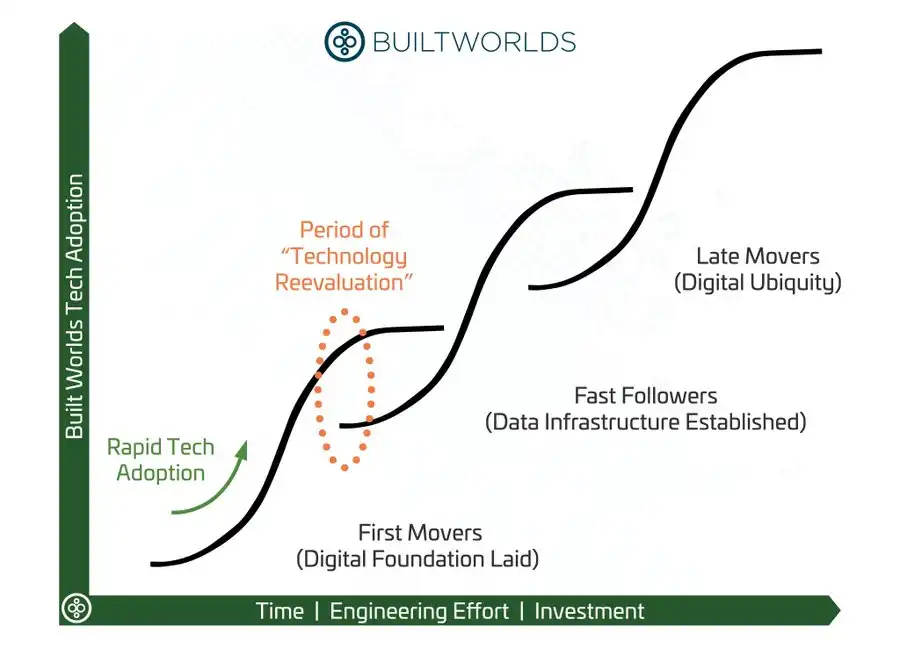
Reassessment Phase
Why is blockchain technology seeing widespread adoption while our token prices are plummeting? Why are some groups remaining optimistic while others are pessimistic? The answer is simple: we are at the end of one S-curve and the beginning of another.
Retrospective of the Crypto Industry
2009-2011: Early Tech Geeks
2011-2016: Dark Web / Gambling Era
2017-2019: Mainstream's First Cycle
2020-2021: DeFi Summer, Mainstream's Second Cycle
2022-2024: Speculators / Vulture Capital, Mainstream's Second/Third Cycle
The above is a highly summarized classification, but I believe it is fundamentally accurate. People who entered the crypto industry early on usually fell into one of three categories: tech geeks, criminals, or just lucky timing.
Those who entered the crypto industry before 2017 can now be roughly divided into three scenarios:
Already financially free, choose to retire
Consider cryptocurrency as a way of life
Still struggling to make money
After the DeFi Summer, a large number of newcomers entered the crypto industry, indicating that those who entered after 2020 are more akin to the general public compared to earlier adopters. Many in this group have seen wealth growth, but extreme wealth accumulation is less common compared to the early adopters.
Their current status can be roughly divided into:
A few have achieved financial freedom and retired
Most are in the middle of the wealth spectrum, holding the power of choice
Some are in a state of "pre-affluence" but are gradually becoming disillusioned with the industry
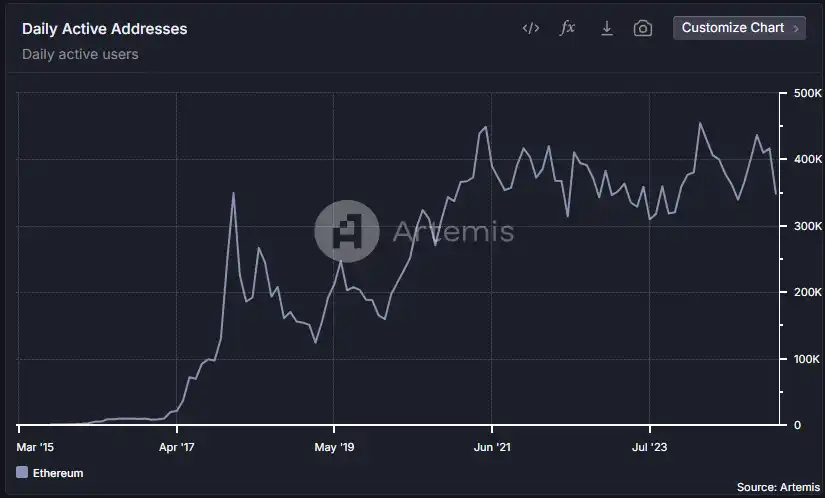
From 2024 onwards, people from all walks of life will come into contact with cryptocurrency, but only those who can identify business opportunities and have exceptional abilities will survive. We may see a large number of executives with traditional finance or Web2 experience entering the space.
Looking back at the participants in the crypto industry, those who are still active can be roughly divided into three categories:
"Pre-affluent" but entered before 2022: In the past 5-10 years, they missed opportunities, and many are disillusioned with the industry.
"Post-affluent" and deeply believe in crypto (like religious believers, e.g., ETH Maximalists, Link Marines): These individuals still consider ETH as "money" but have not been actively involved for years, disconnecting from the market.
Newcomers seeking business opportunities: They have not been influenced by past market fluctuations and remain optimistic.
Among these, the most pessimistic are usually the first category, as they harbor deep jealousy and resentment towards the industry, realizing that their wealth accumulation largely came from luck or shady means.
The second category firmly believe that ETH is still "money." They speak grandiosely on podcasts or work in fund companies but have long been out of touch with market reality.
The third category remain optimistic because they have not been worn down by past market cycles, or they still focus on their beliefs. Today, as regulatory frameworks become clearer, stablecoins see widespread adoption, and the financial markets accelerate towards tokenization.
Future Development Directions?
The entire industry has essentially reached a consensus on the direction in the coming years, but those who cannot benefit from the new landscape often choose to selectively ignore reality. In the future, the marginal new users will pay more attention to how cryptocurrency can create value in their real lives. We may see:
· Significant growth in on-chain financial applications
· More applications of crypto technology in security and reducing backend operational costs
However, the growth of the purely crypto-native market may slow down, which is not very favorable for token fund inflows and may also be one of the reasons for the sluggishness of the liquid market.
The current industry is in a transition period where regulation has not yet been fully established but is imminent. In the future, liquidity may shift towards compliant public market stocks rather than tokenized assets. Additionally, many on-chain financial products may require identity verification to attract institutional clients, leading to a split of the on-chain financial market into gray/black market and compliant market.
Uncertainty implies risk, and although the industry's long-term trend is positive, this may not necessarily benefit everyone's investment portfolio.

ETH Denver: A Wake-Up Call for the Industry
ETH Denver and its surrounding market trends have sounded an alarm for the entire crypto industry. Market participants are now facing a stark choice:
· Shift towards building or investing in real businesses to drive the practical application of blockchain technology;
· Continue to pray for the "crypto casino" to restart, hoping for windfall profits in the next bull run.
As genuinely business valuable projects gradually emerge and the "crypto casino" opportunity relatively diminishes, this choice becomes increasingly clear.
In fact, many industry participants (companies, traders, funds) have long been in decline, merely hesitant to accept reality due to the market's long feedback loop or overcapitalization.
This transformation all began with the Bitcoin ETF in 2024 and culminated with Trump's inauguration in 2025. The market is slowly evolving towards a more rational direction, with less and less room for blind speculation.
In the early cycles (2017, 2021), the "average person" might have willingly immersed themselves in the Ponzi game, pretending ignorance. However, eight years have passed since the first crypto frenzy, and more and more people have come to terms with reality:
VC -> TGE (Token Generation Event) -> Cash Out, the old routine, is fundamentally a funding game. But as long as this path remains profitable, it won't change, yet fewer and fewer people are willing to continue being duped.
The crypto industry is undergoing a structural transformation, and the era of the casino is fading as genuine business models rise.
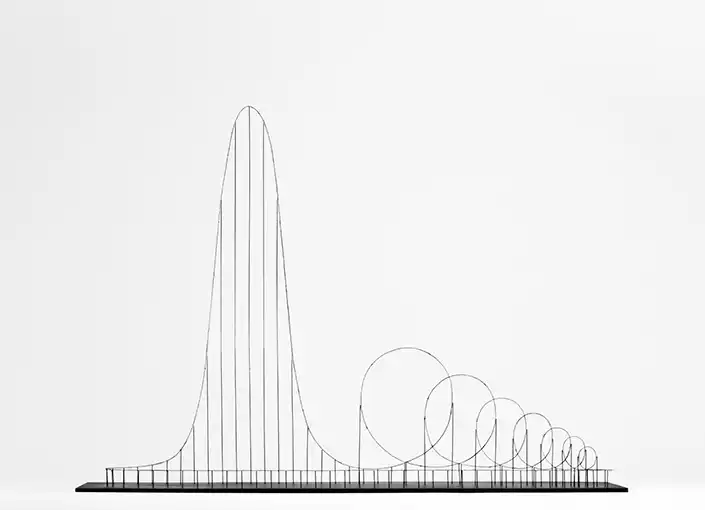
The 2024 market surge was primarily driven by the wealth effect brought by Bitcoin and the meme coin hype cycle. But this time around, traders are all too aware; they're only participating when there's money to be made, having no faith in any narrative.
Today, the era of free money is over, the gamblers have left the building, and industry participants relying on market liquidity must now reassess the impact on their investment portfolios.
You may also like

The other side of Musk's trillion-dollar fortune: 85% cannot be sold

The U.S. government prohibits foreigners from using Fable 5, Anthropic issues a rebuttal

Citibank releases "2030 Asset Tokenization Market Outlook": 6 major trends may create a $8.2 trillion market

The trillion-dollar valuation test: Are the three major super IPOs a celebration for tech stocks or a nightmare for the crypto market?

Morning Report | Digital Asset completes $355 million financing led by a16z Crypto; Meta completes operational separation from Manus

a16z Crypto Partner: Cash flow is the moat

Cryptocurrency market makers collectively seek change as it becomes increasingly difficult to make money

How TradeXYZ, xStocks, and Alpaca break down the SpaceX IPO into three different strategies
$75 billion in risk asset redistribution: How will SpaceX's IPO affect U.S. stocks and Bitcoin?

Why Is BlackRock Investing $5 Billion in the SpaceX IPO?
Morning News | CME Group launches Nasdaq Cryptocurrency Index futures; Asset management giant Janus Henderson strategically invests in Ethena

Bitcoin Layer 2 Network Botanix: Why Did We Choose to Dissolve?

Why did Oracle deliver the strongest financial report in history, yet its stock price fell?
When the P2P illicit funds from ten years ago turned into 60,000 bitcoins
Dialogue with OmenX Founder: Why does the prediction market need an evolution from "spot" to "derivatives"?
Galaxy in-depth report: Is Solana still worth paying attention to?
Young people in South Korea make a "final effort" in the epic bull market
The pricing controversy of Trade.xyz exposes the fatal weakness of Pre-IPO perpetual contracts
The other side of Musk's trillion-dollar fortune: 85% cannot be sold
The U.S. government prohibits foreigners from using Fable 5, Anthropic issues a rebuttal
Citibank releases "2030 Asset Tokenization Market Outlook": 6 major trends may create a $8.2 trillion market
The trillion-dollar valuation test: Are the three major super IPOs a celebration for tech stocks or a nightmare for the crypto market?
Morning Report | Digital Asset completes $355 million financing led by a16z Crypto; Meta completes operational separation from Manus
a16z Crypto Partner: Cash flow is the moat


