
- Buy Crypto
- Markets
 Futures
- Spot
- Copy Trade
- Earn
- More
Ethereum ERC-5564: Keep Your Receiving Address Private

Original Title: Ethereum Got Stealth Mode
Original Author: Vaidik Mandloi, TOKEN DISPATCH
Original Translation: Luffy, Foresight News
Have you ever opened Etherscan to search for your wallet address, not to check for transactions, but just to see how it looks to an outsider?
Your current balance, every token you've ever held, NFTs you've bought, protocols you've interacted with, those late-night DeFi experiments, every claim or ignored airdrop... it's all there, completely public.
Imagine handing out this address to a freelancer you're paying, a DAO funding you, or even someone you just met at a conference. You're not just giving out a receiving address, but an entire set of on-chain financial life.
The reason is simple, Ethereum, like most public blockchains, treats every address as essentially a public ledger.
Most people have felt this awkwardness. There's a split-second hesitation before pasting a wallet; some people opt for a dedicated "new wallet" for receiving funds; and some prefer to move funds around first to avoid leaking too much information about their balance.
This instinct is not limited to crypto-native users. A ConsenSys global survey covering 15,000 people in 2023 showed: 83% value data privacy, but only 45% trust existing internet services.
ERC-5564 is designed to address this address association issue. It brings stealth addresses natively to Ethereum: a standard that allows you to receive payments without exposing your main wallet every time.
What Does ERC-5564 Bring?
At the core of the issue is that one address permanently records all your actions. So why must you reuse the same address?
Think about how you receive funds in the real world: someone sending you a bank transfer needs your account number, and this account number doesn't change with each transaction. Over time, the bank account becomes a complete record of your income, expenses, and savings. The key difference is: only you and the bank can see it.
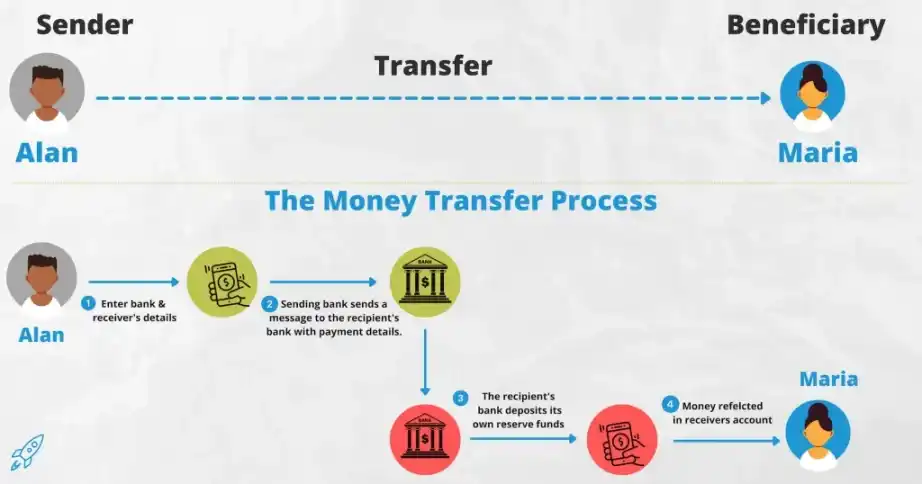
On Ethereum, the wallet address works the same way: it's a permanent account in the network's global state. When someone sends you money, they need the address, which remains the same, and all transactions are recorded under that single public address.
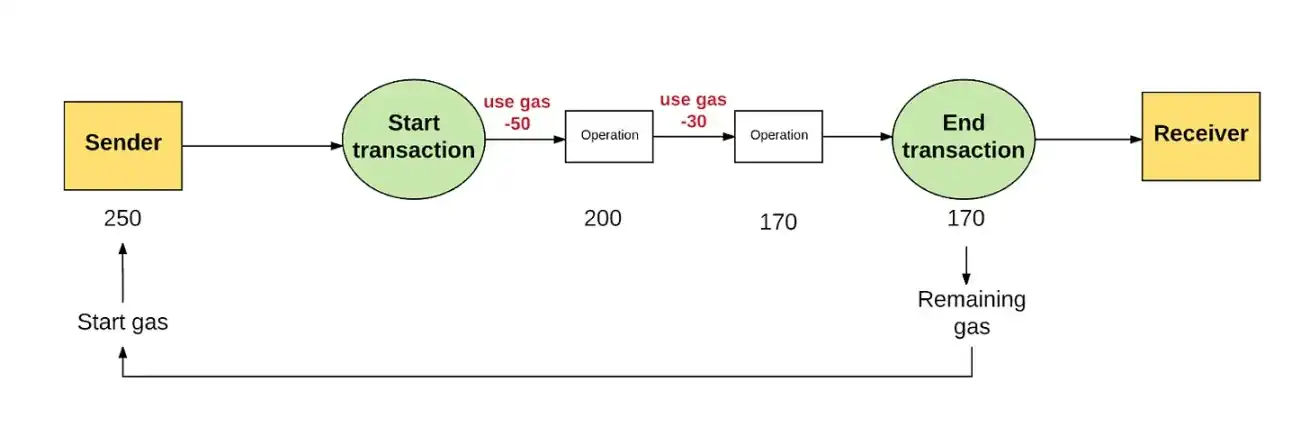
Researchers call this the "Glass Bank Account" problem. The issue is not that transactions are visible, but that all behavior is automatically linked to an almost immutable address.
In the early days of crypto, this would only expose basic transaction records. But later on, the blockchain evolved into a lending market, NFT platforms, governance systems, payment layers, and identities. Today, what an address can expose is much richer than just a few years ago.
A common analogy in privacy research is: imagine playing Battleship on the blockchain, where every move is publicly visible. The rules are enforced correctly, and the system faithfully records everything. But when both players can see each other's ship positions, the element of strategy disappears.
The system operates exactly as designed, but the experience has fundamentally changed because transparency has eliminated privacy.
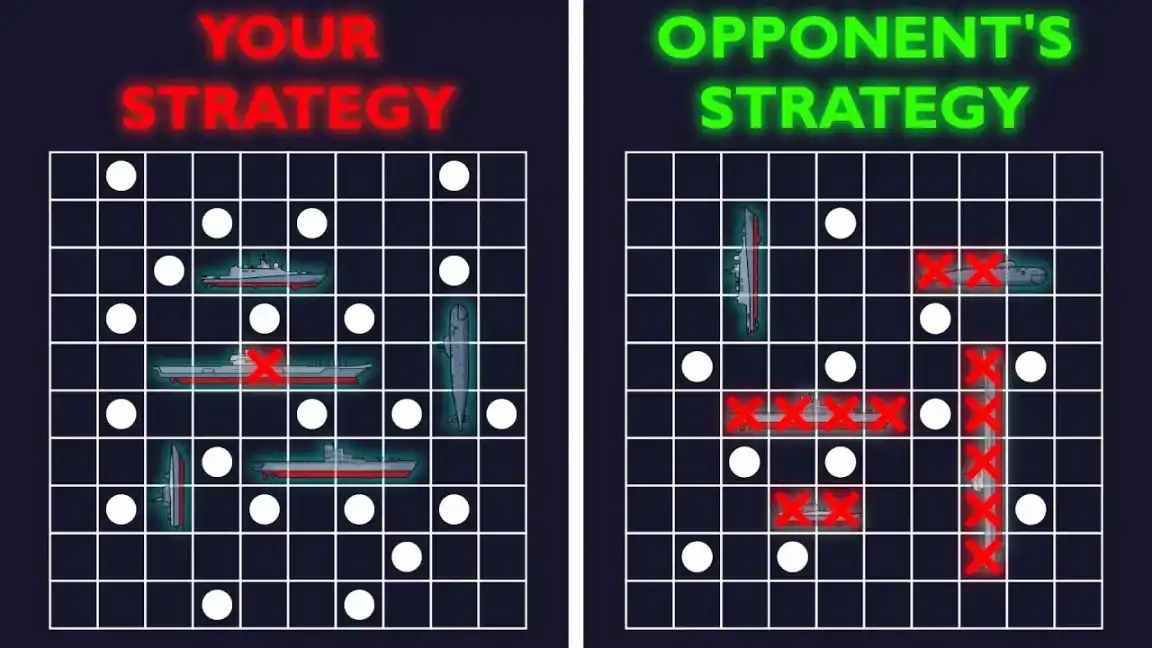
Financial coordination works in a similar way. Not every receipt needs to come with an address's full history.
ERC-5564 did not attempt to eliminate Ethereum's transparency, nor did it introduce complex designs like balance encryption or privacy pools. It focused on a narrower, more practical issue: reducing automatic linkage at the receipt layer.
The core logic is very simple—instead of directly giving your wallet address to the other party, you provide a stealth meta-address. This meta-address is not the receipt target; it contains public key cryptography information to generate a unique temporary receipt address for you.
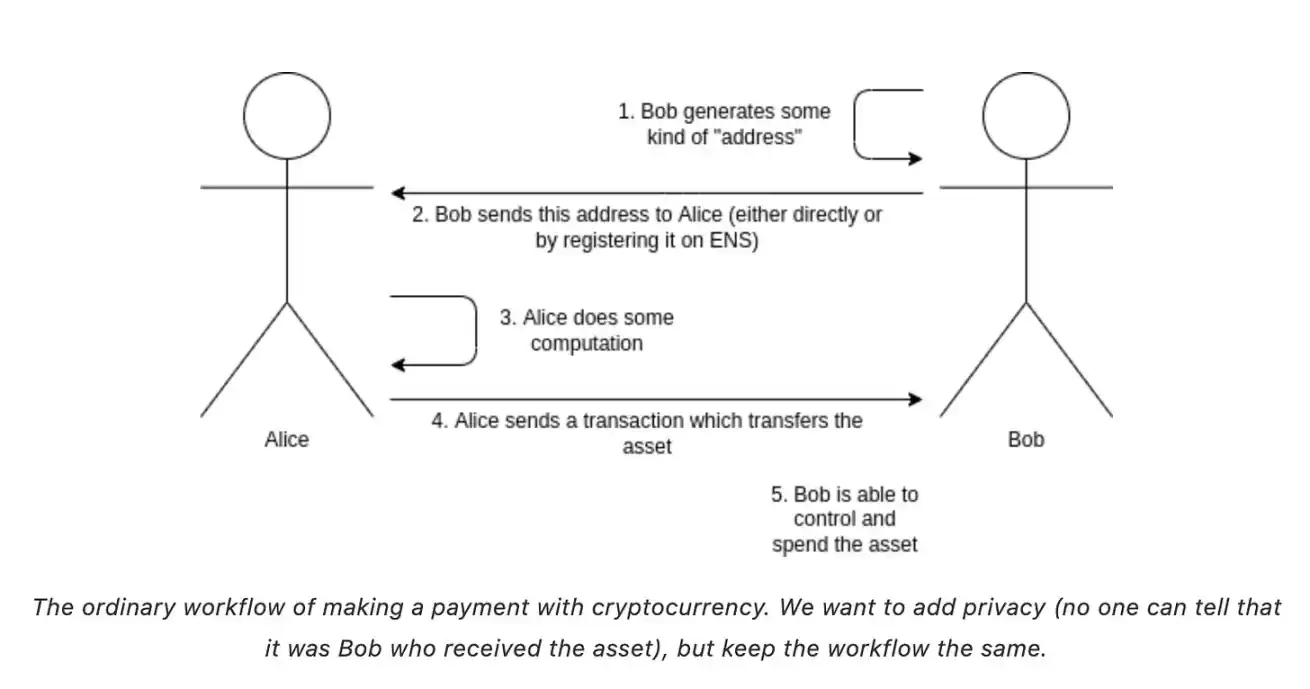
In other words, when the other party pays you, the money does not go to your publicly known main wallet but to a brand-new address generated only for that transaction. On-chain, it appears as if they sent it to a new account that has never been used before.
For the network, everything operates as usual. The difference is that each receipt is sent to a different address, not continuously recorded on a permanent account.
Does Ethereum really need it?
You can tell by looking at user behavior.
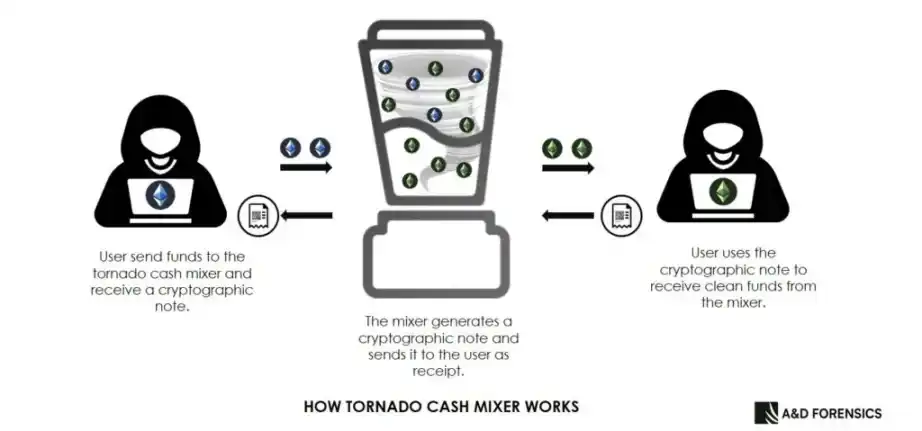
Take Tornado Cash, for example: a mixing protocol that allows users to deposit funds into a public pool, then withdraw to a new address, severing the link between sender and recipient. Despite facing sanctions and strict scrutiny, Tornado Cash processed over $25 billion in funds in 2025. This shows that users are willing to take on legal and reputational risks and separate their transactions from their main wallet.
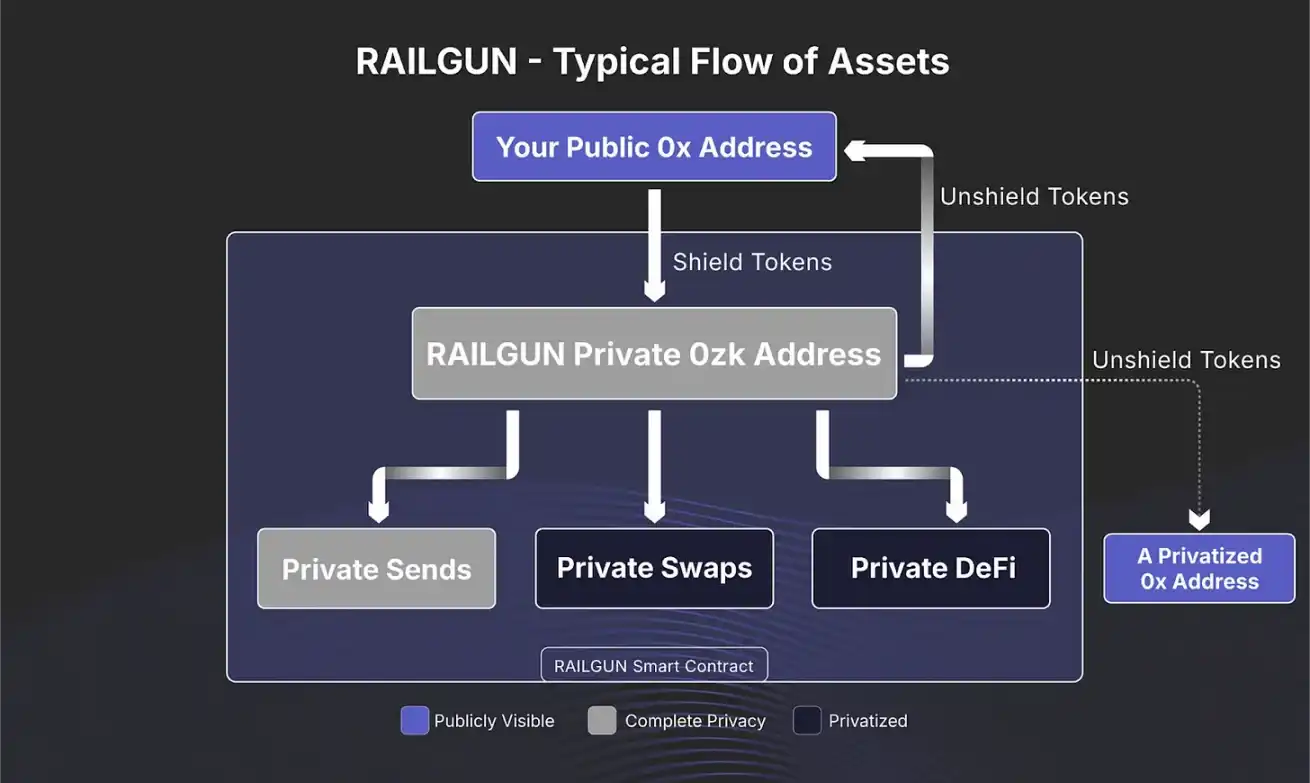
Let's look at Railgun: It achieves privacy transactions using zero-knowledge proofs, keeping the balance and transfer details private. By 2025, Railgun's locked value stabilized at $70 million, with a total transaction volume exceeding $2 billion.
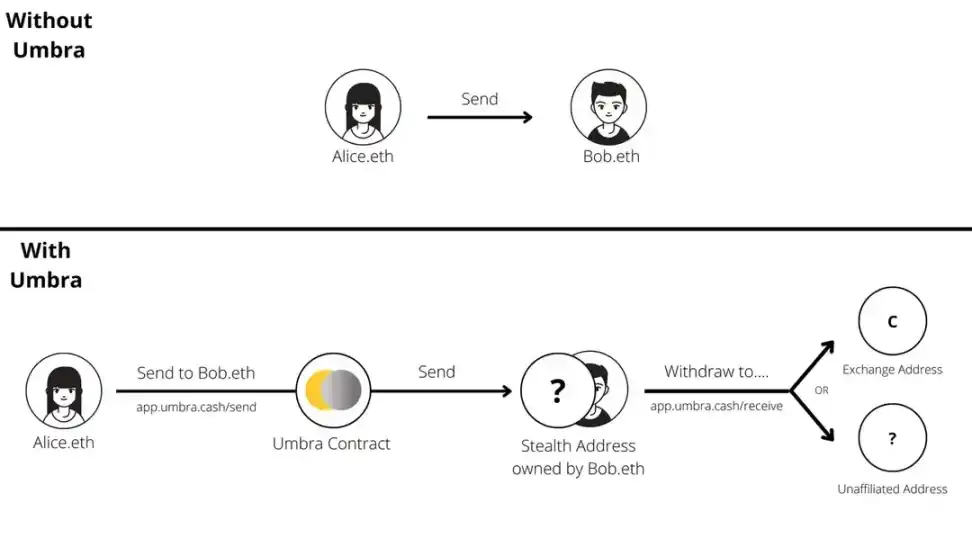
On the recipient privacy front, Umbra implemented application-layer stealth payments on Ethereum: users publish confidential information and receive funds using one-time addresses. As of 2026, Umbra has generated over 77,000 active stealth addresses.
These numbers may not be significant compared to the overall market, but they are enough to illustrate: Users strongly desire "privacy by default."
Meanwhile, these tools come with trade-offs:
· Coin mixing requires separate entry and exit contracts, adding friction, compromising composability, and residing in a regulatory gray area
· ZK privacy tools are still an additional layer that users must opt into
· Umbra has proven the usefulness of stealth receipts, but it is only a standalone application, not a wallet standard
On Ethereum, achieving privacy always requires an extra step.
ERC-5564 took a different approach: Instead of creating a new privacy protocol, it standardized stealth payments at the wallet layer.
Where Does Ethereum Stand on Privacy?
Privacy in the crypto world is not black and white but a spectrum of trade-offs.
At one end of the spectrum is protocols like Monero, which embed privacy directly into the base layer. Transaction amounts are concealed, and sender and receiver addresses are obfuscated. Privacy is not optional but rather mandatorily enforced through design. Users do not need to choose to enable privacy protection because confidentiality is the network's default state.
Then there's Zcash, which introduces shielded transactions using zero-knowledge proofs. Zcash allows users to choose between transparent and private transactions, but it operates in a separate shielded pool rather than across the entire system. This architecture supports confidentiality, but it remains a distinct mode rather than a fundamental network behavior.
Ethereum, on the other hand, is entirely different, prioritizing transparency and composability from day one.
It is this openness that has fueled the rapid rise of DeFi, NFTs, and DAOs. The trade-off is a structural link that confines the privacy ecosystem to exist outside the protocols.
ERC-5564 marks a shift in mindset: no longer tacking on a privacy layer externally but integrating privacy as a foundational component into Ethereum's existing design, especially at the transaction layer.
If Monero treats privacy as fundamental and Zcash treats privacy as an opt-in feature, then ERC-5564 turns privacy into an infrastructure piece of wallet standards, rather than relying on standalone chains or applications as add-ons.
The industry narrative is also evolving: the debate is no longer "should a public chain be entirely transparent or completely private," but rather: where should privacy reside, how much is needed, and how it can coexist with verifiability and composability.
What Can Privacy Truly Bring to Users and the Market?
Privacy is not just about concealing transactions; it fundamentally alters the incentives and power distribution within the financial system. In this sense, privacy unlocks three core elements, which we can explore one by one.
On a transparent blockchain, all operations are visible. This may seem insignificant, but it is far from it.
When all transaction data is public, the primary beneficiaries are not ordinary users but those with the most advanced data analysis tools, such as hedge funds, MEV bots, analytics firms, and AI models. Ordinary users' behaviors are exposed, while these sophisticated actors observe, model, and extract value from them.
This leads to structural asymmetry.
The issue is not transparency per se but how transparency turns each economic action into a public signal, leading to strategies developed around these signals and leveraging them for profit.
When transactions are not easily exploitable, competition among participants shifts from who has the most advanced monitoring tools to pricing and risk. This fosters healthier, more equitable market behavior. This is the first step of privacy: it restricts value extraction solely based on visible transaction activity.
The second unlocking mechanism is more profound. Privacy can foster capital formation, something a transparent system cannot achieve.
Retail users might tolerate full transparency, but institutional users never will.
If every position is under real-time surveillance, funds cannot deploy capital effectively into DeFi. If a fund holds a certain asset, the market might move against it; if a fund hedges, competitors can trace the hedge. Strategy protection becomes impossible. The same applies to enterprises. If supplier relationships are visible to competitors, a company cannot tokenize invoices on a public ledger; if salary structures are openly transparent, a company cannot distribute salaries on-chain. A transparent system favors experimentation but hinders autonomous decision-making.
This illustrates the saying “Token interoperability is easy, key interoperability is hard.”
On a public chain, since all information is public, transferring assets between different networks is very simple. However, in private systems, once outside the realm of privacy, historical transaction records are exposed, causing friction. Privacy-conscious users tend to stay in an environment where transaction records will not be leaked upon exit.
This situation gives rise to a new type of network effect.
The competition in traditional blockchains is evident in throughput, fees, and developer tools. Privacy introduces a competition in terms of information isolation. The larger the private anonymous set, the higher the value of staying in it. Liquidity also begins to concentrate in this area, as confidentiality strengthens with scale.
The third unlock is what we can call selective disclosure.
In today's systems, privacy choices are very binary: either all public or all hidden. However, cryptography introduces a third option: you can prove something without revealing the underlying data.
Protocols can prove their solvency without disclosing all positions they hold. Exchanges can prove their reserves without disclosing account balances. Users can prove compliance with certain rules without revealing their entire transaction history.
This reduces the occurrence of systemic data honeypots. It also reduces the trade-off between privacy and regulation, opening doors to a whole new field of financial applications.
For example, a private lending market can enforce collateral rules and liquidation logic while concealing the identity of individual borrowers; platforms like Aleo and Secret Network are experimenting in this area through confidential DeFi designs.
On-chain dark pools can match trades without revealing the order size or direction before execution, which is precisely what Renegade is building in its encrypted trading infrastructure aimed at preventing front-running based solely on visible intent.
Compliant stablecoins can provide regulators access through proper legal channels while preventing the public from understanding user behavior through transaction graphs. Private stablecoin projects like Paxos and Aleo, as well as Zcash's pioneered selective disclosure model through view keys, are exploring this concept.
Trade finance platforms can tokenize invoices and prove that invoices have not been double-financed without revealing supplier relationships. Enterprise networks like Canton Network are collaborating with large financial institutions to pilot such confidential infrastructure, enabling enterprises to share ledger efficiency without disclosing sensitive business data.
All of this will lead to long-term behavioral effects.
A transparent system permanently associates identity and financial behavior. Over time, this will decrease their willingness to try new things as behavior cannot be decoupled from long-term identity. Privacy, on the other hand, restores the separation between participation and permanent exposure. It allows users to act without having every decision recorded on an immutable public ledger.
Conclusion
The intention of transparency is verifiability. Native privacy cryptography, while preserving verifiability, supports institutional capital and selective disclosure. ERC-5564 is not about turning Ethereum into a privacy chain, but about giving Ethereum programmable, lightweight, native transaction privacy.
You may also like

Bloomberg: A Romanian Presidential Election Intervened by Crypto Traders

Founders Fund, Pantera, and Franklin Templeton join Sentient's "Arena" to stress test enterprise-level AI agents

Why Retail Is Shifting From Crypto to Equities: Will They Return?
Retail traders are exiting the crypto market and gravitating towards equities. Bitcoin saw a notable reduction in spot…

Canton Crypto Network vs. XRP: Understanding DTCC’s Strategic Approach to Infrastructure and Liquidity
Key Takeaways Canton Network and XRP serve distinct roles in blockchain technology: Canton for asset tokenization and atomic…

Jack Dorsey’s Block to Cut 4,000 Jobs in AI-Driven Restructuring
Key Takeaways Block’s significant job cuts aim to streamline operations for AI-driven growth. The company’s stock surged over…

Axiom Crypto Uncovered: ZachXBT Reveals $400k Insider Trading
Key Takeaways Allegations of insider trading at Axiom Crypto involve approximately $400,000 and a complex scheme where employees…

Ethereum 2029 Roadmap: ETH to Become the High-Speed Internet of Value
Key Takeaways Ethereum’s new roadmap, the “Strawmap,” aims for a settlement layer achieving 10,000 transactions per second (TPS)…
India Enhances Crypto KYC and AML Measures with Live ID and Location Checks
Key Takeaways: India classifies crypto exchanges as Virtual Digital Asset (VDA) service providers requiring enhanced Anti-Money Laundering (AML)…

Bitcoin Price Prediction: $500 Million in Short Positions Just Got Wiped Out — Is a Bull Market Beginning?
Key Takeaways: Bitcoin experienced a massive short squeeze, liquidating nearly $500 million in short positions and propelling its…

XRP Price Prediction: Ripple Invests Billions to Forge a Connection with Banks – Is $1,000 Possible?
Key Takeaways: Ripple has invested around $4 billion in establishing connections between traditional banks and crypto platforms, illustrating…

Crypto Price Prediction Today 26 February – XRP, Bitcoin, Ethereum
Key Takeaways Bitcoin has rebounded above $68,000, reigniting optimism within the crypto market and potentially signaling a shift…

Google’s Gemini AI Predicts the Price of XRP, Dogecoin, and Shiba Inu by the End of 2026
Key Takeaways Google’s Gemini AI forecasts significant price surges for XRP, Dogecoin, and Shiba Inu by the end…

Wall Street Frontrunning Retail? Institutions Flooded Ethereum Before 15% Price Rally
Key Takeaways Institutional Inflows Surge: A massive $157 million institutional inflow was recorded into Ethereum ETFs in a…

Animoca’s Yat Siu Says AI Agents Will Make 2026 the ‘Year of Utility’
Key Takeaways Animoca’s Yat Siu envisions a future where AI agents and blockchain seamlessly integrate, making 2026 a…
Chainlink Price Surges: What’s Behind Today’s LINK Rally?
Key Takeaways Chainlink’s price has experienced a notable surge, increasing over 14% to reach $9.35, its highest since…
Crypto Exchange Kraken Aims to Reignite Services in India
Key Takeaways Kraken is making strides to re-establish its footprint in the Indian cryptocurrency market. Vishesh Khurana has…

Crypto Rebound: Bitcoin Hits $68,000, Circle’s Revenue Climbs, and NEAR’s Confident Rise
Key Takeaways Bitcoin’s recent surge to $68,000 represents a strategic market rebound, driven by structural support and forced…

MetaMask Expands Mastercard Crypto Card Across the U.S.
Key Takeaways MetaMask has launched its self-custodial crypto card across all 50 U.S. states, broadening the accessibility of…
Bloomberg: A Romanian Presidential Election Intervened by Crypto Traders
Founders Fund, Pantera, and Franklin Templeton join Sentient's "Arena" to stress test enterprise-level AI agents
Why Retail Is Shifting From Crypto to Equities: Will They Return?
Retail traders are exiting the crypto market and gravitating towards equities. Bitcoin saw a notable reduction in spot…
Canton Crypto Network vs. XRP: Understanding DTCC’s Strategic Approach to Infrastructure and Liquidity
Key Takeaways Canton Network and XRP serve distinct roles in blockchain technology: Canton for asset tokenization and atomic…
Jack Dorsey’s Block to Cut 4,000 Jobs in AI-Driven Restructuring
Key Takeaways Block’s significant job cuts aim to streamline operations for AI-driven growth. The company’s stock surged over…
Axiom Crypto Uncovered: ZachXBT Reveals $400k Insider Trading
Key Takeaways Allegations of insider trading at Axiom Crypto involve approximately $400,000 and a complex scheme where employees…


 App
App