
- Buy Crypto
- Markets
 Futures
- Spot
- Copy Trade
- Earn
- More
Franklin Templeton Launches First Retail Tokenized Fund in Singapore
By: coin central|2025/05/16 00:45:05
0
Share
TLDRFranklin Templeton Launches $20 Blockchain Fund in SingaporeRetail Tokenized Finance Goes Live with Franklin TempletonFranklin Templeton Brings Blockchain Mutual Fund to the MassesSingapore OKs First Tokenized Retail Fund by Franklin TempletonTokenized Finance Gets Retail Boost via Franklin Templeton’s $20 Entry FundFranklin Templeton has secured approval from Singapore’s Monetary Authority to launch a retail-focused tokenized money market fund. This marks the first blockchain-based retail fund in Singapore, structured under the Franklin Templeton Investments Variable Capital Company. The move expands Franklin Templeton’s blockchain integration and reinforces its strategy to bridge traditional finance and retail investors.Franklin Templeton Targets Retail Investors With Tokenized FundFranklin Templeton introduced the fund using its blockchain-integrated platform to issue shares directly on-chain for retail participants. The fund, launched in Singapore, accepts a low entry threshold of just $20 per investor, broadening access significantly. This approach aims to bring professional money management to more retail users through digital asset innovation.Asset management giant Franklin Templeton has received approval from the Monetary Authority of Singapore to launch the Franklin On-Chain USD Short-Term Money Market Fund, becoming Singapore's first tokenized fund for retail investors with a minimum investment of only US$20....— Wu Blockchain (@WuBlockchain) May 15, 2025Besides improving transparency, the blockchain platform offers enhanced security and operational efficiency. Retail investors now gain access to a tokenized financial product with minimal barriers and greater convenience. Consequently, Franklin Templeton is positioning itself at the forefront of global tokenized asset adoption.Franklin Templeton’s launch follows Singapore’s regulatory advancements, including the Payment Services Act and recent consultations to enhance digital asset oversight. These measures have encouraged institutions like Franklin Templeton to introduce blockchain products under a clear, stable framework. Moreover, Singapore’s 11.05% crypto adoption rate reflects strong public engagement with regulated digital finance.Tokenization Trends Gain Momentum in Global FinanceFranklin Templeton is not alone in embracing tokenization, but it remains among the first to target retail markets. Tokenized assets are projected to rise from $0.6 trillion in 2025 to $18.9 trillion by 2033. As a result, the finance sector is undergoing major changes in how assets are issued, traded, and accessed.VanEck recently launched VBILL, a tokenized U.S. Treasury fund, catering exclusively to institutions with high entry requirements. While Franklin Templeton opens tokenized finance to retail, most peers still cater to accredited investors. The trend reflects a divide between institutional-grade and retail-accessible blockchain investment products.U.S. Treasuries are now among the largest asset classes on-chain, valued at $6.9 billion and growing fast. Franklin Templeton’s focus on retail users and real-time blockchain settlements could reshape how individuals interact with traditional assets. Hence, tokenization is shifting from niche experiments to mainstream finance tools.Franklin Templeton Pushes Retail Innovation Through BlockchainFranklin Templeton’s $20 minimum investment sets it apart from rivals requiring six-figure minimums. This strategy marks a shift toward democratized finance, aligning with global efforts to lower barriers for average investors. Hence, the firm is using its scale and infrastructure to broaden digital asset accessibility.Franklin Templeton manages over $1.4 trillion in assets across more than 30 countries. Its global presence enables it to support innovative retail offerings under strict compliance. This foundation makes the Singapore fund a model for future retail-focused tokenized investments worldwide.Franklin Templeton launched the world’s first U.S.-registered mutual fund on blockchain in 2021. The new fund in Singapore builds on that success, extending its strategy into Asia’s regulated digital asset markets. Therefore, Franklin Templeton consistently leads the charge in merging traditional finance with blockchain innovation.Franklin Templeton’s Singapore fund reflects growing confidence in blockchain-based investment products. The MAS approval and minimal investment barrier show a new model for financial inclusion. With future regulatory milestones like the upcoming SEC decision about its Spot XRP ETF on 17 June, Franklin Templeton continues to lead in digital finance innovation. The post Franklin Templeton Launches First Retail Tokenized Fund in Singapore appeared first on CoinCentral.
You may also like

The second half of stablecoins no longer belongs to the crypto circle
What Coinbase doesn't want, Mastercard is eager to buy.

Cursor "Shell" Kimi Controversy Reversed: From Copyright Infringement Allegations to Authorized Collaboration, China's Open Source Model Once Again Becomes a Global AI Foundation
Cursor was accused of being based on Kimi K2.5, which sparked controversy, and was later confirmed to be compliant through Fireworks AI due diligence.

The Real Reason Tokens Don't Sell: 90% of Crypto Projects Overlook Investor Relations
Provide an Investor Relations Best Practices Guide for Crypto Projects.

Is the income of pump.fun real, earning a million dollars a day despite the market downturn?
If it can really earn this much, what is the reason for the low price of $PUMP?

The real reason why tokens are not selling: 90% of crypto projects neglect investor relations
Investor Relations Practice Guide for Cryptocurrency Projects.

Who is the true winner of the "Tokenization" narrative?
Virtually everyone benefits, but the reason for the benefit, the timing, and the underlying logic are completely different.

Moss: The Era of AI-Traded by Anyone | Project Introduction
AI Trading Agent is rapidly growing its infrastructure.

Chip Smuggling Case Exposes Regulatory Loophole | Rewire News Evening Update
AI chips have become a strategic asset more sensitive than missiles

How a Structured AI Crypto Trading Bot Won at the WEEX Hackathon
Ritmex demonstrates how disciplined risk control and structured signals can make an AI crypto trading bot more stable and reliable on WEEX, highlighting the importance of combining execution discipline with scalable AI trading systems.

Old Indicator Fails, Three Major New Signals Emerge: BTC True Bottom May Still Be Below $60K
When the grocery shopping auntie on the subway, or Tony the hairdresser, start asking you about BTC, crypto, and cryptocurrency investments, selling immediately will be the only best option.

Meeting OpenClaw Founder at a Hackathon: What Else Can Lobsters Do?
Imperial College London MetaGame: AI Agent × Web3 Landing Three Major Directions.
Huang Renxun's Latest Podcast Transcript: NVIDIA's Future, Embodied Intelligence and Agent Development, Soaring Demand for Inferencing, and AI's PR Crisis
The future of competition is not only about whose model is bigger, whose computing power is stronger, but also about who understands the industry better, who can more deeply integrate AI into real processes, and who can organize these capabilities into a set of executable, scalable systems
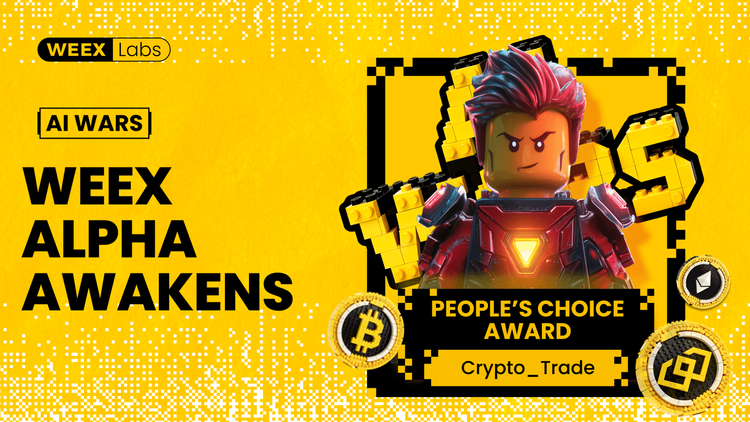
How a Structured AI Crypto Trading Bot Won at the WEEX Hackathon
Crypto_Trade shows how structured inputs and controlled adaptability can build a more stable and reliable AI crypto trading bot within the WEEX AI Trading Hackathon, highlighting a practical path toward scalable AI trading systems.

AI Starts to Devour the Manufacturing Industry | Rewire News Morning Edition
When Bezos starts using AI to buy factories instead of building data centers, it shows that he believes the next wave of AI's value is not inside the box.
When Scaling Meets Speed, Ethereum Foundation Introduces "Hardness" to Safeguard the Base Layer
Hardness is a protocol-level commitment to Ethereum core properties, including censorship resistance, privacy, security, and permissionlessness.
Google, Circle, Stripe Flock Together to Let AI Spend Money: Payment Giants' Joys and Worries in 2026 Q1
The real enemy is no longer each other, but zero cost itself

$100 Billion Factory Purchase: Bezos and Middle Eastern Capital Shift AI Money from Cloud to Shop Floor
Bezos doesn't invest in a new model; he invests in a supply chain.

Xiaomi and MiniMax both unleash their ultimate moves, signaling the start of the Agent Pricing War.
No brand, no marketing, let developers vote with their feet in 8 days
The second half of stablecoins no longer belongs to the crypto circle
What Coinbase doesn't want, Mastercard is eager to buy.
Cursor "Shell" Kimi Controversy Reversed: From Copyright Infringement Allegations to Authorized Collaboration, China's Open Source Model Once Again Becomes a Global AI Foundation
Cursor was accused of being based on Kimi K2.5, which sparked controversy, and was later confirmed to be compliant through Fireworks AI due diligence.
The Real Reason Tokens Don't Sell: 90% of Crypto Projects Overlook Investor Relations
Provide an Investor Relations Best Practices Guide for Crypto Projects.
Is the income of pump.fun real, earning a million dollars a day despite the market downturn?
If it can really earn this much, what is the reason for the low price of $PUMP?
The real reason why tokens are not selling: 90% of crypto projects neglect investor relations
Investor Relations Practice Guide for Cryptocurrency Projects.
Who is the true winner of the "Tokenization" narrative?
Virtually everyone benefits, but the reason for the benefit, the timing, and the underlying logic are completely different.


 App
App