
Mr. Beast is officially entering the world of finance, the Gen Z's new banker

Author | Kaori
Editor | Sleepy.txt
In February 2026, MrBeast officially acquired the teenage-focused digital bank unicorn Step. Through this transaction, he directly obtained a complete financial infrastructure including accounts, card issuance, and credit building.
In October of last year, MrBeast had just submitted a trademark application for "MrBeast Financial," with business covering areas such as decentralized exchange operation, cryptocurrency payment processing, and investment management. And just a month ago, BitMine, a financial company holding 4.3 million Ether and targeting 5% of Ethereum's total supply, invested $200 million in MrBeast's enterprise.
A 27-year-old internet celebrity who buried himself alive on YouTube, built a pyramid in the desert, took less than four months to receive a check from a top Wall Street strategist, obtain a banking license, and acquire 7 million teenage users.
Over the past few years, MrBeast sold chocolate, Mr. Beast Storm sold clothing, 李诞 sold snacks, and 李佳琦 sold lipstick. The business logic of these internet celebrities was still at the early stage of traffic monetization through selling products. Now, MrBeast has completed the transition from the consumer goods retail end to the financial infrastructure end.
By taking a consumer product, plugging in MrBeast's distribution engine, it can become the most profitable business line in the entire company. Feastables chocolate has already validated this model, and the acquisition of Step signifies his intention to apply the same playbook to financial services.
The difference is that the revenue ceiling per individual customer in financial services is 10 times higher than a chocolate bar.
The Collapse of a Unicorn
To understand the business logic behind this transaction, one must first see clearly the challenges Step has faced in recent years.
This company's core audience is teenagers aged 13 to 18, a group who cannot independently open credit card accounts legally, engage in high-risk investments, or even have formal job income. It's too difficult to make money from them; their income is mostly from allowance saved with minimal interest or occasional spending with some cashback.
Although Step accumulated 7 million users, it has always been a loss-making endeavor. Compliance, risk control, customer service, technical maintenance—all require ongoing investment, while the teenage user segment offers very little profit margin.
This high-growth, low-profitability model could still tell a compelling story during the 2021 capital frenzy, but by 2025, the market was no longer buying it. Venture capitalists began tightening their purse strings, and Step's funding became increasingly challenging.
The more crippling blow came from the regulatory side. Step's underlying partner bank, Evolve Bank & Trust, faced frequent cease-and-desist orders from the Federal Reserve in the latter half of 2024. This bank was mandated to rectify issues related to anti-money laundering, data security, among others, directly resulting in Step being unable to launch its planned profitable business lines such as teen credit products and investment management.
All compliance paths for expanding into new revenue streams were cut off. Step's management faced two choices: either significantly reduce staff, shrink operations, and wait for market recovery, or find a buyer and sell at a good price while still holding some bargaining chips. They chose the latter.
Mr. Beast's offer was not considered generous; industry insiders estimated it as a discounted acquisition. However, for Step's investors, this might have been the best exit opportunity available.
With the same 7 million users, the same banking license, and the same technological infrastructure, why is it that in Mr. Beast's hands, this asset can transform from a cash-burning burden into a high-profit money printer?
The answer is simple: customer acquisition cost.
The customer acquisition cost for traditional consumer banking apps typically ranges from $100 to $300 per user. Star companies like SoFi and Chime have to invest hundreds of millions of dollars annually in marketing just to sustain user growth.
How much does it cost for Mr. Beast to post a video? According to internal data from Beast Industries, the production cost of a YouTube video ranges from $500,000 to $2 million. But this video can garner 100 million to 300 million views. If 1% of the viewers register for Step, that's 1 million to 3 million new users. Spread across each user, the customer acquisition cost is less than $1.
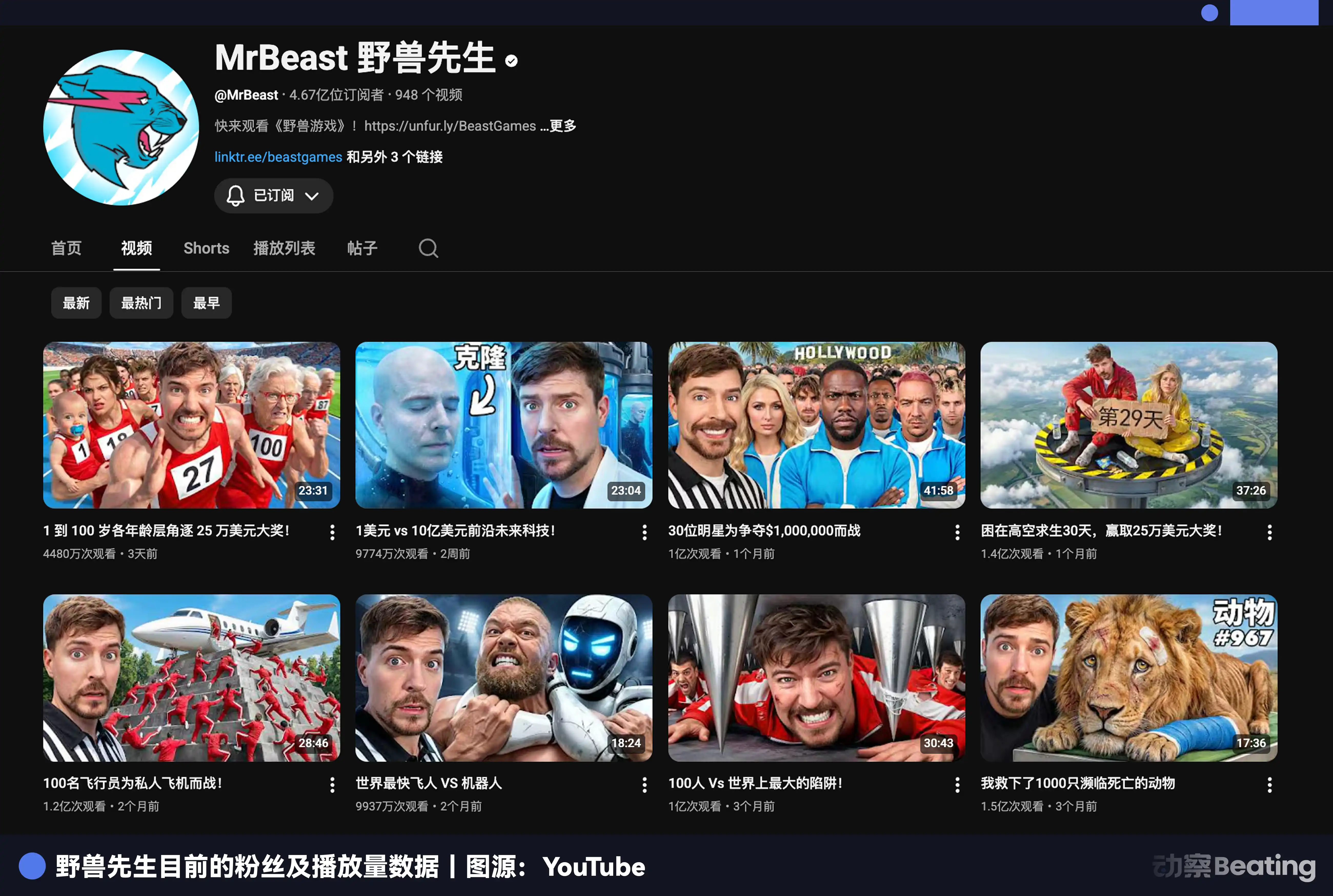
More importantly, this type of customer acquisition requires almost no additional marginal cost. Mr. Beast was already creating content and releasing videos. Promoting Step in the video was just a natural addition. When your marketing channels have a combined 600 million followers on platforms like YouTube, TikTok, Instagram, the customer acquisition cost can effectively approach zero.
This cost advantage is something that any traditional fintech company cannot replicate.
From Chocolate to Credit Card
Mr. Beast was not the first to attempt cross-over merchandise sales from content creation. These creators' business logic was quite similar, leveraging the power of celebrity to convert initial sales and turn fans into consumers.
However, this model had a fatal flaw; it relied on ongoing traffic dividends but lacked repeat purchase stickiness. A fan might buy your product once because they like you, but it's challenging to drive repeat purchases. The user's lifetime value is extremely short, capping the business model's potential.
Mr. Beast took a completely different path.
In 2022, he launched his own chocolate brand, Feastables, which completely disrupted the traditional logic of the food industry.
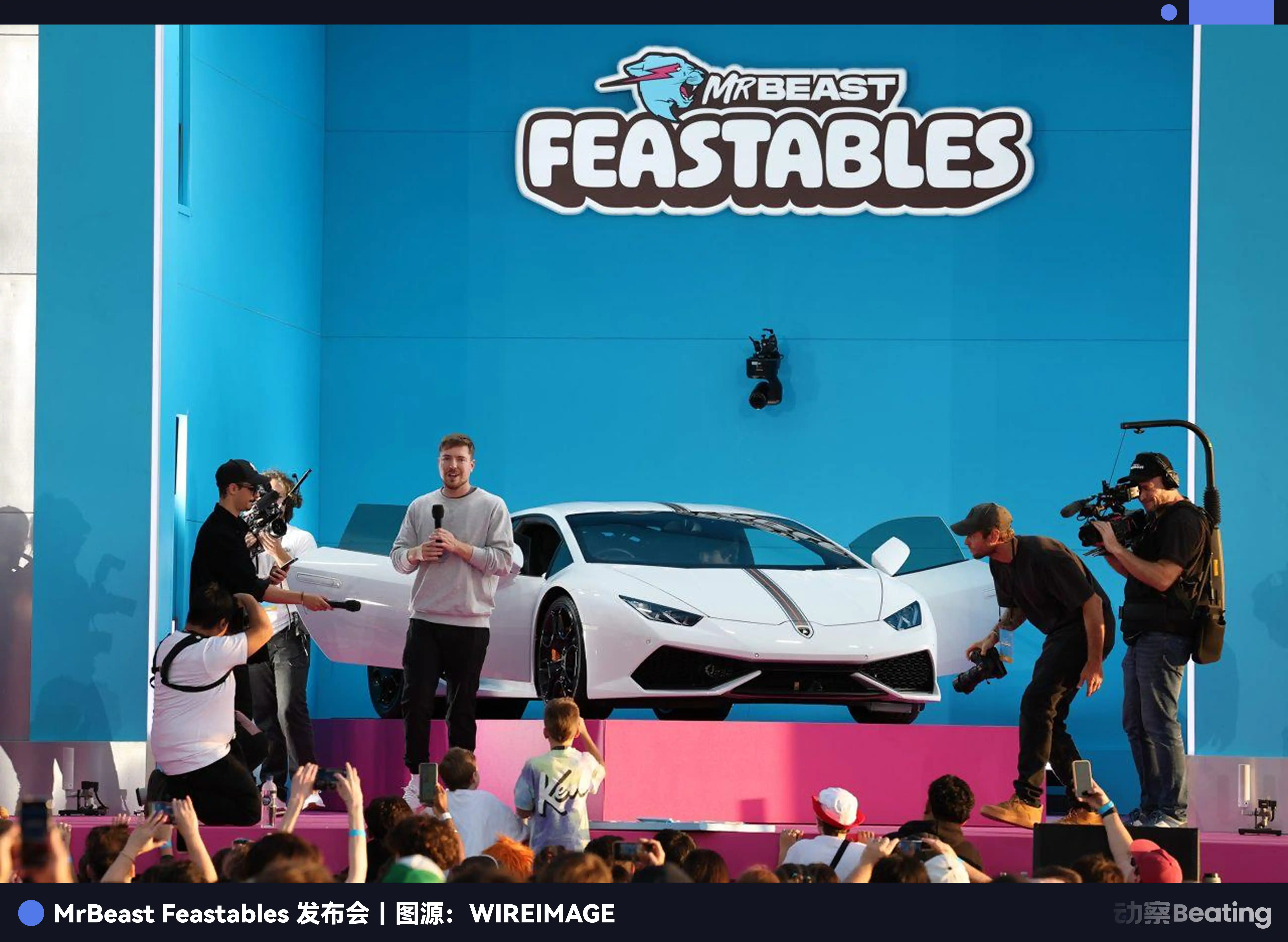
Mr. Beast didn't spend a penny on traditional advertising; all marketing was done through his content. He designed various challenges in his videos, integrating Feastables as a prize or prop. Fans were not just consumers but active participants in the content.
While Mr. Beast's annual content output generated over a billion dollars in media revenue, the high cost of content production led the media business to lose nearly $80 million in 2024, necessitating a high-margin product line for subsidy. In 2024, Feastables generated $250 million in revenue with over $20 million in profit, surpassing Mr. Beast's YouTube ad revenue share and Prime Video show for the first time in both revenue and profitability, becoming the most profitable business line of Beast Industries.
This proved one thing: when you have a strong enough distribution capability, you can plug any product into this engine and wait for it to take off.
Chocolate is like this, energy bars are like this, hamburgers are also like this. So, what about credit cards?
Acquiring Step essentially copied the script of Feastables to financial services. The difference is that this time, there was no need to build a supply chain, brand, or channels from scratch. With 7 million existing users, a full banking license, and a mature technical infrastructure, all foundational elements were already in place. All Mr. Beast had to do was connect his distribution engine.
Furthermore, the single customer value in financial services is more than 10 times higher than a chocolate bar. If a Step user remains active, they can deposit, spend, invest, and borrow on the platform. As they age, their financial needs will become more complex, contributing more revenue to the platform. This is a truly long-term valuable asset.
However, mere customer acquisition efficiency and distribution capability are not enough. The financial industry already has too many established players, such as SoFi, Chime, Cash App. These companies have full licenses, a full product line, and have accumulated tens of millions of users. Why should Mr. Beast be able to snatch the future from them?
Capture Them Before Student Loans
2025 is a turning point. The days of digital banking will be tough, customer acquisition will become harder, and growth will slow down.
As emerging fintech banks, SoFi's core barrier is student loan refinancing and one-stop financial services. Its typical user profile is 25 to 35 years old, young professionals who have just graduated or worked for a few years, burdened with student loans, and in need of refinancing solutions with lower interest rates. Around this core need, SoFi has built a full set of financial services including deposits, investments, insurance, and financial advisory.
This model has been very successful over the past decade, but it is actually still too late. When a young person enters college and starts to take on loans, their financial habits have already taken shape. They may already have their first bank card, be accustomed to a particular payment app, and have established trust in a certain brand.
On the other hand, 88% of Step's users have their first bank account in their life. Their ages are concentrated between 13 and 18 years old, without any established financial habits or brand loyalty. Whoever captures this blank period first will own the future.
This means that Mr. Beast completed credit lock-in 5 years ahead of SoFi's potential customers entering college. By the time these kids turn 18, they will be used to using Step for spending, saving, and checking bills. Their first paycheck will be deposited in Step, their first installment payment will be made on Step, and their first investment will also start from Step.
By then, the cost for SoFi to steal these users will be much higher than it is now.
More importantly, the value propositions offered by both are completely different. SoFi provides professional financial tools, certified financial planner consultations, systematic investment seminars, and optimized loan rates.
These are very attractive to mature financial consumers, but for a 15-year-old high school student, they are too dull.
Mr. Beast offers social currency. Step offers 10% cashback on spending, the only channel to participate in Mr. Beast's video challenges, and may even have the opportunity to meet Mr. Beast in person in the future. For Gen Z, this sense of engagement and belonging far outweighs a mere 0.5% deposit interest rate.
So here, the user acquisition is not about snatching existing users from SoFi, but at the moment when SoFi needs to pay for user outreach, Mr. Beast has already locked in the incremental user base through free outreach.
Moreover, the rules of the game themselves are changing.
When the Nation Starts to Focus on Teenage Accounts
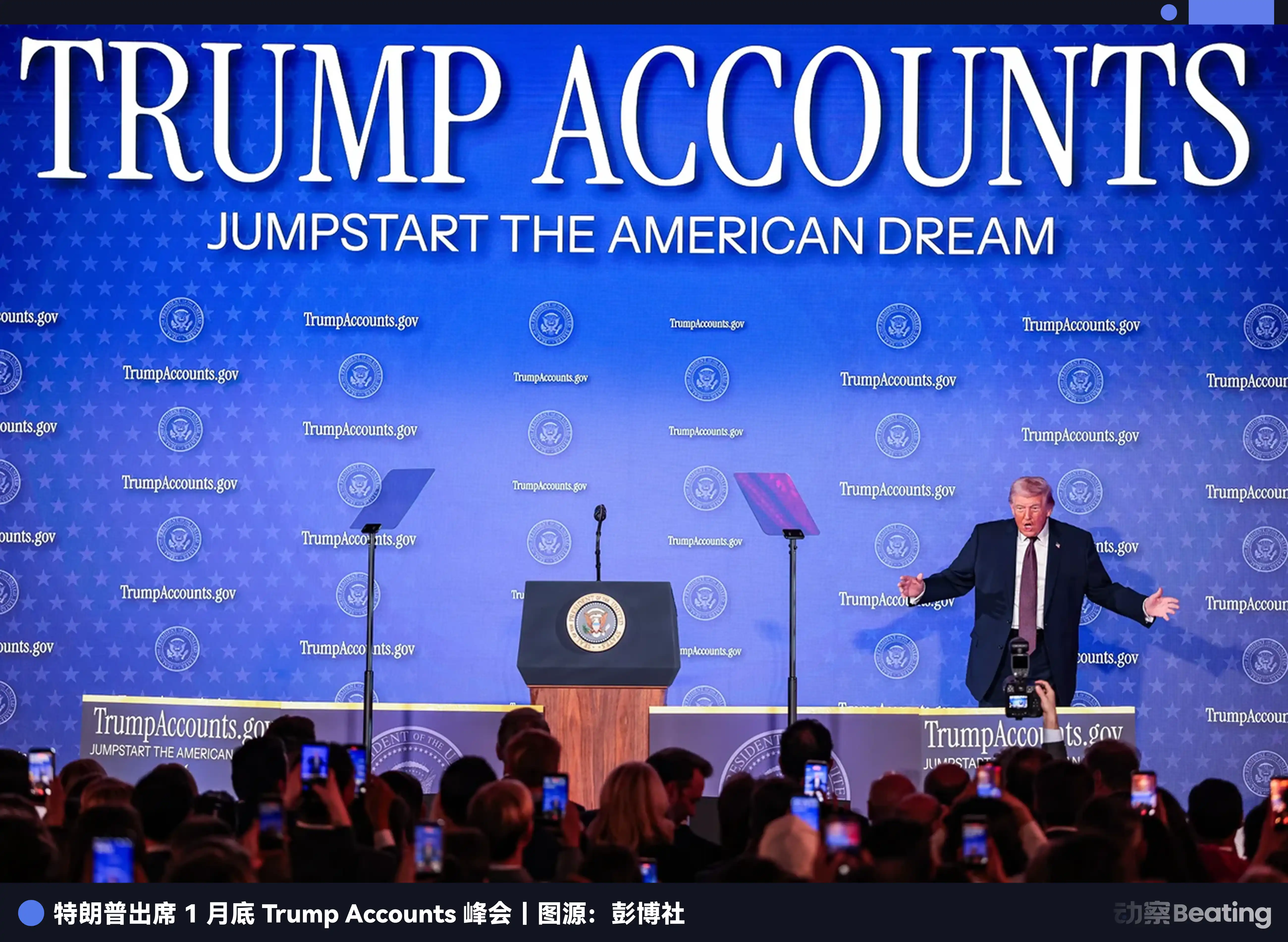
On January 20, 2026, the U.S. Department of the Treasury issued a policy framework called Trump Accounts. This document proposed to automatically open a government-supported investment account for every child born in the U.S., with an initial deposit of a certain amount, encouraging families to save continuously, allowing this money to become their first pot of gold when the child reaches adulthood.
The symbolic significance of this policy is greater than its practical operational significance. Its real impact is that it has turned each child's first investment and first account into a national narrative and institutional design.
Wall Street immediately sensed the shift in direction. J.P. Morgan explicitly stated at its January 2026 strategic meeting that it would increase investment in teenage financial services. Bank of America announced the nationwide expansion of a teenage savings plan. Even the usually conservative Vanguard Bank started exploring collaborations with schools to introduce financial education courses.
This will inversely raise the strategic importance of teenage accounts for the entire industry. Previously, banks thought kids had no money and were not worth the effort; now everyone realizes that this is about competing for future market share.
For Step and Mr. Beast, this is a huge boon. The 7 million teenage users they have accumulated over the past few years have transformed from a potentially valuable asset in the future to a scarce resource of strategic value today.
Mr. Beast's timing in aligning with the national narrative reassessment of teenage accounts by banks, and fintech, sometimes proves more critical than effort itself.
But this is only the beginning of the story. When Mr. Beast has tapped into the underlying traffic, successfully intercepting future customers of traditional financial institutions, will he be satisfied with just being a transporter in the fiat world?
ETH's Strongest Bull's Sun Tzu Strategy
Following the announcement of Mr. Beast receiving a $200 million investment from BitMine, the cryptocurrency community was somewhat stunned.
This was no ordinary venture capital firm; BitMine is a leading global Ethereum financial company, holding over 4.3 million ETH, valued at over $10 billion at the time. Their goal was very clear: to control 5% of the total Ethereum supply and become the most influential player in this ecosystem.
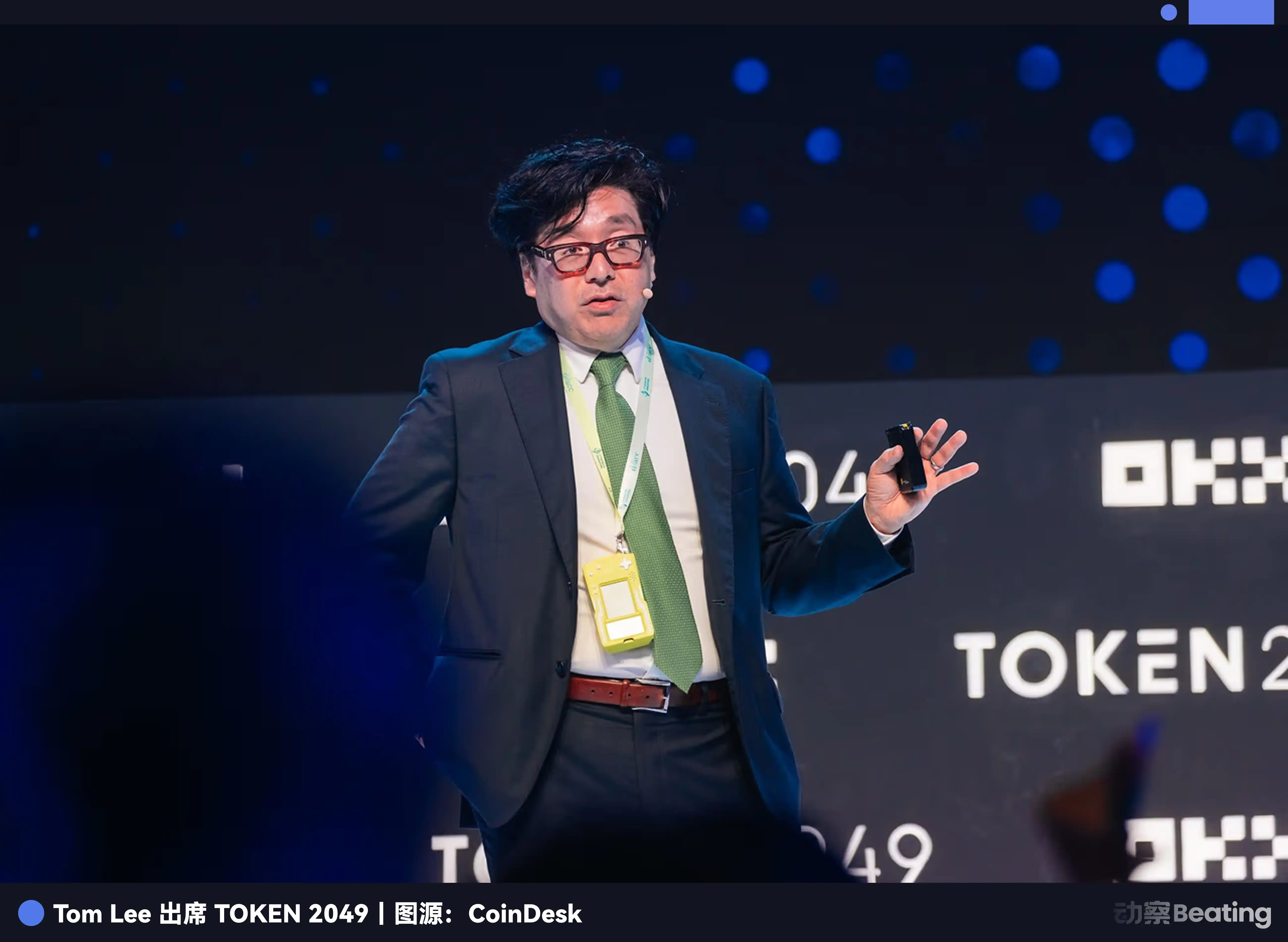
Tom Lee himself is one of Wall Street's most well-known Ethereum bulls. He has stated on multiple public occasions that Ethereum will become the foundational protocol of the future financial infrastructure, much like TCP/IP in the era of the internet. However, he is also aware that while Wall Street understands the technology and the potential of smart contracts, it does not understand how to reach young people and the next generation's digital way of life.
The Beast was created to be a bridge between these two worlds.
In BitMine's investment thesis, Step's 7 million teenage users are a perfect testing ground. These kids do not carry the baggage of the old financial world and are open to new things. Planting the seed of decentralized finance in them now, and in a decade or so, when they have become a significant part of society, considering digital assets as standard will be a natural progression.
Back in October 2025, Beast Industries quietly filed for the trademark "MrBeast Financial," explicitly mentioning cryptocurrency payments, exchanges, and investment management.
MrBeast is not content to run a retail banking business with fiat currency; he aims to turn Step into a gateway that connects traditional finance with crypto finance.
In an interview regarding that investment, Beast Industries CEO Jeff Housenbold expressed, "We look forward to further exploring collaboration with BitMine and introducing DeFi in the upcoming financial services platform."
Of course, navigating regulation is no easy task. The SEC has always kept a close eye on cryptocurrency, especially when it involves minors, which is a red line among red lines. However, MrBeast's team seems well prepared, having hired a former SEC official as an advisor, maintaining communication with regulatory bodies, and proceeding cautiously.
Coupled with the relatively crypto-friendly stance of the Trump administration, although the "Trump Accounts" policy does not explicitly support digital assets, it has not shut the door either. Some believe that introducing young people to cryptocurrency earlier, teaching them about risk management, might actually be a good thing.
Epilogue
Wall Street understands candlestick charts, valuation, and asset portfolios, but they do not understand today's children.
They do not comprehend why a 13-year-old would open an account to participate in a video challenge; why a child would trust a YouTube influencer more than a century-old bank.
But Mr. Beast understands. He knows that what Gen Z wants is not a cold, boring account; they want something fun, something cool, something to brag to their friends about.
This is the power of generational shift, where the game rules are being rewritten, and the old guard is often caught off guard, already obsolete by the new world order.
In February 2026, Mr. Beast acquired Step, perhaps just the beginning of this financial revolution. Looking back in ten years, we may realize that this was the true turning point.
You may also like

Morning Report | BitMine increased its holdings by 126,971 ETH last week; trader Eugene announced his exit from the crypto market

Wang Chuan: How can one not feel anxious after the neighbor Old Wang made thirty times profit by investing in storage stocks? (Seven) - A quarter-century cycle

Cryptocurrency CEXs are flocking to sell US stocks, and traditional brokerages are facing an "uninvited guest."

$75 billion in foreign capital has fled, and South Korean retail investors have absorbed it all using leverage

Japan’s Three Megabanks Plan Joint Stablecoin Issuance in Fiscal 2026
MUFG, SMBC, and Mizuho reportedly plan to jointly issue fiat-pegged stablecoins in fiscal 2026, signaling Japan’s growing push into bank-led digital payment infrastructure.

Humanity Discloses H Token Dual-Chain Attack Details, With Losses on Ethereum and BSC Exceeding $36 Million
Humanity said the H token attack across Ethereum and BSC caused more than $36 million in losses after leaked ProxyAdmin keys enabled malicious contract upgrades and token minting.
White House Discusses CLARITY Act With Law Enforcement Ahead of Senate Vote
The White House discussed the CLARITY Act with law enforcement ahead of a Senate vote, focusing on illicit finance risks and developer protections.

Bitcoin Trading Guide 2026: Strategies for Experienced Traders

What Is XAUT and PAXG? Why Tokenized Gold Is Booming in 2026

Will the SpaceX IPO Hurt Bitcoin? Here's What Traders Are Watching

Foreign selling in the South Korean stock market accelerates, with cumulative net sales reportedly reaching $75 billion this year
On June 9, The Kobeissi Letter, citing Goldman Sachs data, reported that global investors are selling South Korean stocks at an unusually rapid pace. In the latest trading session, foreign investors sold about $801 million worth of Kospi constituent stocks again; total foreign outflows last week reached about $10 billion, and the market has been in net foreign selling on nearly every trading day over the past month. According to the data cited in the report, foreign investors have sold about $75 billion worth of South Korean stocks so far this year. Meanwhile, South Korean retail and institutional investors together recorded roughly $69 billion in net buying over the same period, suggesting that the market’s main buying support has come from domestic capital rather than returning overseas funds. The information currently disclosed still mainly comes from The Kobeissi Letter’s retelling and Goldman Sachs data summaries, while public details on the statistical period and the specific definition of “selling” remain relatively limited.

Fortune Warns of Strategy’s Financing Structure Risks as Bitcoin Premium Narrows
Fortune warned that Strategy’s Bitcoin treasury model faces growing financing risks as MSTR’s net asset premium narrows and preferred stock dividend pressure increases.

Ferrari Challenge Le Mans: Carl Moon to Dominate in WEEX Livery

Sahara AI Responds to SAHARA’s Sharp Drop: No Contract or Product Security Issues Found, Internal Investigation Underway
Sahara AI responded to SAHARA’s 60% price drop, saying no token contract or product security issues have been found and an internal investigation is underway.

WEEX Deposit/Withdrawal Dynamic Island: Your Asset Status, Always in Sight
Scaling Crypto Derivatives: The Digital Asset Infrastructure Behind High-Volume Trading
In the fast-moving digital asset ecosystem, derivatives platforms face an extreme architectural test. High-leverage futures markets demand more than just standard security—they require absolute operational precision, zero-latency matching engines, and ironclad structural scalability, all while navigating intense market volatility.
As global platforms scale to meet these demands, the industry is shifting away from rigid, monolithic setups toward a more agile, "decoupled" infrastructure philosophy.
The Blueprint for High-Volume Copy TradingFor elite global exchanges like WEEX (founded in 2018), this architectural choice becomes critical when scaling high-volume retail features like social copy trading. When thousands of users automatically mirror the real-time strategies of elite traders simultaneously, it triggers sudden, monumental spikes in concurrent transactional volume.
To prevent execution latency or settlement bottlenecks during these peak volatility events, a platform's primary engine must remain entirely dedicated to risk management, copy-trade synchronization, and order matching.
The Architectural Rule: New-generation platforms must separate front-end user execution engines from heavy backend infrastructural overhead to eliminate operational friction.
By separating these layers, platforms can maintain complete sovereignty over their trading environments and user experiences while strategically aligning with institutional-grade infrastructure ecosystems. This strategic framework allows modern exchanges to leverage advanced Digital Asset Custody infrastructure such as Cobo’s behind the scenes, ensuring that backend wallet management scales elastically alongside trading spikes.
Capitalizing on Market Momentum and 400× LeverageIn a derivatives arena where platforms offer up to 400× leverage on perpetual contracts, capital efficiency and market agility are core business metrics. To capture market momentum, an exchange needs the ability to rapidly expand its asset offerings, supporting everything from legacy crypto assets to sudden, trending altcoins across a massive library of trading pairs.
Adopting a flexible, scalable Wallet-as-a-Service (WaaS) solution such as Cobo’s could completely rewrite the development timeline for high-growth exchanges. Instead of spending months of engineering capital building out custom backend wallet architectures for every new blockchain network, platforms can deploy localized infrastructure in days.
This agility allows platforms to instantly scale their listings to over a thousand trading pairs without compromising security or delaying time-to-market. It mirrors the exact operational advantages seen during high-velocity market events, similar to how advanced wallet infrastructure empowers platforms during sudden asset surges; allowing exchanges to pass that speed and liquidity directly to their global user base.
A Mature Foundation for GrowthThe synergy between trusted infrastructure ecosystems and global trading platforms represents the natural evolution of a maturing crypto market. As WEEX continues to scale its global spot and derivatives offerings for over 6 million users, adopting robust backend paradigms proves that platforms no longer have to compromise between cutting-edge trading velocity and uncompromised structural security.

Get Paid to Onboard? Try WEEX’s New Homepage with Rewards for Registration, Deposit & Trade
WEEX Custom Layout: Build Your Perfect Trading Workspace in Seconds
Morning Report | BitMine increased its holdings by 126,971 ETH last week; trader Eugene announced his exit from the crypto market
Wang Chuan: How can one not feel anxious after the neighbor Old Wang made thirty times profit by investing in storage stocks? (Seven) - A quarter-century cycle
Cryptocurrency CEXs are flocking to sell US stocks, and traditional brokerages are facing an "uninvited guest."
$75 billion in foreign capital has fled, and South Korean retail investors have absorbed it all using leverage
Japan’s Three Megabanks Plan Joint Stablecoin Issuance in Fiscal 2026
MUFG, SMBC, and Mizuho reportedly plan to jointly issue fiat-pegged stablecoins in fiscal 2026, signaling Japan’s growing push into bank-led digital payment infrastructure.
Humanity Discloses H Token Dual-Chain Attack Details, With Losses on Ethereum and BSC Exceeding $36 Million
Humanity said the H token attack across Ethereum and BSC caused more than $36 million in losses after leaked ProxyAdmin keys enabled malicious contract upgrades and token minting.


