How to protect your cryptocurrencies from DeFi hacks

Knowing how to protect your cryptocurrencies from DeFi hacks has become a real necessity in 2026. A single attack on the Kelp DAO bridge drained approximately R$ 1.5 billion in digital assets in hours, exposing a vulnerability that affects any investor in decentralized protocols.
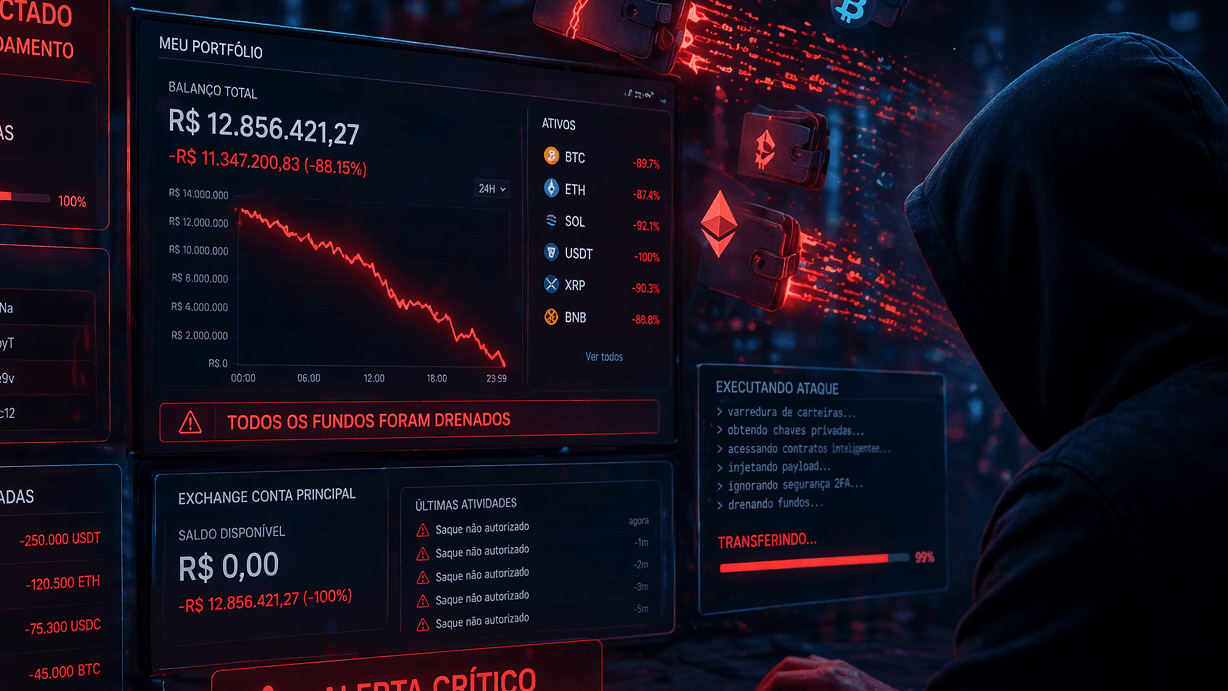
The presence of groups like the Lazarus Group at the center of investigations shows that the DeFi environment requires preparation against certain risks. Therefore, in this guide, we will provide some explanations on how these risks work and what to do to protect yourself.
What is DeFi and why are hacks so frequent?
DeFi (Decentralized Finance) is the set of financial protocols that operate on blockchain without banks or exchanges. Smart contracts automatically execute loans, swaps, and yield generation, moving more than $90 billion globally, and therefore, where there is a concentration of value, there is an incentive for attack.
In April 2026 alone, the sector lost more than $605 million in less than twenty days: the Drift hack drained $285 million, and the Kelp DAO attack extracted $292 million via a flaw in LayerZero.
The cause is structural, as cross-chain bridges concentrate huge reserves and rely on verification systems that are difficult to audit; consequently, understanding this scenario is a basic condition for operating safely, and the first step begins with choosing the right platform.
How to protect your cryptocurrencies from DeFi attacks
The first step to protecting yourself in DeFi is to understand that security begins before connecting your wallet to any protocol. The biggest incidents of 2026 were not caused by flaws in smart contracts, but by operational leaks, that is, compromised private keys, exposed credentials, and social engineering. A large portion of the losses could have been avoided with basic digital care practices.
In practice, a DeFi investor should follow three principles: never concentrate all assets in a single protocol, verify that the project has undergone an independent audit before depositing, and use hardware wallets to keep the majority of assets out of reach of online applications.
Keeping assets on regulated exchanges eliminates the risk of bridge and smart contract failures. At WEEX, your assets are under professional custody, with layers of security that the individual investor can hardly replicate alone.
Asteroid Shiba: the speculative risk of memecoins in 2026
Asteroid Shiba was inspired by a toy created by Liv Perrotto, a 15-year-old girl who passed away after battling cancer. The toy flew aboard a space mission as a zero-gravity indicator, and before she died, Liv asked Elon Musk to make the Asteroid an official SpaceX mascot. Musk responded with two words, and the market did the rest.
The brief interaction triggered one of the biggest rallies of memecoins in 2026, with the ASTEROID token rising hundreds of thousands of percent in seven days. Those who entered at the peak faced a drop of more than 40% in 24 hours, without warning, without technical foundation, and without a product behind the token.
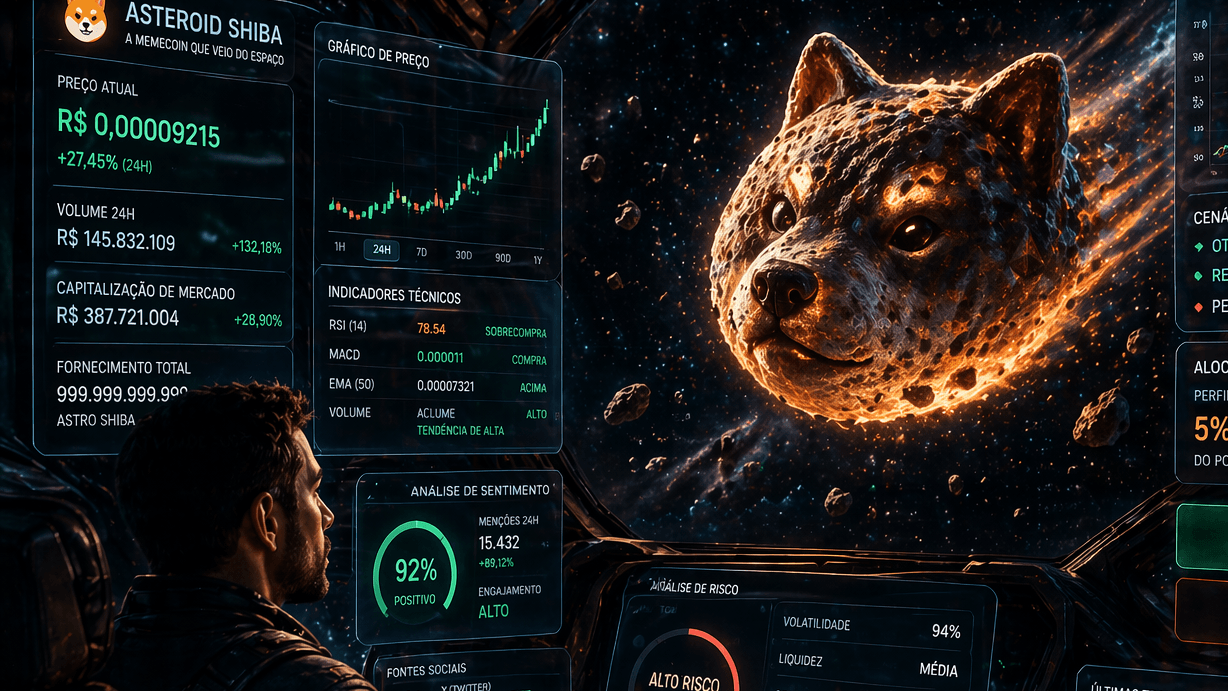
The investor who enters memecoins needs to be clear: the value does not come from technology or adoption, but from narrative and momentum. When the narrative runs out, the price plummets at the same speed. At WEEX, the investor finds assets with real liquidity and verifiable fundamentals, a much more solid base than any social media hype.
Where to store your cryptocurrencies more securely
The choice of where to store cryptocurrencies is one of the most important decisions, and also one of the most ignored. There are two main options: self-custody, via hardware or software wallets, and custody on regulated exchanges. Each model has distinct advantages and risks, and the decision depends on the profile and the volume invested.
Hardware wallets are physical devices that keep private keys offline, offering the highest degree of control. The problem is that this control comes with total responsibility: anyone who loses the device or the recovery phrase loses the assets permanently. The biggest incidents of 2026 involved precisely the compromise of private keys, showing that self-custody without rigorous discipline can be as vulnerable as any DeFi protocol.
For most Brazilian investors, keeping assets on a regulated exchange is the safest choice. At WEEX, custody is professional, with separation between client funds and operational capital and two-factor authentication.
What changes with crypto regulation in Brazil in 2026?
Crypto regulation in Brazil changed structurally in 2026. BCB Resolutions No. 519, 520, and 521, in effect since February, created the licensing regime for virtual asset services and equated stablecoin transactions to foreign exchange operations. The Central Bank began treating the crypto market as part of the financial system, with all the obligations that this implies.
The most relevant change is mandatory asset segregation, where investor resources are kept separate from the exchange's capital, reducing the risk of loss due to insolvency. Operating on a platform already aligned with this framework, such as WEEX, is an additional layer of protection for those who invest in crypto in Brazil.
Conclusion
The crypto market of 2026 offers real opportunities, but also risks that require preparation. DeFi hacks, speculative memecoins, and unregulated exchanges are concrete threats to the Brazilian investor. Most of these risks can be reduced with simple choices: understanding where you are investing, diversifying exposure, and operating on platforms with professional custody.
The investor who has made it this far has already taken the first step: understanding that security in crypto is a continuous habit, not a one-time task.
Register at WEEX and find a regulated environment with liquidity and secure custody, the ideal place to invest with more awareness and less unnecessary risk.
Frequently Asked Questions
What is DeFi and why is it risky?
DeFi is the set of financial protocols on blockchain without intermediaries. The risk comes from flaws in smart contracts and bridges between blockchains, as occurred with Kelp DAO and Drift Protocol in April 2026, which together totaled more than $577 million in losses.
What is Asteroid Shiba and why did the coin soar?
A memecoin inspired by a toy of Liv Perrotto, a young girl who battled cancer and asked Elon Musk to make it the SpaceX mascot. Musk's public response generated an explosive rally in days, followed by a drop of more than 40% in 24 hours, illustrating the extreme risk of memecoins.
How does Central Bank regulation protect the investor?
BCB Resolutions 519, 520, and 521 require authorized exchanges to keep client resources separate from their own capital, follow governance standards equivalent to those of financial institutions, and report operations to the Central Bank.
Disclaimer
WEEX and its affiliates provide digital asset exchange services, including derivatives and margin trading, only where legal and to qualified users. All content is general information and not financial advice - seek independent advice before trading. Cryptocurrency trading is high-risk and can result in total loss. By using WEEX services, you accept all related risks and terms. Never invest more than you can afford to lose. Consult our Terms of Use and Risk Disclosure for details.