What is Canton Network: Pioneering Institutional Crypto with Canton Coin (CC) and Privacy-Preserving Blockchain Innovation

By: WEEX|2025-11-10 15:15:00
0
Share
copy

Picture a world where the ironclad vaults of traditional finance open to blockchain’s relentless 24/7 pulse—without the usual chaos of exposed data or regulatory nightmares. That’s the reality Canton Network is building. Launched in May 2023 by a powerhouse consortium including Goldman Sachs, Microsoft, and Deutsche Bank, this public-yet-permissioned Layer 1 isn’t another speculative side project. It’s the settlement layer where real-world assets (RWAs) and stablecoins finally live and breathe on-chain. As of late 2025, with Canton Coin (CC) trading near $0.13 and daily transactions topping 600,000, Canton Network is quietly closing the gap between Wall Street caution and crypto speed.

What Makes Canton Network the Institutional Crypto Standard?

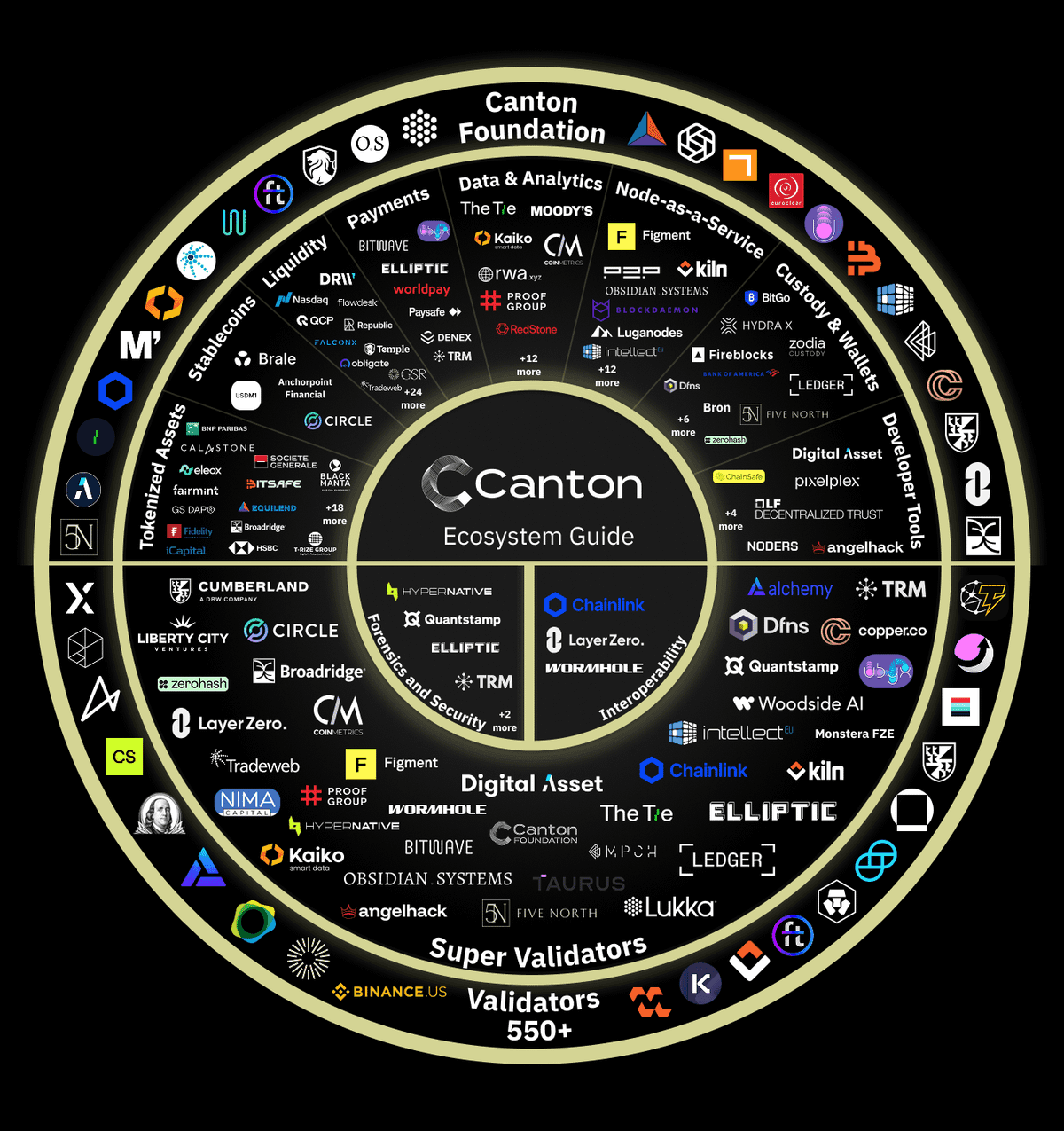
Canton Network runs on a “network of networks” architecture: each institution keeps its own private sub-ledger, syncing seamlessly via a shared global synchronizer. Unlike typical public chains that broadcast every transaction to every node—inviting compliance disasters—data here flows encrypted and only to parties specified in the smart contract. Sensitive operations, like the $280 billion daily U.S. Treasury repo market, remain confidential yet fully auditable.
What is Canton Network: Pioneering Institutional Crypto with Canton Coin (CC) and Privacy-Preserving Blockchain Innovation

Think of it as a secure diplomatic summit: participants share only what’s required for the deal, but the entire agreement locks in atomically across borders. Governed by the independent Global Synchronizer Foundation under the Linux Foundation, the network now boasts over 600 validators and 31 super validators. Monthly transaction volume exceeds 15 million, with more than $6 trillion in assets tokenized. Major U.S. exchanges—Binance U.S., Crypto.com, Gemini, and Kraken—are fully integrated, turning institutional adoption into an unstoppable trend.

The Privacy Advantage: Why Canton Network Crypto Stands Apart

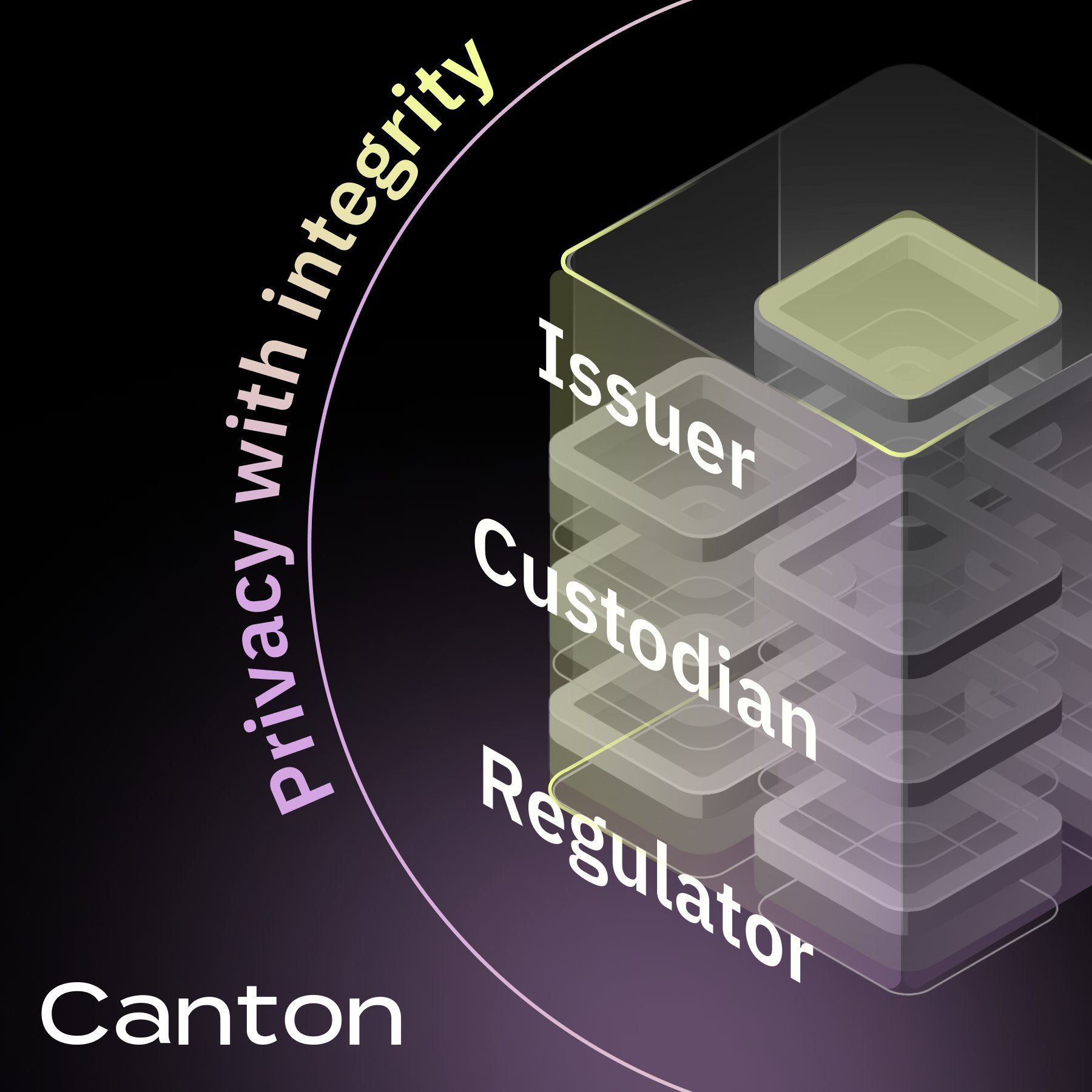
While most blockchains scream transparency, Canton whispers. Its synchronizers distribute encrypted messages only to relevant parties, enabling real-time settlement across bonds, treasuries, and even tokenized real estate—without the silos that trap capital in legacy systems. Just this week, Franklin Templeton’s Benji Token went live on the network, proving how Canton unlocks collateral mobility while staying MiCA-compliant.
The Privacy Advantage- Why Canton Network Crypto Stands Apart.jpeg

This rare balance of decentralization and control makes Canton Network coin the backbone of RWAs. Assets aren’t just “on-chain”—they’re programmable, reusable, and regulator-friendly, delivering a capital efficiency revolution already powering institutional DeFi pilots.

Inside Canton Coin: The CC Token Powering a Fair, Utility-First Economy

Canton Coin (CC) isn’t built for hype—it’s engineered for real work. Outlined in the Canton Network whitepaper, CC is the native payment and incentive layer that rewards actual network contribution, not speculation. No pre-sales. No team allocations. No VC lockups. Tokens are minted only through verifiable utility: running validators, deploying applications, or driving traffic.

Every 10 minutes, in structured mining rounds, stakeholders earn redeemable coupons based on liveness, validation, and app activity. Pay gas in CC? It’s automatically burned. The more the network is used, the tighter supply becomes—creating a self-regulating deflationary loop tied directly to real economic activity. With 22 billion CC in circulation and a 100 billion cap over the first decade (followed by 2.5 billion annually), this model echoes Zcash’s privacy legacy but supercharges it with institutional-grade infrastructure.

-- Price

--

CC Coin Tokenomics Breakdown: Minting, Burning, and Long-Term Alignment

The minting curve is deliberately bootstrapped: early years favor super validators to fund backbone infrastructure, but by year five, regular validators dominate rewards. The split starts 50/50 between infrastructure and applications, then shifts to 75% for app providers—ensuring builders, not just operators, thrive. External parties can delegate minting via AmuletRules_Transfer, but unredeemed rewards expire, keeping the system merit-driven and lean.
CC Coin Tokenomics Breakdown- Minting, Burning, and Long-Term Alignment.jpeg

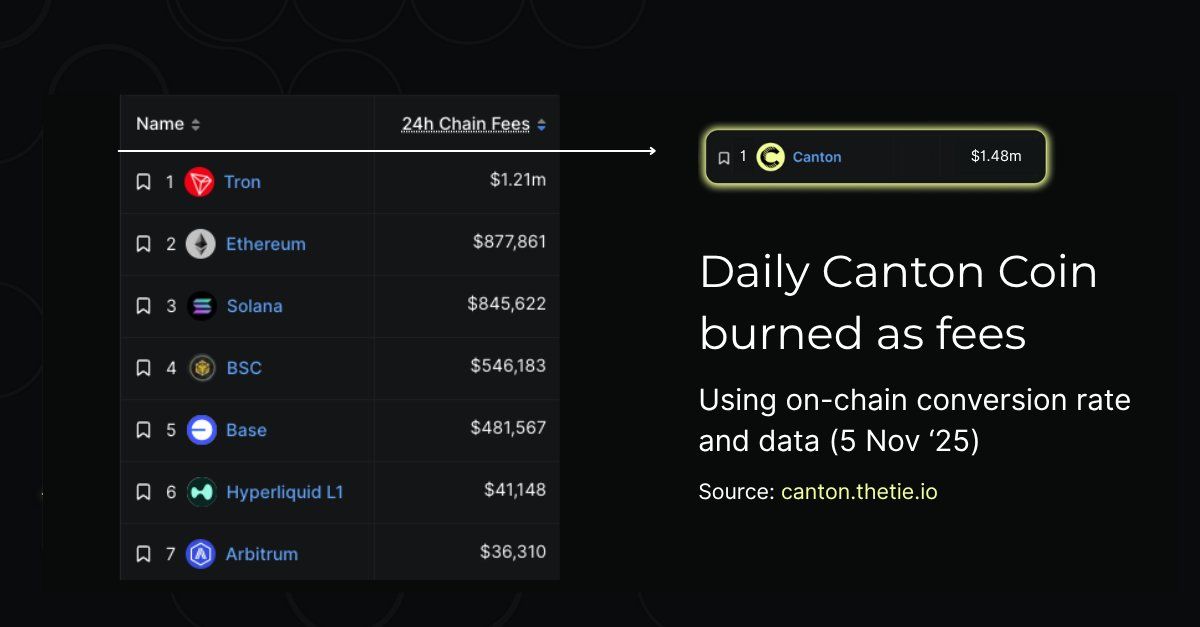
This design kills speculation at the root. Despite a post-listing dip to $0.126, CC sees $80 million in daily volume across top exchanges. Recent $540 million treasury commitments—including Tharimmune’s strategic pivot—signal growing conviction in CC’s long-term value, backed by $1.48 million in daily fees and real RWA throughput.

Canton Network’s 2025 Breakout: Listings, Integrations, and Real-World Traction

This year has been explosive for Canton Network crypto. CC launched October 31 at $0.11, rapidly listing on Gate.io, Bybit (via Launchpool with 355% APR staking), MEXC (zero-fee trading through November 24), and now WEEX—offering deep liquidity, tight spreads, and a seamless mobile experience for traders worldwide. Whether you’re spot trading CC/USDT or staking for yield, WEEX delivers institutional-grade execution with retail-friendly simplicity, making it a go-to platform for accessing Canton Network coin alongside KuCoin, Phemex, and others.

Network momentum is undeniable: Talos joined as a super validator this month, Chainlink’s SCALE integration unlocked oracle and cross-chain functionality across 22+ networks, and Broadridge now processes $4 trillion in monthly ledger repos on-chain. Copper Research reports over 500,000 daily transactions—proof that Canton isn’t promising the future; it’s running it.

On X, the conversation is electric. Threads dissect the $500 million treasury round from DRW and Liberty City Ventures. AMAs spotlight privacy’s role in institutional DeFi. One viral post sums it up: “Canton now has 598 validators and growing—this is what real on-chain adoption looks like.”

Why is Canton Network the Settlement Layer for RealFi?

Compare Canton to meme-driven chains chasing viral pumps, and its strength is clear: while others tokenize hype, Canton tokenizes reality—national debts, repurchase agreements, precious metals—making them liquid, auditable, and programmable. Its BFT consensus with privacy scales without gas wars. Partnerships like Nasdaq’s listings and HSBC’s pilots underscore a shift from DeFi speculation to RealFi—real finance, on-chain.

With a $4.5 billion market cap and year-end price targets between $0.08 and $0.17, CC’s upside isn’t driven by unlocks—it’s fueled by burn mechanics that reward usage. As stablecoins become settlement engines and RWAs go programmable, Canton Network coin isn’t just bridging TradFi and crypto—it’s fusing them.

This is the infrastructure where the future of global capital markets is being built, one private, atomic sync at a time.

Frequently Asked Questions (FAQ)

  1. What is Canton Coin (CC), and how is it different from other crypto tokens?

Canton Coin is the native utility token of Canton Network, designed to reward real network activity—validation, app deployment, traffic—rather than speculation. With no pre-mine or VC allocation, CC is minted only through contribution, and fees paid in CC are burned, creating a supply model tied directly to usage and long-term ecosystem health.

  1. Where can I buy and trade Canton Network coin (CC) right now?

CC is live on WEEX, KuCoin, Phemex, Gate.io, Bybit, and MEXC with USDT and USDC pairs. WEEX stands out for fast deposits, low-latency trading, and strong mobile support—ideal for active traders. Always use secure wallets and enable 2FA. DYOR before investing.

  1. What’s the outlook for Canton Network crypto in 2026 and beyond?

With 600+ validators, $6T in tokenized assets, and growing integrations (Chainlink, Talos, Franklin Templeton), analysts expect CC to rise as RWAs go mainstream. If repo volumes sustain $280B daily, valuation could double or more by 2027—positioning Canton as the default settlement layer for institutional blockchain.


You may also like

Buy Crypto with BCA on WEEX P2P – 0 Fee & 24/7 IDR Merchants

BCA is widely recognized in Indonesia as a trusted and reliable option for fast and seamless cryptocurrency purchases using IDR. With WEEX P2P, users can buy crypto directly through BCA with zero fees, access 24/7 verified merchants, and enjoy ultra-fast release times.

Compared with Binance, Bybit, and local OTC platforms, WEEX consistently offers better IDR exchange rates, safer escrow protection, and more available ads for BCA users.

As crypto adoption continues to rise in Indonesia, secure and convenient access to digital assets has become increasingly important. With WEEX P2P, users can buy USDT, BTC, or ETH via BCA with instant processing, 0% buyer fees, and professional merchant support.


What is P2P Trading?

Peer-to-Peer (P2P) trading allows users to buy and sell crypto directly with other users, while the platform acts as a secure intermediary.

On WEEX P2P:

Crypto is held in escrowSellers release assets only after payment is confirmedTrades are processed quickly and safely

This ensures zero counterparty risk and allows users to pay via local banking methods for a seamless experience.


Why WEEX P2P is the Best Choice for BCA Users

WEEX P2P offers key advantages to users purchasing crypto with IDR via BCA:

0% buyer fees:Save 2–8% compared to competing platforms and maximize the value of every tradeFast release times :Funds are typically released within 1–3 minutes, ensuring a smooth and efficient buying experienceOfficial escrow protection:Platform-managed escrow guarantees 100% transaction safetyFlexible trade sizes:Supports everything from small purchases to large-volume transactionsBest IDR exchange rates for BCA users: Enjoy highly competitive pricing tailored for BCA paymentsThousands of merchants online 24/7: Deep liquidity and constant availability at any time of dayMore BCA ads than any competitor: Greater choice, faster matching, and higher deal completion rates

Whether you’re buying 1,000 IDR or 1,000,000 IDR, WEEX ensures fast, safe, and cost-efficient crypto purchases.


How to Buy Crypto with BCA on WEEX P2P

Buying crypto with BCA on WEEX is simple and fast. Follow these steps:

Register on WEEX and complete basic KYC verification Create your WEEX account and finish the basic identity verification process, which typically takes less than one minute to complete.Navigate to Buy Crypto → P2P Trading From the main menu, enter the P2P trading section and select IDR as your preferred fiat currency.Apply the “BCA” filter Enable the BCA payment filter to view only those merchant advertisements that support BCA.Select the most suitable merchant Review and compare available merchants based on key indicators, including:Exchange priceOrder completion rateTotal trading volumeReal-time online statusEnter the amount you wish to purchase Input your desired crypto amount, and the system will automatically calculate and display the exact payable amount in IDR.Complete the payment via BCA Transfer the displayed amount using BCA, following the bank details provided by the selected merchant.Confirm payment and notify the seller Click “Transferred, Notify Seller” after completing the transfer. The seller will then verify your payment and promptly release the cryptocurrency to your WEEX account.

Your Crypto will arrive instantly in your WEEX wallet — safe, fast, and with zero fees.


Frequently Asked Questions (FAQ)

Q1: Are there any fees when paying with BCA? A: 0% fee for buyers. Only sellers pay a small fee.

Q2: How fast will I receive Crypto? A: Usually 1–5 minutes after marking payment as sent.

Q3: Is buying with BCA safe on WEEX? A: Yes. All trades use official escrow.

Q4: Do I need full KYC? A: Basic KYC is required for P2P trading.


Ready to Buy Crypto with BCA?

Start buying crypto in under 3 minutes — fast, safe, and 0% fee for buyers!

Start Buying Crypto on WEEX P2P with BCA Now!

Buy BTC with BCA on WEEX P2P – 0 Fee & 24/7 IDR Merchants

BCA is widely recognized in Indonesia as a trusted and reliable option for fast and seamless cryptocurrency purchases using IDR. With WEEX P2P, users can buy BTC directly through BCA with zero fees, access 24/7 verified merchants, and enjoy ultra-fast release times.

Compared with Binance, Bybit, and local OTC platforms, WEEX consistently offers better IDR exchange rates, safer escrow protection, and more available ads for BCA users.

As BTC adoption continues to rise in Indonesia, secure and convenient access to digital assets has become increasingly important. With WEEX P2P, users can buy USDT, BTC, or ETH via BCA with instant processing, 0% buyer fees, and professional merchant support.


What is P2P Trading?

Peer-to-Peer (P2P) trading allows users to buy and sell BTC directly with other users, while the platform acts as a secure intermediary.

On WEEX P2P:

BTC is held in escrowSellers release assets only after payment is confirmedTrades are processed quickly and safely

This ensures zero counterparty risk and allows users to pay via local banking methods for a seamless experience.


Why WEEX P2P is the Best Choice for BCA Users

WEEX P2P offers key advantages to users purchasing BTC with IDR via BCA:

0% buyer fees:Save 2–8% compared to competing platforms and maximize the value of every tradeFast release times :Funds are typically released within 1–3 minutes, ensuring a smooth and efficient buying experienceOfficial escrow protection:Platform-managed escrow guarantees 100% transaction safetyFlexible trade sizes:Supports everything from small purchases to large-volume transactionsBest IDR exchange rates for BCA users: Enjoy highly competitive pricing tailored for BCA paymentsThousands of merchants online 24/7: Deep liquidity and constant availability at any time of dayMore BCA ads than any competitor: Greater choice, faster matching, and higher deal completion rates

Whether you’re buying 1,000 IDR or 1,000,000 IDR, WEEX ensures fast, safe, and cost-efficient BTC purchases.


How to Buy BTC with BCA on WEEX P2P

Buying BTC with BCA on WEEX is simple and fast. Follow these steps:

Register on WEEX and complete basic KYC verification Create your WEEX account and finish the basic identity verification process, which typically takes less than one minute to complete.Navigate to Buy BTC → P2P Trading From the main menu, enter the P2P trading section and select IDR as your preferred fiat currency.Apply the “BCA” filter Enable the BCA payment filter to view only those merchant advertisements that support BCA.Select the most suitable merchant Review and compare available merchants based on key indicators, including:Exchange priceOrder completion rateTotal trading volumeReal-time online statusEnter the amount you wish to purchase Input your desired BTC amount, and the system will automatically calculate and display the exact payable amount in IDR.Complete the payment via BCA Transfer the displayed amount using BCA, following the bank details provided by the selected merchant.Confirm payment and notify the seller Click “Transferred, Notify Seller” after completing the transfer. The seller will then verify your payment and promptly release the BTCcurrency to your WEEX account.

Your BTC will arrive instantly in your WEEX wallet — safe, fast, and with zero fees.


Frequently Asked Questions (FAQ)

Q1: Are there any fees when paying with BCA? A: 0% fee for buyers. Only sellers pay a small fee.

Q2: How fast will I receive BTC? A: Usually 1–5 minutes after marking payment as sent.

Q3: Is buying with BCA safe on WEEX? A: Yes. All trades use official escrow.

Q4: Do I need full KYC? A: Basic KYC is required for P2P trading.


Ready to Buy BTC with BCA?

Start buying BTC in under 3 minutes — fast, safe, and 0% fee for buyers!

Start Buying BTC on WEEX P2P with BCA Now!

Buy USDT with BCA on WEEX P2P – 0 Fee & 24/7 IDR Merchants

BCA is widely recognized in Indonesia as a trusted and reliable option for fast and seamless cryptocurrency purchases using IDR. With WEEX P2P, users can buy USDT directly through BCA with zero fees, access 24/7 verified merchants, and enjoy ultra-fast release times.

Compared with Binance, Bybit, and local OTC platforms, WEEX consistently offers better IDR exchange rates, safer escrow protection, and more available ads for BCA users.

As USDT adoption continues to rise in Indonesia, secure and convenient access to digital assets has become increasingly important. With WEEX P2P, users can buy USDT, BTC, or ETH via BCA with instant processing, 0% buyer fees, and professional merchant support.


What is P2P Trading?

Peer-to-Peer (P2P) trading allows users to buy and sell USDT directly with other users, while the platform acts as a secure intermediary.

On WEEX P2P:

USDT is held in escrowSellers release assets only after payment is confirmedTrades are processed quickly and safely

This ensures zero counterparty risk and allows users to pay via local banking methods for a seamless experience.


Why WEEX P2P is the Best Choice for BCA Users

WEEX P2P offers key advantages to users purchasing USDT with IDR via BCA:

0% buyer fees:Save 2–8% compared to competing platforms and maximize the value of every tradeFast release times :Funds are typically released within 1–3 minutes, ensuring a smooth and efficient buying experienceOfficial escrow protection:Platform-managed escrow guarantees 100% transaction safetyFlexible trade sizes:Supports everything from small purchases to large-volume transactionsBest IDR exchange rates for BCA users: Enjoy highly competitive pricing tailored for BCA paymentsThousands of merchants online 24/7: Deep liquidity and constant availability at any time of dayMore BCA ads than any competitor: Greater choice, faster matching, and higher deal completion rates

Whether you’re buying 1,000 IDR or 1,000,000 IDR, WEEX ensures fast, safe, and cost-efficient USDT purchases.


How to Buy USDT with BCA on WEEX P2P

Buying USDT with BCA on WEEX is simple and fast. Follow these steps:

Register on WEEX and complete basic KYC verification Create your WEEX account and finish the basic identity verification process, which typically takes less than one minute to complete.Navigate to Buy USDT → P2P Trading From the main menu, enter the P2P trading section and select IDR as your preferred fiat currency.Apply the “BCA” filter Enable the BCA payment filter to view only those merchant advertisements that support BCA.Select the most suitable merchant Review and compare available merchants based on key indicators, including:Exchange priceOrder completion rateTotal trading volumeReal-time online statusEnter the amount you wish to purchase Input your desired USDT amount, and the system will automatically calculate and display the exact payable amount in IDR.Complete the payment via BCA Transfer the displayed amount using BCA, following the bank details provided by the selected merchant.Confirm payment and notify the seller Click “Transferred, Notify Seller” after completing the transfer. The seller will then verify your payment and promptly release the USDTcurrency to your WEEX account.

Your USDT will arrive instantly in your WEEX wallet — safe, fast, and with zero fees.


Frequently Asked Questions (FAQ)

Q1: Are there any fees when paying with BCA? A: 0% fee for buyers. Only sellers pay a small fee.

Q2: How fast will I receive USDT? A: Usually 1–5 minutes after marking payment as sent.

Q3: Is buying with BCA safe on WEEX? A: Yes. All trades use official escrow.

Q4: Do I need full KYC? A: Basic KYC is required for P2P trading.


Ready to Buy USDT with BCA?

Start buying USDT in under 3 minutes — fast, safe, and 0% fee for buyers!

Start Buying USDT on WEEX P2P with BCA Now!

Do You Pay Tax on Crypto? Trading, Staking and Airdrops Explained

TL;DR

Do you pay tax on crypto without selling? Yes, in most cases, you owe crypto tax even if you don’t cash out.Do you pay tax on crypto trading? Yes. Buying, selling, or swapping crypto (ETH to BTC) can trigger capital gains tax.How is crypto trading taxed? Profits are usually taxed as capital gains, but frequent trading or futures trading may be treated as business income.Is staking taxable? Yes. Crypto staking rewards are taxed as income when received, and taxed again as capital gains when sold.Are crypto airdrops taxable? Yes. Airdrops are taxable income at the time you receive them, even if you don’t sell.When do you owe crypto taxes? When you trade, earn, or receive crypto — not just when you withdraw to fiat.What are common crypto tax mistakes? Not tracking trades, ignoring staking rewards, and assuming no tax without withdrawal.How to report crypto taxes easily? Export your data from WEEX and use crypto tax software like KoinX to generate reports.

Most crypto users assume one thing: If you haven't withdrawn your funds, you don't owe any tax.

It sounds logical , but in most cases, it's wrong.

As crypto markets evolve, tax rules have become clearer and stricter. What matters is not whether you cash out, but how you interact with your assets. Trading, earning, or even receiving tokens can all trigger taxable events, often without you realizing it.

So when exactly do you pay tax on crypto? The answer depends on what you do.

Do You Pay Tax on Crypto Trading? Even Without Cashing Out

The most common misconception is that taxes only apply when you convert crypto into fiat.

In reality, tax authorities in many countries treat any disposal of crypto as a taxable event. This includes not only selling for cash, but also swapping one asset for another.

If you trade ETH for BTC, you may still need to calculate your gain — even though no money ever leaves the crypto ecosystem.

What matters is whether you realized a profit.

If the value of your asset increased between the time you acquired it and the time you traded or sold it, that difference is typically taxed as a gain. Losses may also be recognized, depending on local rules.

For active traders, especially those using futures or trading frequently, things can become more complex. In some cases, trading activity may even be treated as business income rather than capital gains, which can significantly change how it is taxed.

Is Staking Taxable? When and How Rewards Are Taxed

Staking is often described as passive income, but from a tax perspective, it’s rarely that simple.

In most jurisdictions, staking rewards are treated as income at the moment you receive them, based on their market value at that time.

This means you may owe tax even if you never sell your rewards.

And that’s only the first layer.

If you later sell those tokens at a higher price, the additional profit is taxed again — this time as a capital gain.

This dual structure — income first, gains later — is one of the most commonly misunderstood aspects of crypto taxation, and a frequent source of reporting errors.

Are Crypto Airdrops Taxable? What Counts as Income

Airdrops feel like free money. From a tax perspective, they usually aren’t.

In many cases, airdropped tokens are treated as income once you have control over them and they have a measurable market value.

That means the moment you can claim or access the tokens, their value may already be taxable — regardless of whether you sell them.

If you later sell at a higher price, the difference is taxed again as a gain.

Like staking, airdrops often create two separate tax events:

one when you receive the tokens, and another when you dispose of them.

Crypto Tax Mistakes That Can Cost You Money

The rules themselves are not always complicated — but applying them correctly can be.

Many users assume that staying within crypto avoids tax, overlook income from staking or airdrops, or fail to track the original cost of their assets across multiple trades.

As activity increases, especially across different assets and strategies, keeping accurate records becomes significantly harder. Without proper tracking, it’s easy to either underreport — or overpay.

When Do You Actually Owe Crypto Taxes? Key Takeaways

Crypto taxation is not just about how much you earn. It’s about when and how those earnings are realized.

Trading, staking, and airdrops are taxed in different ways, often at different points in time. And in many cases, tax obligations arise long before any funds are withdrawn.

The key takeaway is simple:

If you are actively participating in the crypto market, you are very likely generating taxable events — whether you notice them or not.

Understanding this early makes it easier to stay compliant, avoid costly mistakes, and make better decisions as your trading activity grows.

How to Report Crypto Taxes on WEEX: A Simple Step-by-Step Guide

Understanding how crypto is taxed is only half the process — reporting it correctly is where it gets more complex.

As your activity grows, especially across trading, staking, and rewards, keeping track of every transaction manually can quickly become overwhelming. Using a platform where your trading history is organized and easily exportable can make a meaningful difference when it comes to filing.

For a step-by-step guide on how to track and report your crypto taxes, read the full tutorial here:

WEEX Crypto Tax Guide: How to Export Trading Data and Generate a Tax Report with KoinX

About WEEX

Founded in 2018, WEEX has developed into a global crypto exchange with over 6.2 million users across more than 150 countries. The platform emphasizes security, liquidity, and usability, providing over 1,200 spot trading pairs and offering up to 400x leverage in crypto futures trading. In addition to the traditional spot and derivatives markets, WEEX is expanding rapidly in the AI era — delivering real-time AI news, empowering users with AI trading tools, and exploring innovative trade-to-earn models that make intelligent trading more accessible to everyone. Its 1,000 BTC Protection Fund further strengthens asset safety and transparency, while features such as copy trading and advanced trading tools allow users to follow professional traders and experience a more efficient, intelligent trading journey.

Follow WEEX on social media:

· Instagram: @WEEX Exchange 
· X: @WEEX_Official 
· Tiktok: @weex_global 
· Youtube: @WEEX_Global 
· Discord: WEEX Community 
· Telegram: WeexGlobal Group

How to Withdraw Funds from WEEX on Mobile Device: Complete Guide for Beginners

Withdrawing your assets securely and efficiently is essential for every crypto trader. Whether you're cashing out profits after a successful trade or moving funds to an external wallet for long-term storage, knowing how to withdraw funds from WEEX is a fundamental skill.

This step-by-step guide will walk you through how to complete a withdrawal on the WEEX exchange—from logging into your account to confirming the transaction. Learn the process, avoid common mistakes, and manage your crypto with confidence using WEEX's user-friendly platform.

Step-by-Step Guide: How to Withdraw Funds from WEEXStep 1: Log Into Your WEEX AccountGo to WEEX offcial website and Install the WEEX appSelect the Login optionEnter your login information and verify your accountStep 2: Navigate to the Withdrawal Section

Once logged in:

On the WEEX homepage, navigate to your Spot Account (where your funds are held)Click the Withdraw button in the menu to start the processAlternatively, go to the Wallet section and choose Withdraw or Withdraw FundsStep 3: Select the Token to Withdraw

WEEX supports a broad range of tokens, including:

BTC (Bitcoin)ETH (Ethereum)USDT (Tether)WXT (WEEX Token)And many other cryptocurrencies

In the Withdraw section:

Select the cryptocurrency or token you want to withdraw (e.g., BTC, ETH, USDT)Verify that your Spot Account has sufficient balance for the desired withdrawal amountStep 4: Enter Withdrawal Details

After selecting your token, enter the transaction details carefully:

Withdrawal Address:

Input the destination address for your tokensDouble-check every character—crypto transactions are irreversibleEnsure the receiving wallet supports the chosen token

Network Selection:

For USDT, select the correct network (e.g., TRC-20, ERC-20, BEP-20)Using the wrong network can result in permanent loss of fundsMatch the network to your destination wallet's capabilities

Amount:

Enter the number of tokens you want to withdrawNote that some tokens have minimum withdrawal limitsNetwork fees will be deducted from your totalStep 5: Review and Submit

Before finalizing:

Carefully review the withdrawal address, network, and amountCheck the handling fee displayedIf everything is correct, click Withdraw or Confirm to proceedComplete any additional security verification (2FA, email confirmation)Step 6: Track Your Withdrawal Status

After submitting:

Visit the Withdrawal History section in your WEEX accountCheck whether the transaction is Pending or CompletedWithdrawal times vary by network and congestion:USDT on TRC-20: usually minutesBTC and ETH: may take longer depending on network activityStep 7: Verify Funds in Your Destination Wallet

Once the transaction is confirmed on the blockchain:

Check your receiving wallet to confirm the funds arrivedIf tokens don't appear immediately, allow time for network confirmationsFor delays, you can track the transaction using a blockchain explorer

If you still have questions about the withdrawal process, check out the tutorial video below to help you safely withdraw your assets.

Why Choose WEEX for Your Crypto Trading?

WEEX offers numerous advantages for crypto traders, starting with zero fees on many transactions—features like the We-Launch event allow users to deposit and earn rewards without any transaction costs. The platform also provides access to promising projects through events where you can commit WXT tokens and earn airdrop rewards from high-quality crypto initiatives.

With a wide range of supported cryptocurrencies, WEEX makes it easy to build and diversify your portfolio. Above all, every deposit and withdrawal is processed with the highest level of security, including cold storage for most funds and regular security audits, giving you complete peace of mind.

FAQQ1: How long does a WEEX withdrawal take?

Withdrawal times vary by cryptocurrency and network activity. USDT on TRC-20 typically takes minutes, while BTC and ETH may take 10-60 minutes depending on network congestion.

Q2: Are there withdrawal fees on WEEX?

WEEX does not charge its own withdrawal fees, but blockchain network fees apply. These fees go to miners/validators, not to WEEX.

Q3: Can I Cancel a Withdrawal?

Once confirmed, withdrawals cannot be canceled. Always verify details before submitting.

Q4: Can I cancel a withdrawal after submitting?

No. Once a withdrawal is confirmed and submitted to the blockchain, it cannot be canceled. Always verify details before confirming.

With OpenClaw taking the world by storm, what can the Agentic economy bring to Web3?

Goodbye Agent, hello OpenClaw

“It is now the largest, most popular and most successful open-source project in human history. This is definitely the next ChatGPT.”

This isn’t the wild claim of some tech enthusiast, but rather NVIDIA CEO Jensen Huang’s assessment of OpenClaw in an interview this Tuesday.

This open-source AI agent, released by a former Apple developer, saw its GitHub stars skyrocket to 320,000 within three months, surpassing Linux and React. Because its logo bears a striking resemblance to a lobster, the Chinese community has dubbed it ‘龙虾’, referring to lobster in Chinese.

However, the viral success of OpenClaw is not merely another AI tool craze, but rather the prelude to the agentic economy—a pivotal turning point where AI evolves from ‘talking’ to ‘doing’.


From chatbots to digital employees: this time it’s different

Over the past two years, the term “AI agent” has been bandied about repeatedly, yet it remained confined to presentation slides. It wasn’t until the emergence of OpenClaw that this impasse was truly broken.

Its core distinction lies in execution rather than conversation.

Traditional products like ChatGPT and Claude are, at their core, tools for answering questions—you ask, it answers, and the next step is still up to you. The new generation of agents represented by OpenClaw operates on a completely different logic: OpenClaw is authorised to take control of the operating system, autonomously invoking browsers, code executors, APIs, iMessage and more, planning, executing and adjusting its course of action independently until the task is completed.

Of course, this fully managed approach carries inherent risks, but that is a story for another time.

Many have likened this moment to the ChatGPT moment of 2022, but I believe a more accurate analogy might be that distant afternoon years ago when Steve Jobs unveiled the iPhone.

Innovation shows no signs of stopping; OpenClaw’s official skills marketplace, ClawHub, currently offers over 27,000 skills for various AI agents to access free of charge—meaning these digital employees are capable of handling an ever-increasing range of tasks.

Looking further ahead, OpenClaw’s popularity is not merely a repeat of past AI tool fads, but rather the prelude to the agentic Economy, for which Web3 is the natural breeding ground.


Why is Web3 the most natural economic vehicle for AI agents?

On the surface, this OpenClaw appears to be merely a slightly intelligent executor: automatically checking emails, booking tickets, managing files, and even posting across platforms. But dig deeper, and it is precisely the true catalyst for the agentic economy—and Web3 is the most suitable ‘ocean’ for this lobster once it has crawled ashore.

Moreover, the integration of blockchain and the OpenClaw possesses inherent advantages that amplify its impact:

The x402 protocol enables agents to autonomously pay fees and switch AI model providers using a single wallet, without the need for manual review;The ERC-8004 protocol grants agents a portable reputation system and legal identity;Clawpay, ClawCredit and ClawRouter facilitate private payments, native credit and autonomous routing;Stablecoins (USDT/USDC) serve as the agent’s 24/7 bank, perfectly aligning with code-driven settlement requirements.

In summary, the automatic execution of smart contracts, permissionless on-chain interactions, and the instant global settlement enabled by stablecoins—these characteristics can significantly address the bottlenecks faced by traditional AI agents in areas such as payment closed-loop systems, identity and reputation, and contract execution.

Further innovative use cases are on the horizon:

Circle’s open-source Circle Skills already enable AI agents to directly generate USDC payments, cross-chain transfers and smart contract logic;MistTrack Skills from SlowMist provide agents with on-chain AML risk analysis capabilities, automatically performing security checks prior to transfers;RootData, meanwhile, has packaged databases of thousands of crypto projects, funding data, token economics and social engagement metrics into Skills, boosting content creation efficiency tenfold.

We therefore have every reason to believe that OpenClaw’s explosive popularity is merely the beginning; once integrated into Web3, the Agentic economy will unleash astonishing potential.


The Agentic concept project at the forefront of the trend

KITE

KiteAI is a PoAI L1 blockchain dedicated to agents, working in close synergy with the OpenClaw ecosystem: it supports OpenClaw developer activities and enables agents to independently pay for computing resources and API calls.

Currently, KiteAI has joined the Agentic AI Foundation, in partnership with OpenAI, Google and others, and serves as a key piece of infrastructure for the agentic economy

PIEVERSE

The on-chain payment protocol Pieverse recently launched Purr-Fect Claw, transforming OpenClaw into a fully on-chain tool. Users can now deploy agents directly within Web2 applications such as Line, Kakao and WhatsApp, enabling gasless on-chain transactions and operations.

GPS

GoPlus Security has launched SafuSkill—a security-first Skills marketplace built on the BNB Chain, integrating a skills marketplace, an automated security scanning engine and developer tools to help users filter for secure AI agent skills.

Lobster

This is not an AI agent, but rather a Chinese meme coin originated from OpenClaw. Like many similarly named meme coins that capitalise on trending events, ‘Lobster’ has also been hyped due to OpenClaw’s viral popularity.

CLAWD

‘clawd.atg.eth’ is a self-hosted personal AI assistant deployed by Ethereum developer Austin Griffith based on the open-source clawd.bot. The agent can independently write, test and deploy dApps to the Ethereum/Base mainnet, and has already produced over 14 production-grade applications, such as the ClawFomo game, PFP prediction markets and the Incinerator burning mechanism.

KELLYCLAUDE

KellyClaude is a personal AI executive assistant created by Austen Allred. Running on the Claude model, it can proactively manage tasks such as schedules, emails and travel, and actively shares experiences within agent communities such as Moltbook.

CLUDE

Clude.io, meanwhile, focuses on an independent memory layer, separating memory from the model to achieve a persistent, private, and cross-model portable brain-like system, perfectly addressing the pain points of memory and privacy sovereignty for agents.


Last but not least

In 2023, the arrival of ChatGPT ignited the AI data sector, represented by Fetch.ai (FET), SingularityNET (AGIX) and Ocean Protocol (OCEAN), as well as the early AI+DePIN sector, represented by Render (RNDR), Akash (AKT) and io (IO);

By the end of 2024, TURBO, GOAT and Fartcoin triggered an AI meme frenzy, shifting AI’s focus from utility to culture and speculation;

In 2025, the market’s focus shifted to AI agents as economic entities, with projects such as Bittensor (TAO) and The Graph (GMT) pivoting towards supporting data queries and autonomous transactions for AI agents, whilst projects like SkyAI emphasised multi-agent collaboration;

Now, OpenClaw is taking the next step in enabling s to truly carry out 24/7 trading, collaboration and entrepreneurship, thereby fuelling massive on-chain traffic and new DeFi narratives. This marks our transition into the agentic era.

The lobster has been launched, and the vast ocean of Web3 awaits it.

Are you ready for the new generation?

Join WEEX and Claim 30,000 USDT Bonus for New Users
Sign Up Now

Popular coins