
ROBO Airdrop on WEEX: How to Claim Your Share of 50,000 USDT and Zero-Fee Rewards


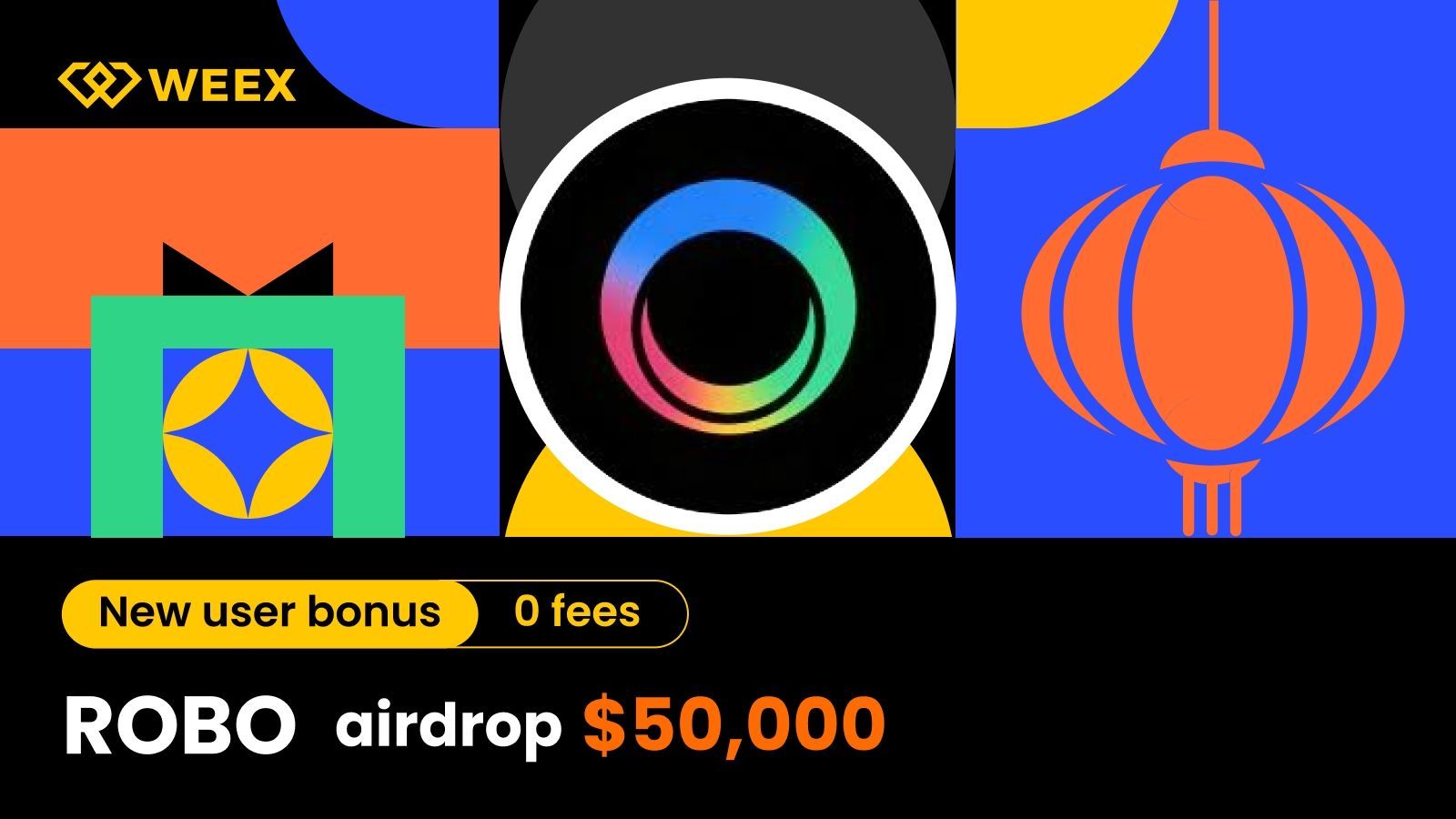
The ROBO airdrop on WEEX presents a primary opportunity for investors to participate in a 50,000 USDT prize pool while utilizing a specialized zero-fee trading environment. Running from February 26, 2026, to March 5, 2026, this event is designed to reward active market participants through a structured series of deposit and trading tasks. According to recent data from CoinMarketCap, airdrops and exchange-led incentive programs remain a critical driver for token liquidity and user acquisition in the decentralized finance space. By focusing on the ROBO/USDT trading pair, WEEX provides a targeted entry point for new users to explore the platform’s ecosystem while securing guaranteed rewards before the 1,000-user cap is reached.
Strategic Market Analysis of the ROBO Airdrop Event
Participating in a ROBO airdrop requires a clear understanding of the current market landscape. Industry reports from Glassnode indicate that exchange-based events often act as a local catalyst for price stability as users accumulate tokens to meet reward criteria. This specific crypto airdrop is particularly attractive because it combines direct USDT rewards with a zero-fee trading model, effectively lowering the cost of participation for retail investors. The integration of ROBO into the spot market allows traders to engage with emerging assets without the typical friction of transaction costs, which is a significant advantage in high-frequency trading scenarios.
The structure of this event reflects a broader trend among top-tier exchanges to prioritize high-quality user engagement over passive participation. By requiring a sequence of tasks—first deposit, first spot trade, and futures trade—the platform ensures that rewards are distributed to users who contribute meaningful liquidity. For those tracking the broader crypto airdrop market, this multi-step requirement serves as a filter to prevent bot-driven wash trading, thereby preserving the value of the prize pool for genuine community members.
Maximizing New User Rewards through Sequential Tasks
The reward structure for the ROBO airdrop is divided into specific tiers that cater to different levels of capital and trading experience. The first milestone for any new user is the deposit task, which requires a net deposit of at least 100 USDT. It is essential to note that net deposit is defined as total deposits minus withdrawals during the event period. Furthermore, only on-chain and P2P deposits are eligible for calculation, as internal transfers do not reflect new capital entering the ecosystem. Successfully completing this step yields a 5 USDT reward, establishing a base return on investment before any market exposure is taken.
Once the deposit is confirmed, the next phase involves executing the first spot trade. To qualify for the additional 5 USDT bonus, this trade must specifically involve the ROBO/USDT pair. This task is crucial for establishing the initial liquidity of the token on the exchange. Professional traders often recommend using limit orders to execute these trades to avoid slippage, especially during the early hours of an event when volatility may be higher. Since this specific reward is limited to the first 1,000 users who complete the sequence, speed and precision in execution are vital for securing the bonus.
Advanced Futures Trading and Volume Tier Incentives
For participants looking to maximize their returns, the futures trading segment of the ROBO airdrop offers the most significant growth potential. The reward for futures trading is scaled based on the volume achieved, with tiers reaching up to 10 USDT for a volume of 10,000 USDT. Unlike the spot market tasks, futures trading allows for the use of leverage to meet volume requirements more efficiently. However, it is important to remember that rewards in this category are not stackable; the system will distribute the highest tier achieved by the user at the end of the event.
The volume calculation for this task is restricted to USDT-M pairs, ensuring that the trading activity supports the core liquidity pools of the exchange. Experienced traders often utilize hedged positions or intraday strategies to reach these volume milestones while minimizing net exposure. By reaching the 1,000 USDT, 5,000 USDT, or 10,000 USDT benchmarks, users can significantly enhance their total reward package from the event. This tiered approach provides a clear roadmap for users to follow as they scale their activity on the platform.
Daily Incentives and Community Participation Rewards
Beyond the initial signup tasks, the ROBO airdrop includes a 20,000 USDT futures bonus pool available to all users. This portion of the event rewards daily consistency, requiring a daily spot volume of 200 USDT on any trading pair. Participants who meet this requirement can receive a random futures bonus ranging from 2 to 15 USDT, with a maximum cap of 100 USDT per user over the course of the event. This daily incentive model is highly effective for maintaining constant engagement and provides a recurring revenue stream for active traders.
This component of the crypto airdrop is particularly beneficial for existing users who might not qualify for the "new user" specific rewards. By opening the 20,000 USDT pool to the entire community, the exchange fosters a more inclusive environment. The random nature of the daily bonus adds an element of gamification, which has been shown in behavioral studies by organizations like Chainalysis to increase user retention and platform loyalty. For a small daily commitment of 200 USDT in spot volume, the potential for a 100 USDT cumulative bonus represents a high-value proposition for frequent market participants.
Summary of Reward Tiers and Eligibility Requirements
To ensure a smooth participation process, users should refer to the following data regarding the specific rewards and the requirements needed to unlock them.
| Task Category | Requirement | Reward Amount | Eligible Users |
|---|---|---|---|
| Initial Net Deposit | Net Deposit ≥ 100 USDT | 5 USDT | First 1,000 New Users |
| First Spot Trade | Trade ROBO/USDT Pair | 5 USDT | First 1,000 New Users |
| Futures Trading Tier 1 | 1,000 USDT Volume | 2 USDT Bonus | First 1,000 New Users |
| Futures Trading Tier 2 | 5,000 USDT Volume | 5 USDT Bonus | First 1,000 New Users |
| Futures Trading Tier 3 | 10,000 USDT Volume | 10 USDT Bonus | First 1,000 New Users |
| Daily Active Trade | 200 USDT Daily Spot Vol | 2–15 USDT Daily | All Registered Users |
The distribution of these rewards occurs within seven working days after the event concludes on March 5, 2026. This period allows the exchange to conduct a comprehensive audit of all trading activity to ensure compliance with the terms and conditions, specifically regarding the exclusion of zero-fee trades and stablecoin pairs from volume calculations.
Compliance and Risk Management for Airdrop Participants
Adhering to the technical requirements is the only way to guarantee reward eligibility in the ROBO airdrop. One critical rule is that the tasks must be completed in order: first deposit, then spot trade, then futures trade. Skipping a step or performing them out of sequence will result in the user being ineligible for the subsequent rewards. Additionally, "New Users Only" refers strictly to those who sign up during the event period. Market makers and institutional accounts are explicitly barred from participation to ensure that the 50,000 USDT pool remains accessible to individual retail traders.
Risk management is also a vital component of any crypto airdrop strategy. While the rewards provide a buffer, users should still practice disciplined trading, especially in the futures market. The use of stop-loss orders and a clear understanding of liquidation prices are essential when trading with leverage to meet volume goals. The zero-fee trading benefit should be seen as a tool to maximize net profits rather than a reason to take excessive risks. By focusing on high-liquidity pairs and maintaining a consistent daily volume, participants can navigate the event with a balanced approach to risk and reward.
Final Insights for Successful Event Engagement
The ROBO airdrop on WEEX serves as a robust example of how targeted incentives can benefit both the exchange and its user base. For the new user, the combination of a 50,000 USDT prize pool and zero-fee trading provides an excellent low-cost entry into a high-potential asset class. For the seasoned trader, the daily bonuses and futures volume tiers offer a way to optimize existing strategies for additional profit. The success of this event relies on the community's ability to follow the sequential task requirements and maintain active participation throughout the week-long window.
As the crypto industry continues to evolve, events like this remain a cornerstone of market growth. The data-driven approach to rewarding genuine volume and capital deposits ensures a healthy ecosystem for all participants. To get started, users must ensure they are registered through the official event page and meet the minimum deposit threshold promptly to secure their spot among the first 1,000 eligible participants.
DISCLAIMER: WEEX and affiliates provide digital asset exchange services, including derivatives and margin trading, only where legal and for eligible users. All content is general information, not financial advice-seek independent advice before trading. Cryptocurrency trading is high risk and may result in total loss. By using WEEX services you accept all related risks and terms. Never invest more than you can afford to lose. See our Terms of Use and Risk Disclosure for details.
You may also like

What Is SAOS? Strategic American Oil Supply Token Explained
SAOS is a meme token on Solana with a 75,000 USD market cap and 22,000 USD locked liquidity, positioned around oil supply themes but lacking real asset backing
It thrives on pure narrative speculation, with no utility, website, or doxxed team, making it highly volatile and attention-dependent
Traders should distinguish SAOS from legitimate real-world asset projects, as its branding is speculative rather than substantive
Positive aspects include locked liquidity reducing rug pull risks, but low trading activity signals high uncertainty
How to Buy Public Asset Control (PAC) Token in 2026: Latest Solana Buying Guide
How to buy Public Asset Control (PAC) token in 2026, PAC contract address, Solana wallet setup, Jupiter swap guide, latest price, liquidity, and risks.
What Is Public Asset Control (PAC) Token and How Does It Work? Latest Solana PAC Token Guide
Public Asset Control (PAC) token explained. Learn what PAC is, how it works on Solana, current price snapshot, risks, and buying basics.

Can PAC Coin Reach $1 Soon? Analyzing Public Asset Control
PAC is a Solana-based meme token with a government-themed narrative, but it is highly speculative.
At its current price (~$0.0009) and 1B supply, reaching $1 would require a $1B market cap, which is very unlikely.
Short-term moves to $0.001 or $0.01 are more realistic, but the token is highly volatile due to low liquidity and hype-driven trading.
Overall, $1 is not a realistic target, and PAC is better suited for short-term speculation than long-term investment.

United Nations Oil Reserve (UNOS) Crypto: Solana Token, UN Links, and Risks
United Nations Oil Reserve (UNOS) Crypto explained: Solana token basics, UN links, oil-backing claims, market risks, contract checks, and buying cautions.

What Is Public Asset Control (PAC) Coin? Explained for Beginners
Public Asset Control (PAC) is a Solana-based token that uses a “government asset control” narrative involving oil and gold themes, but it has no verified ties to any real institutions or governments. It is mainly an entertainment-focused, speculative meme coin.
The project’s claims about links to entities like BlackRock or Palantir are unverified, and its own disclaimer states it is not a real financial or institutional asset. Like many new Solana tokens, PAC is highly volatile, with low liquidity and limited transparency, including no fully verified audit.
Overall, PAC is a high-risk speculative token driven by hype and storytelling rather than real utility. Beginners are advised to be cautious, verify contract details, and prioritize risk control before considering any trading.

What Is Official Saudi Oil Reserve (OSOR) Coin?
Learn what OSOR coin is, why its Saudi oil narrative matters, how to verify the contract, and what risks to check before trading.

Global Digital Oil Reserve (GDOR): What It Is, Risks, and How to Check It
Global Digital Oil Reserve (GDOR) is an oil-themed Solana token with unclear backing. Learn its risks, market data, and verification checklist.

Is OBC Crypto a Good Investment?
Is OBC crypto a good investment? We analyze the latest market data, holder concentration, liquidity risks, and short-term momentum. Read this before you invest in OBC token.

Can OSOR Reach $1? Full Price Analysis 2026
OSOR crypto price prediction 2026: Can Saudi Oil Reserve token reach 1? Read before buying.

What is International Oil Supply (IOS) Coin?
Wondering what is IOS crypto? Here’s a straight look at International Oil Supply (IOS) coin—the Solana token tied to oil reserve data. Contract address, risks, and what’s still unverified.

What Is the Unified International Token (UNIT)? Is UNIT Crypto Legit or Scam?
what is UNIT crypto? Here’s a breakdown of the Unified International Token ($UNIT), how it ties to BRICS+ data, where to buy it, and why it’s a conceptual project—not an official currency.
What Is Stablecoin Business OS (SBOS) Coin?
What is SBOS crypto? We break down Stablecoin Business OS, its USDC invoicing tools, AI finance assistant, token contract address, and real utility for online businesses.
Is OSOR Token Next 10X Like WCOR or Just Market Hype?
Is OSOR the next 10X crypto like WCOR or just market hype? Compare OSOR vs WCOR on-chain data, price discrepancies, and holder risks in this deep dive into Saudi oil-backed tokens.

How to Buy $WCOR Coin: Should I Invest or Is It Just Hype?
Learn how to buy $WCOR coin on Solana and explore its latest 57% price surge. This expert guide analyzes whether WCOR is a solid investment or speculative hype.
World Collective Oil Reserve ($WCOR) Price Prediction: May 2026 Rally Analysis and Future Outlook
Is $WCOR a good investment? Read our comprehensive World Collective Oil Reserve price prediction and market analysis for 2026-2030. Learn about the energy narrative on Solana and start your trading journey with WEEX rewards.

Is $PAC Token a Good Investment in 2026? Price, Risks, and Market Analysis
A data-driven analysis of Public Asset Control (PAC) token: current price, market cap, liquidity, $1 target feasibility, and risk factors. Is it a legitimate investment or a high-risk meme coin?
NEAR Airdrop: Join WEEX to Share 50,000 USDT in Crypto Rewards
Join the NEAR airdrop on WEEX from May 7 to May 14 to share a 50,000 USDT prize pool. New users can earn rewards through deposits and spot trades with zero-fee trading advantages.
What Is SAOS? Strategic American Oil Supply Token Explained
SAOS is a meme token on Solana with a 75,000 USD market cap and 22,000 USD locked liquidity, positioned around oil supply themes but lacking real asset backing
It thrives on pure narrative speculation, with no utility, website, or doxxed team, making it highly volatile and attention-dependent
Traders should distinguish SAOS from legitimate real-world asset projects, as its branding is speculative rather than substantive
Positive aspects include locked liquidity reducing rug pull risks, but low trading activity signals high uncertainty
How to Buy Public Asset Control (PAC) Token in 2026: Latest Solana Buying Guide
How to buy Public Asset Control (PAC) token in 2026, PAC contract address, Solana wallet setup, Jupiter swap guide, latest price, liquidity, and risks.
What Is Public Asset Control (PAC) Token and How Does It Work? Latest Solana PAC Token Guide
Public Asset Control (PAC) token explained. Learn what PAC is, how it works on Solana, current price snapshot, risks, and buying basics.
Can PAC Coin Reach $1 Soon? Analyzing Public Asset Control
PAC is a Solana-based meme token with a government-themed narrative, but it is highly speculative.
At its current price (~$0.0009) and 1B supply, reaching $1 would require a $1B market cap, which is very unlikely.
Short-term moves to $0.001 or $0.01 are more realistic, but the token is highly volatile due to low liquidity and hype-driven trading.
Overall, $1 is not a realistic target, and PAC is better suited for short-term speculation than long-term investment.
United Nations Oil Reserve (UNOS) Crypto: Solana Token, UN Links, and Risks
United Nations Oil Reserve (UNOS) Crypto explained: Solana token basics, UN links, oil-backing claims, market risks, contract checks, and buying cautions.
What Is Public Asset Control (PAC) Coin? Explained for Beginners
Public Asset Control (PAC) is a Solana-based token that uses a “government asset control” narrative involving oil and gold themes, but it has no verified ties to any real institutions or governments. It is mainly an entertainment-focused, speculative meme coin.
The project’s claims about links to entities like BlackRock or Palantir are unverified, and its own disclaimer states it is not a real financial or institutional asset. Like many new Solana tokens, PAC is highly volatile, with low liquidity and limited transparency, including no fully verified audit.
Overall, PAC is a high-risk speculative token driven by hype and storytelling rather than real utility. Beginners are advised to be cautious, verify contract details, and prioritize risk control before considering any trading.


